June 21, 2026
Cape Coral gate permits can get confusing fast once a motor, wiring, and safety controls enter the picture. A gate that seems simple on the surface can turn into a permit question the moment it becomes powered.
If you manage a home, rental, HOA, or business property, the safest move is to sort out the permit side before work starts. The answer depends on the scope of work, the current local rules, and how the city interprets the project.
When a gate operator needs its own permit
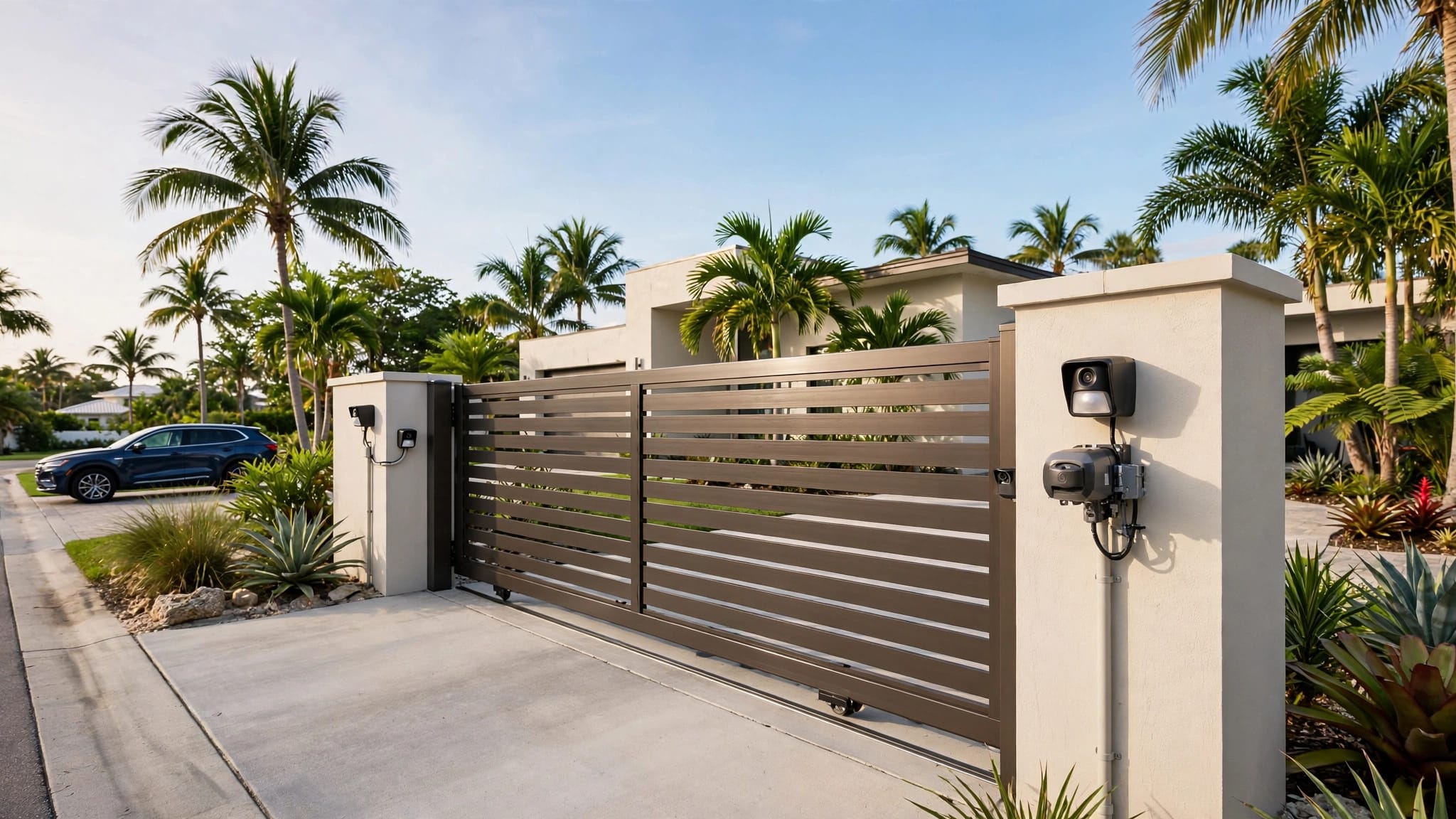
In Cape Coral, a powered gate operator will usually need permit review, and the electrical part may need a separate electrical permit . A manual gate can fall into a different category, but once you add a motor and power connection, the job is no longer just a fence project.
That is why people asking about cape coral gate permits often get more than one answer. The city may look at the gate structure, the operator, the wiring, and the property layout.
Here is a simple way to think about the difference:
| Project type | Permits often involved | What it means |
|---|---|---|
| Manual gate with no power | Building or fence permit may still apply | The gate is treated as part of the fence or entry work |
| New powered gate operator | Building permit plus electrical permit | The motor, controls, and power connection may be reviewed separately |
| Operator replacement only | Electrical permit may still apply | A swap can still count as permitted electrical work |
| Gate that affects access or safety | Extra review may be requested | Clearances, traffic flow, or safety devices may matter |
The exact outcome depends on the job details. A small repair is not the same as a new installation, and a replacement is not always treated like a like-for-like fix.
A powered gate is more than hardware. It is a moving system with electrical parts, controls, and safety concerns.
Why powered gate systems get separate review
The reason is pretty simple. A gate operator is not just a latch with a motor on it. It is a mechanical system, an electrical system, and a safety item all at once.
That mix is what can trigger separate permit steps. The operator needs power, the wiring has to be installed correctly, and the gate has to move in a way that does not create a hazard. If the gate sits at a driveway, commercial entrance, or shared access point, the city may also care about how people and vehicles move through it.
For property owners, that means a permit question can show up even when the fence itself is already approved. The operator changes the project. So does a keypad, remote system, sensor, or other control hardware.
Location matters too. A gate near a property line or access route can raise questions about clearances and placement. If the gate affects entry for residents, customers, deliveries, or emergency access, the review can become more detailed.
The main point is this, powered gate work is often treated differently from basic fence installation because the risk is different.
What Cape Coral permit reviewers may ask for
The paperwork can change with the project, but a gate permit file often needs more than a basic work order. The city may ask for items that show what is being installed and where it will go.
Common requests can include:
- A site sketch or plan that shows the gate location
- A description of the operator and how it will be powered
- Electrical details for wiring, controls, and connections
- Contractor information, if the job requires licensed work
- Notes about access, setbacks, or nearby structures
Sometimes the review stays simple. Other times, the city may want more detail before approving the job. That is especially true when the gate is tied to an entrance used by several people or vehicles.
The best rule is to treat the permit like part of the project, not an afterthought. A clean application can save time later.
How to keep the permit process moving
A few early checks can prevent most delays. Start with the scope of work, because that decides how the permit gets classified.
- Confirm whether the gate is manual or powered.
- Ask whether the operator and electrical work need separate permits.
- Check whether the project changes access, setbacks, or safety features.
- Submit plans before installation starts.
- Wait for approval before the crew begins work.
That order matters. A lot of permit trouble comes from starting too soon or guessing that a replacement does not need review. Even a small change, like adding power to an existing gate, can move the project into a different permit category.
If you are scheduling a bigger fence project at the same time, keep the timing tight. The fence, gate, and operator should all match the approved plan. Otherwise, you may end up revising the paperwork after the work is done.
Working with a local contractor
A local contractor can help you line up the fence work, gate installation, and permit steps so they fit together. That matters when the project includes a powered entry system, because the permit path can involve more than one trade.
If the gate is part of a larger fence job, a contractor that handles residential and commercial fencing solutions can help keep the project organized from start to finish. That does not replace the city's review, but it does reduce guesswork.
For Cape Coral property owners and managers, the main advantage is clarity. You get a better shot at submitting the right documents the first time, and that can shorten the wait for approval.
Conclusion
For most powered setups, the answer to gate permit questions in Cape Coral is yes, and the electrical work may need its own permit too. Manual gates, replacements, and simple repairs can fall into different categories, so the scope of work matters.
Because current local rules and city interpretation can control the final answer, verify the requirements with the local permitting authority before you begin. That step is small, but it can save you from a costly delay later.