August 5, 2026
A fence color can change the entire look of your property, especially when strong Florida sunlight highlights every line and surface. For Florida homeowners, choosing between black vs. bronze aluminum fences often comes down to more than personal taste.
Both finishes offer a durable, low-maintenance alternative to painted steel or wrought iron. However, the surrounding home, exposure to salt air, pool area, and exterior colors can make one option a better fit. Here is how black and bronze aluminum fences compare in Southwest Florida.
Black vs. Bronze Aluminum Fences: The Quick Answer
Black aluminum fencing has a crisp, traditional appearance. It creates strong contrast against light stucco, white trim, concrete walls, and green lawns. Bronze fencing has a softer, warmer appearance that blends more easily with tan stucco, stone, wood accents, and earth-toned pavers.
Both finishes use the same basic aluminum material. The color itself doesn't determine whether a fence will resist humidity, wind, or corrosion. The powder-coating quality, aluminum grade, fasteners, post installation, and maintenance matter more.
| Consideration | Black aluminum fence | Bronze aluminum fence |
|---|---|---|
| Overall appearance | Bold, clean, and classic | Warm, subtle, and traditional |
| Best exterior pairings | White, gray, cool beige, modern finishes | Tan, cream, brown, terracotta, natural stone |
| Visible dust or salt residue | May show more clearly | Often blends with light dirt and pollen |
| Sun exposure | Can become hot in direct sun | Can also become hot in direct sun |
| Design effect | Creates sharper boundaries | Produces a softer transition |
| Common use | Pool areas, front yards, modern homes | Landscaped yards, traditional homes, coastal designs |
Black is a strong choice when you want the fence to define the property line. Bronze works well when you want the fence to support the home without becoming the first feature people notice.
Neither color is automatically stronger or longer-lasting. A properly finished fence in either shade can perform well in Florida conditions.
How Florida Weather Affects Each Finish
Southwest Florida fences face intense sun, heavy rain, high humidity, irrigation water, and occasional salt exposure. These conditions affect the coating and hardware over time, so the installation details deserve as much attention as the color.
Sun, rain, and humidity
Black and bronze are both dark finishes. In direct sunlight, both can become warm to the touch. Color selection should not be the main strategy for controlling heat, especially around a pool or outdoor seating area.
Florida's frequent rain can leave mineral spots on any fence. Sprinklers may add more residue, particularly when they spray against the panels every day. Black surfaces can make pale water spots, dust, and pollen easier to see. Bronze often hides those marks better because its warm tone is closer to the color of soil and common outdoor debris.
A quality powder coat helps protect the aluminum from moisture and ultraviolet exposure. Still, a damaged coating can allow corrosion to develop at exposed areas, around fasteners, or where dissimilar metals contact each other.
Salt air near the coast
Homes in Cape Coral, Fort Myers, Estero, and Bonita Springs can experience salt carried by coastal air, pools, canals, and wind. Aluminum doesn't red-rust like steel, but it can still corrode in a salt-air environment.
For a coastal installation, ask about the finish rating and the hardware used with it. An AAMA 2604 or better powder coat , 316 stainless hardware, and proper isolation between dissimilar metals can provide a stronger setup near the Gulf. You can also review this guide to coastal aluminum fence durability before requesting estimates.
The choice between black and bronze won't remove salt exposure. Regular rinsing and good installation practices protect either finish. A fence that sits near a canal, boat dock, or ocean-facing property may need more frequent cleaning than one installed farther inland.
Which Color Fits Your Home's Exterior?
The right fence should look intentional beside the house, driveway, pool deck, and plantings. Start by looking at the colors already fixed on your property, such as the roof, window frames, garage door, pavers, and exterior lighting.
Choose black for contrast
Black aluminum fences pair naturally with white or light-gray homes. They also work with modern properties that use straight lines, dark window frames, charcoal roofing, or gray pavers.
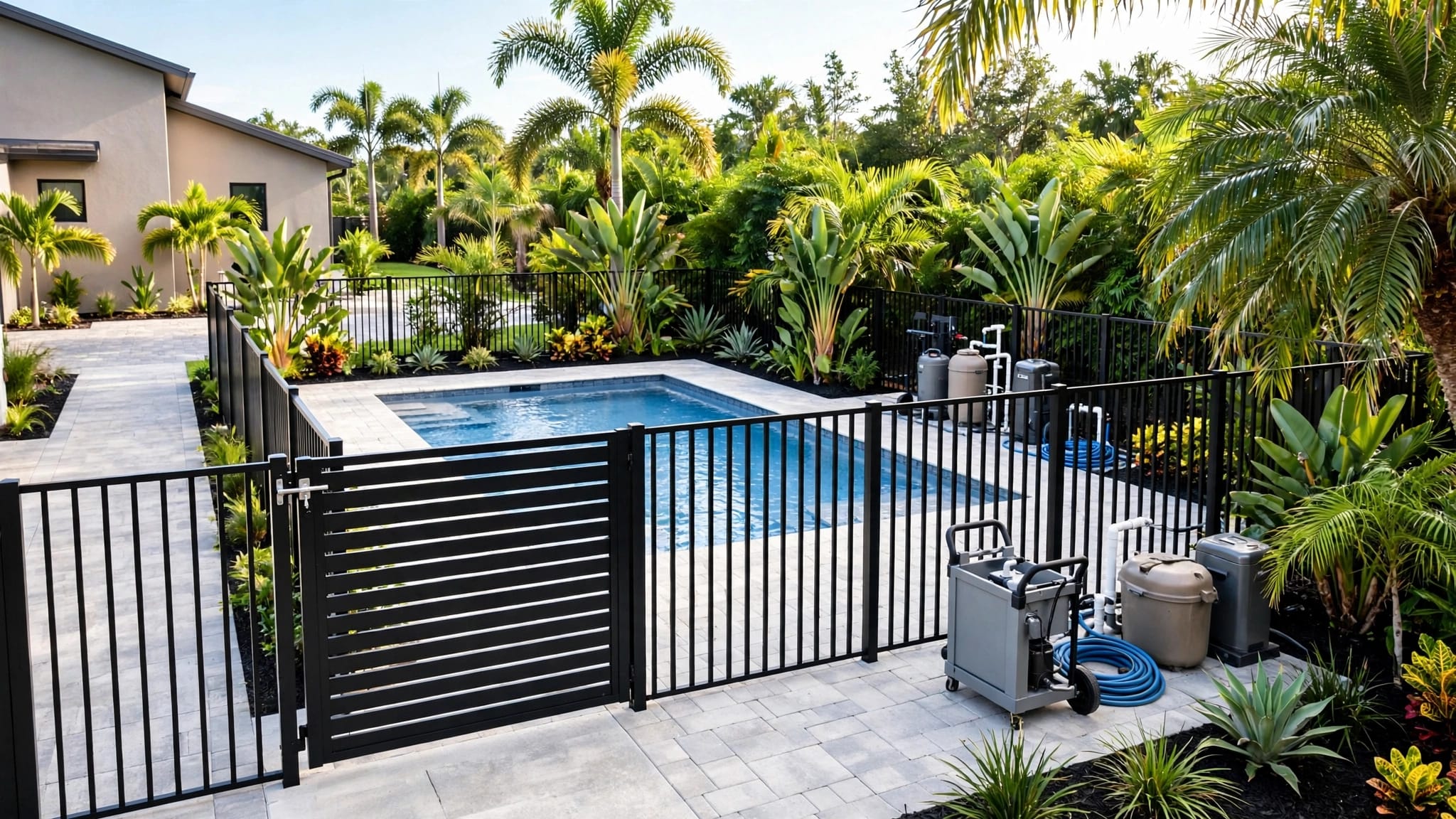
The dark color can make landscaping look fuller because green plants stand out against it. It also gives a pool enclosure a defined outline without blocking the view. Open pickets maintain visibility while creating a clear boundary around the pool or yard.
Black may be the better fit when:
- Your home has white, gray, or cool beige finishes.
- You want the fence to create a strong visual border.
- Your property uses modern lighting, dark trim, or contemporary pavers.
- You prefer a color that remains easy to coordinate with gates and hardware.
Black can look too severe beside a home with warm yellow, orange, or heavily textured finishes. That doesn't make it wrong, but the contrast will be more noticeable.
Choose bronze for a warmer blend
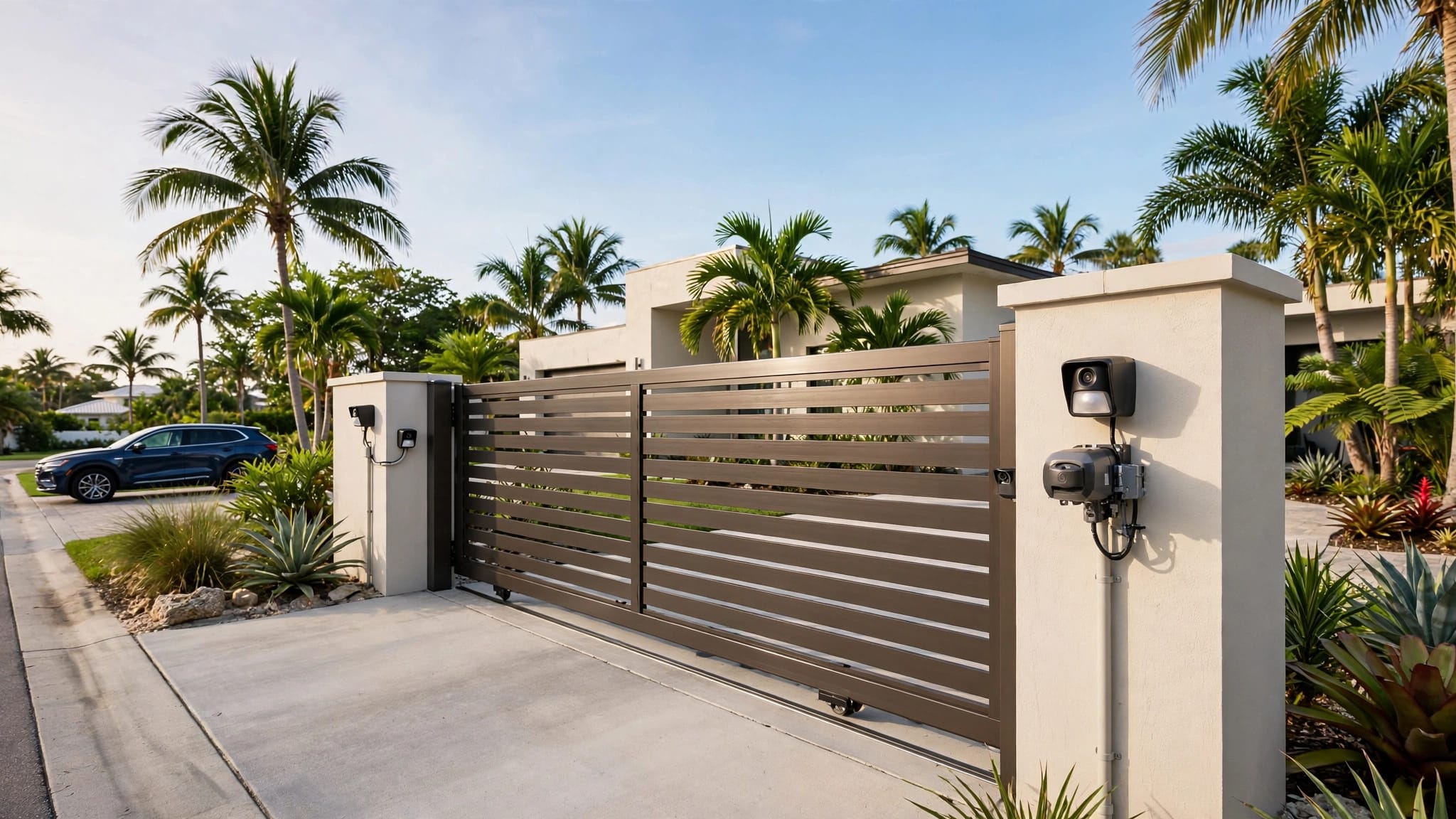
Bronze aluminum fencing complements tan stucco, cream siding, brown roofs, brick, stone, and wood details. Its softer contrast can help a fence blend with mature planting beds and natural materials.
Bronze is often a comfortable choice for traditional homes, Mediterranean-style architecture, and yards with terracotta pavers. It can also work well when you want the fence to define the property without drawing attention away from the house.
When you compare black vs. bronze aluminum fences , look at samples outdoors. A color that appears dark in a showroom may look different under midday sun, shade, or warm exterior lighting. Place samples near the stucco, pool deck, or driveway if possible.
Finish Quality Matters More Than Color
A high-quality color finish should cover the aluminum evenly and resist ordinary outdoor exposure. Ask the contractor how the material is prepared before coating and whether the manufacturer specifies a powder-coat standard.
The fence should also use hardware suited to the local environment. Standard hardware may not be the right choice for a home near salt air or a chlorinated pool. Ask whether hinges, screws, brackets, and gate latches are compatible with the aluminum and the conditions around your property.
Post installation matters just as much. A fence must have properly spaced posts, suitable concrete footings, and gates that align correctly. In storm-prone areas, the height, picket spacing, post size, and anchoring method all affect how the fence handles wind. Local requirements may also affect the design, especially for pool barriers and corner lots.
A professional aluminum fence installation can account for these details before materials arrive. The contractor should review property lines, slopes, gates, utility locations, drainage, and any HOA requirements during the planning process.
Cleaning and Maintenance in Southwest Florida
Aluminum fencing doesn't require the same repainting routine as wood or untreated steel. However, low maintenance doesn't mean no maintenance.
Rinse the fence with fresh water when dust, salt, or sprinkler residue builds up. A garden hose is often enough for routine cleaning. For heavier buildup, use a soft cloth or soft-bristle brush with mild soap and water. Avoid abrasive pads and harsh chemicals that can damage the coating.
Keep sprinklers aimed away from the fence when possible. Irrigation water can leave repeated mineral deposits on both black and bronze surfaces. Trim plants that rub against the panels, and remove leaves or damp debris that collect around posts and gates.
Inspect the fence after major storms. Look for:
- Loose posts or gate hinges.
- Scratches that expose lighter aluminum beneath the finish.
- Damaged latches or misaligned gates.
- Corrosion near fasteners or metal connections.
- Soil erosion around posts.
Black may show scratches and pale residue sooner. Bronze may hide minor dirt, but it still needs the same inspection and cleaning routine. A deep scratch should receive prompt attention because the exposed area can collect moisture and salt.
Does Color Change the Installed Price?
Usually, the biggest cost differences come from fence height, total linear footage, gates, site access, terrain, removal of an existing fence, permits, and pool-related requirements. Black and bronze are common aluminum finishes, so the color alone may have little effect on the estimate.
For planning purposes, a 2026 Cape Coral guide places many installed aluminum fence projects between $25 and $50 per linear foot , including typical materials and labor. Actual pricing depends on the project details. This aluminum fence quote guide explains why two properties with similar fence lengths can receive different estimates.
Ask each contractor whether the quote includes:
- Fence panels, posts, caps, and hardware.
- Walk gates and drive gates.
- Old fence removal and disposal.
- Permit or inspection costs.
- Pool barrier modifications, if applicable.
- Slope adjustments and difficult access.
- Coastal-grade hardware or upgraded finishes.
A written estimate makes it easier to compare black and bronze options fairly. It also prevents the color conversation from overshadowing more important construction details.
How to Choose Between Black and Bronze
Start with the fixed colors around your home. If your trim, roof, and pavers are cool-toned, black may create a cleaner connection. If your stucco, stone, roof, and planting areas have warm tones, bronze may blend more naturally.
Next, consider the fence's role. Black often works well when you want visible structure around a pool, driveway, or front yard. Bronze is a strong option when the fence should recede into a warm exterior or established garden.
Your location also matters. Near the coast, focus first on the coating system, hardware, and maintenance plan. Inland homeowners should still consider irrigation spray, humidity, drainage, and sun exposure.
When reviewing samples, check them in the actual installation area. Compare them during daylight, beside the house finish, and near the gate location. The surrounding colors can change how dark or warm the fence appears.
Conclusion
The best choice in the black vs. bronze aluminum fences comparison depends on the home's exterior, the amount of contrast you want, and the conditions around the property. Black creates a sharper outline and pairs well with light or modern finishes. Bronze offers a warmer appearance that often blends with tan stucco, stone, wood, and traditional designs.
Both can work well in Florida when the fence has a quality powder coat, suitable hardware, secure posts, and regular rinsing. Choose the color that fits your home, then give equal attention to the installation details that protect the fence for years.