June 20, 2026
Fence post spacing in Cape Coral usually starts at 6 to 8 feet , but the right number depends on the fence type, height, and how much wind hits your yard.
A privacy fence on an open lot needs tighter support than a light aluminum fence in a sheltered space. Sandy soil, heavy rain, and gate openings also change the layout fast.
Get the spacing wrong, and a fence can lean, rack, or loosen long before it should. The safest plan is to match the spacing to the material and the conditions on your property.
The short answer for Cape Coral fences
For many homes in Cape Coral, 6 feet apart is a smart default. It gives a fence enough support without adding unnecessary cost or stress to the frame.
That said, 6 feet is not a one-size-fits-all rule . Solid panels, tall fences, and exposed lots often need posts closer together. Lighter, open-style fences can sometimes stretch farther between posts.
If your yard faces open water, wide open ground, or a strong wind path, tighter spacing is usually the better call. On the other hand, a sheltered yard with a lower, lighter fence may handle a wider span.
If you're comparing fence styles, the fence and landscape services in Cape Coral page is a useful place to see the main options.
Fence post spacing by fence type
Different materials behave in different ways. A fence that looks simple from the street may need very different support behind the scenes.
| Fence type | Common post spacing | What to know |
|---|---|---|
| Wood privacy fence | 6 feet, sometimes closer | Taller panels and heavier boards need more support, especially in wind. |
| Vinyl fence | 6 feet, sometimes 4 to 6 feet | Follow the panel maker's spec, because vinyl can flex if spans run too long. |
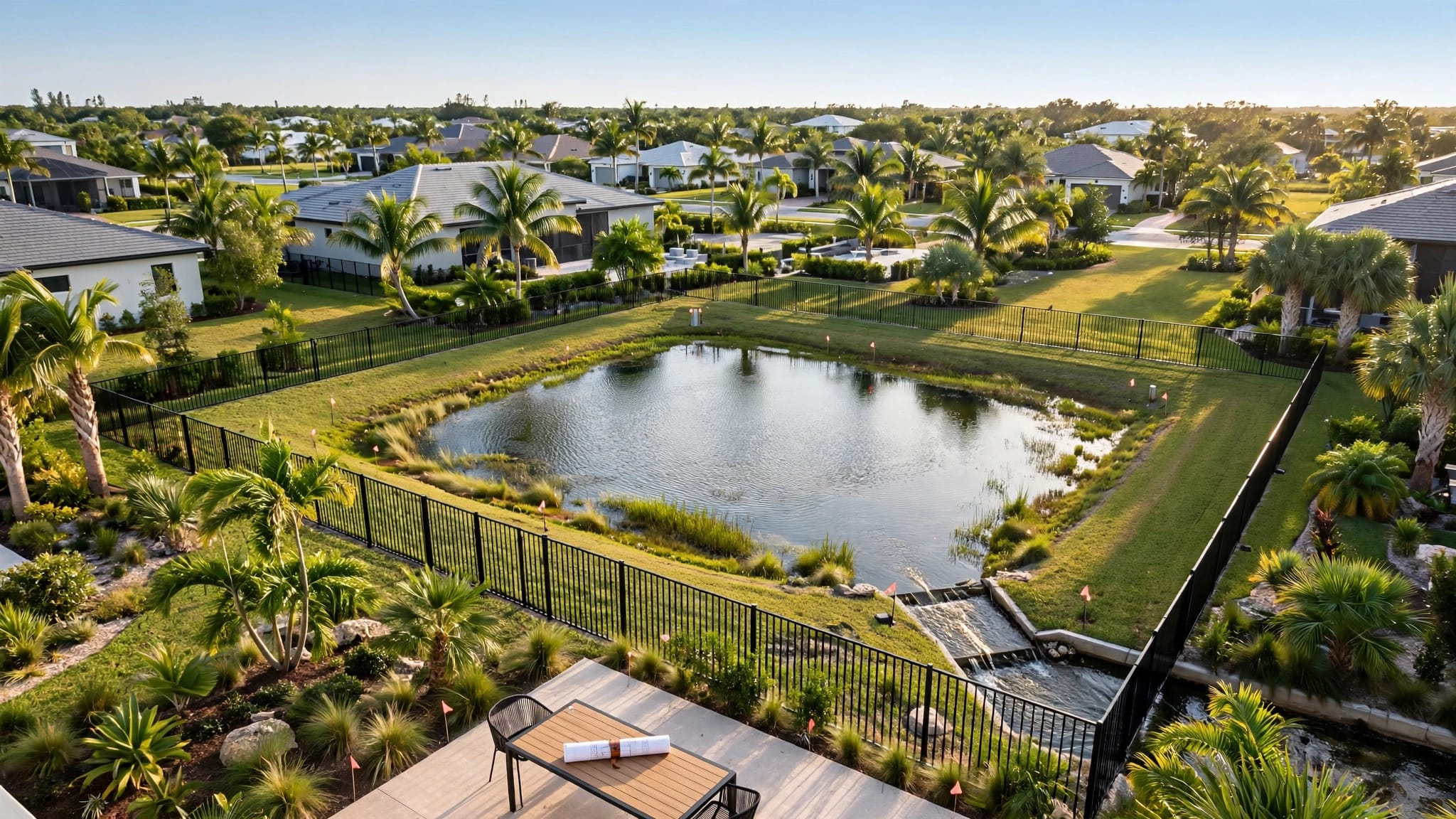
| Aluminum fence | 6 to 8 feet | Open picket styles handle wind better, but gate areas still need extra support. |
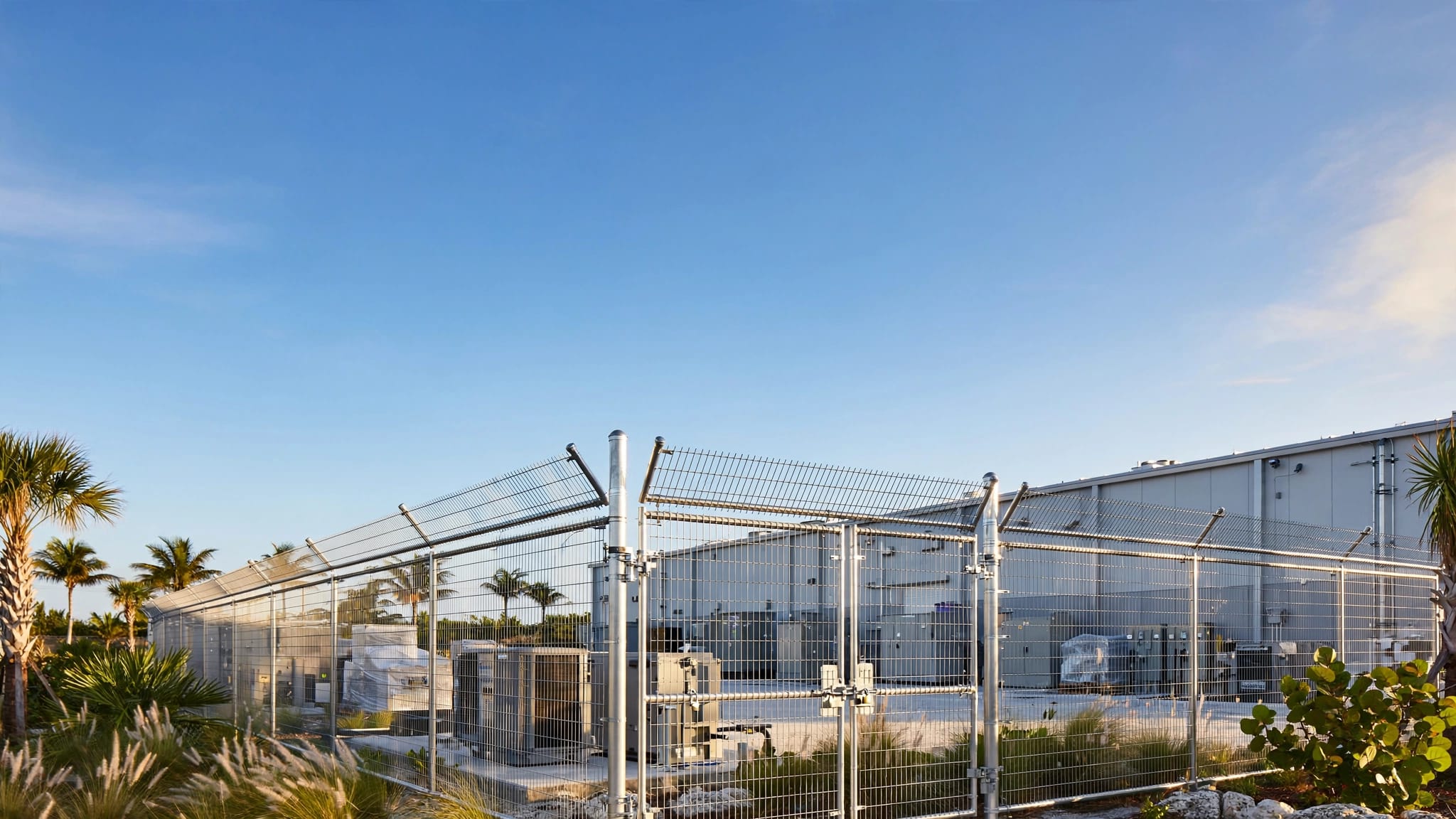
| Chain link fence | 8 to 10 feet | Wider spacing is common, but tall runs and high-tension sections may need closer posts. |
Wood and vinyl usually need the tightest spacing because they catch more wind. Aluminum and chain link can often stretch farther because they let air pass through.
Still, the manufacturer's instructions matter. A fence system is only as strong as its weakest part, and post spacing is a big part of that.
Cape Coral conditions that change the number
Cape Coral weather puts real pressure on fences. Strong gusts, tropical systems, and storm seasons all push against long fence runs like a hand against a door.
Solid privacy fences catch the most wind. That means a long stretch of wood or vinyl can twist if the posts sit too far apart. Corner posts and end posts also take more stress than middle posts, so they need solid footing.
Soil matters too. Cape Coral lots often have sandy or loose ground, and that can shift if the holes are too shallow or poorly packed. Heavy rain can soften the ground around posts, while poor drainage can leave certain areas unstable longer than expected.
A fence post is only as strong as the soil around it. In Cape Coral, drainage and compaction matter almost as much as the gap between posts.
Low spots, filled areas, and places that hold water need extra care. Even the right spacing can fail if the posts are set poorly or the base stays wet.
Gates and heavy sections need tighter support
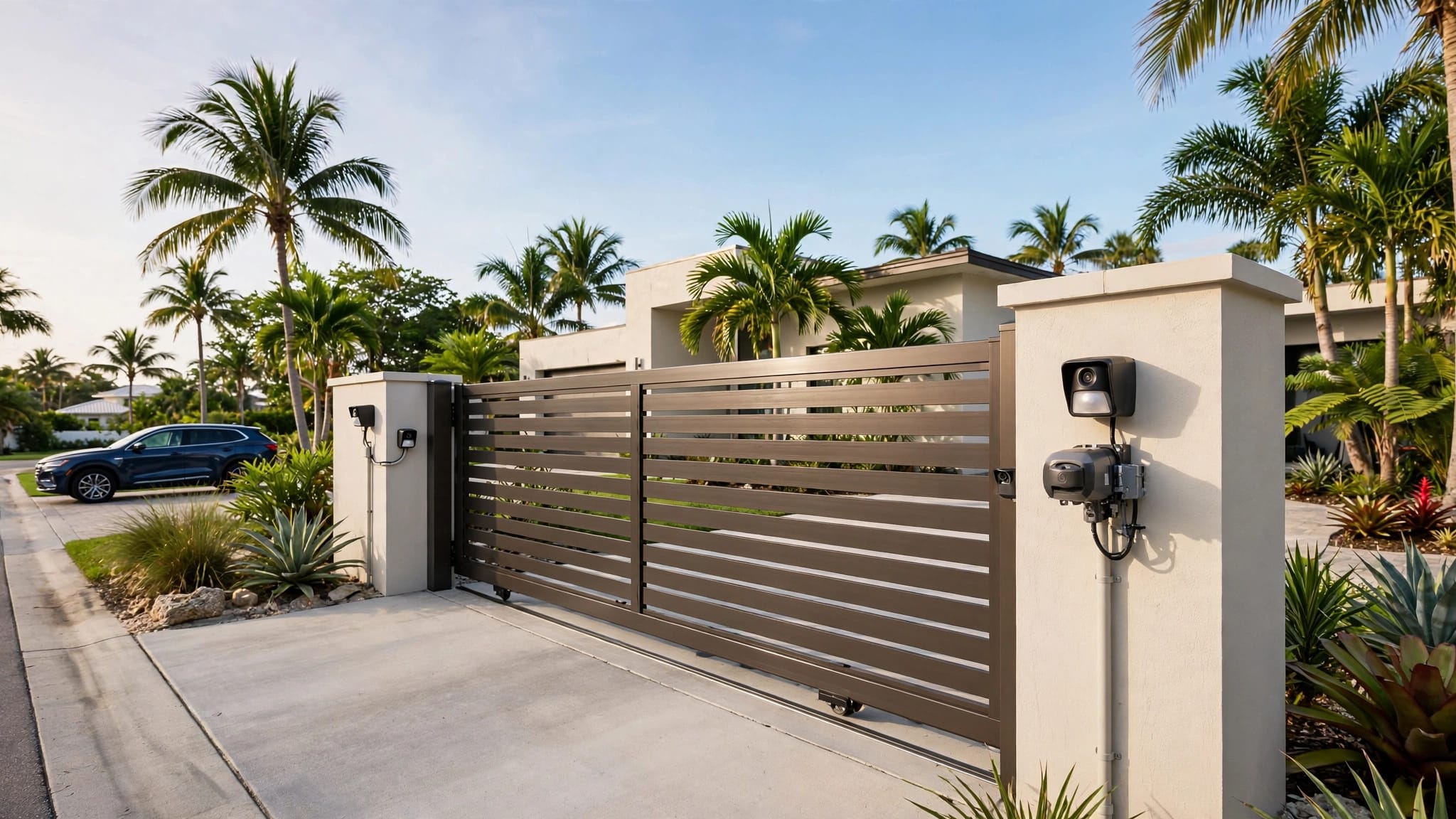
Gate openings need more than standard spacing. A gate swings, pulls, and gets used every day, so the posts around it carry more load than the rest of the fence.
Use heavier posts for gate frames, and keep the span tight enough so the gate doesn't sag. Wider gate openings can work, but they need stronger posts, better hardware, and careful alignment.
This is where many fences fail early. The field sections may look fine, but the gate starts dragging because the posts shifted a little. That's why gate posts often deserve deeper setting and stronger reinforcement than the rest of the run.
Long straight sections can also need closer spacing if the fence is tall or solid. A 6-foot privacy section may look fine at first, then start bowing after a few storms if the posts are too far apart.
Common mistakes that lead to weak fence lines
A few small errors can shorten a fence's life fast.
- Using the same spacing for every fence type
- Skipping the manufacturer's spacing rules
- Making gate posts the same size as line posts
- Setting posts too shallow in loose soil
- Ignoring drainage in low or wet areas
- Forgetting to check current city rules and HOA requirements
That last point matters. Before you build, verify current Cape Coral requirements and any HOA rules directly with the city or your neighborhood association. Rules can change, and some communities have stricter limits than the city minimums.
Good fence post spacing works best when it fits the whole property, not just the material. A wide-open lot, a corner lot, and a sheltered backyard rarely need the same layout.
The right spacing comes down to the fence and the lot
If you want a simple rule, start with 6 feet for many residential fences . Move closer for tall, solid, or wind-prone fences, and stretch farther only when the material and conditions allow it.
Cape Coral fences deal with wind, rain, sandy soil, and gate stress, so the spacing has to match local conditions. A good layout keeps the fence straight, the gate working, and the posts standing where they should.
If you want help figuring out the right spacing for your property, request a free estimate and get the layout handled before the first post goes in.