August 3, 2026
Yes, you can install fence posts in shell fill, but the fill must be checked before the posts are set. Loose shell, mixed debris, or recently placed material may shift under wind and gate loads.
When homeowners search for "fence posts shell fill" , they usually want to know whether concrete alone will hold everything in place. The answer depends on the fill's depth, compaction, moisture, and the type of fence. A fence contractor may need to dig through the shell layer and anchor posts in native soil or properly compacted fill.
Can Fence Posts Shell Fill Support a Fence?
The short answer is yes, if the shell fill is stable and properly compacted . Shell material can provide a firm base when it has been placed in controlled layers and compacted to a suitable density. However, a pile of loose shell around a post doesn't provide the same support.
Fence posts experience more than downward pressure. Wind pushes the fence sideways, while gates add repeated movement near hinges and latches. A tall privacy fence creates more wind resistance than an open picket or aluminum fence. If the surrounding fill shifts, the post can lean even when the concrete footing remains intact.
The best installation often involves removing loose shell from the post hole and extending the hole into native soil or approved compacted material. The contractor then installs a footing sized for the post, fence height, soil conditions, and local wind requirements.
A shallow fence with open panels may place less stress on the ground. A six-foot privacy fence, a large double gate, or a fence near an exposed canal needs more support. That difference matters in Cape Coral, Fort Myers, Estero, and Bonita Springs, where sandy ground, heavy rain, and strong storms affect fence performance.
Concrete holds a post in place, but it can't correct unstable soil around the footing.
Why Shell Fill Can Cause Fence Posts to Shift
Shell fill can vary widely across one property. One section may contain compacted shell, while another includes loose fragments, sand, organic material, or construction debris. The surface may look hard enough to walk on, yet the material underneath can settle when it becomes wet.
Water creates another concern. Shell fill often drains well, but drainage doesn't automatically mean stability. Water can move through loose material and carry fine soil with it. Saturated areas may also lose strength during extended rain.
A post hole in loose shell can collapse while someone digs. That makes it harder to maintain the correct diameter, depth, and post position. The fill can also fall back into the hole, leaving gaps around the concrete.
Posts may shift for several reasons:
- The shell fill was placed without adequate compaction.
- The fill is deeper than the planned footing.
- Rain has softened the material beneath the post.
- The hole has an uneven shape or contains loose shell.
- Post spacing is too wide for the fence design.
- A gate transfers extra movement into nearby posts.
- The fence catches more wind than the footing can resist.
A concrete collar around the post won't solve every problem. If the entire fill layer moves, the concrete and post may move with it. The footing needs stable material below and around it.
Check the Fill Before You Dig
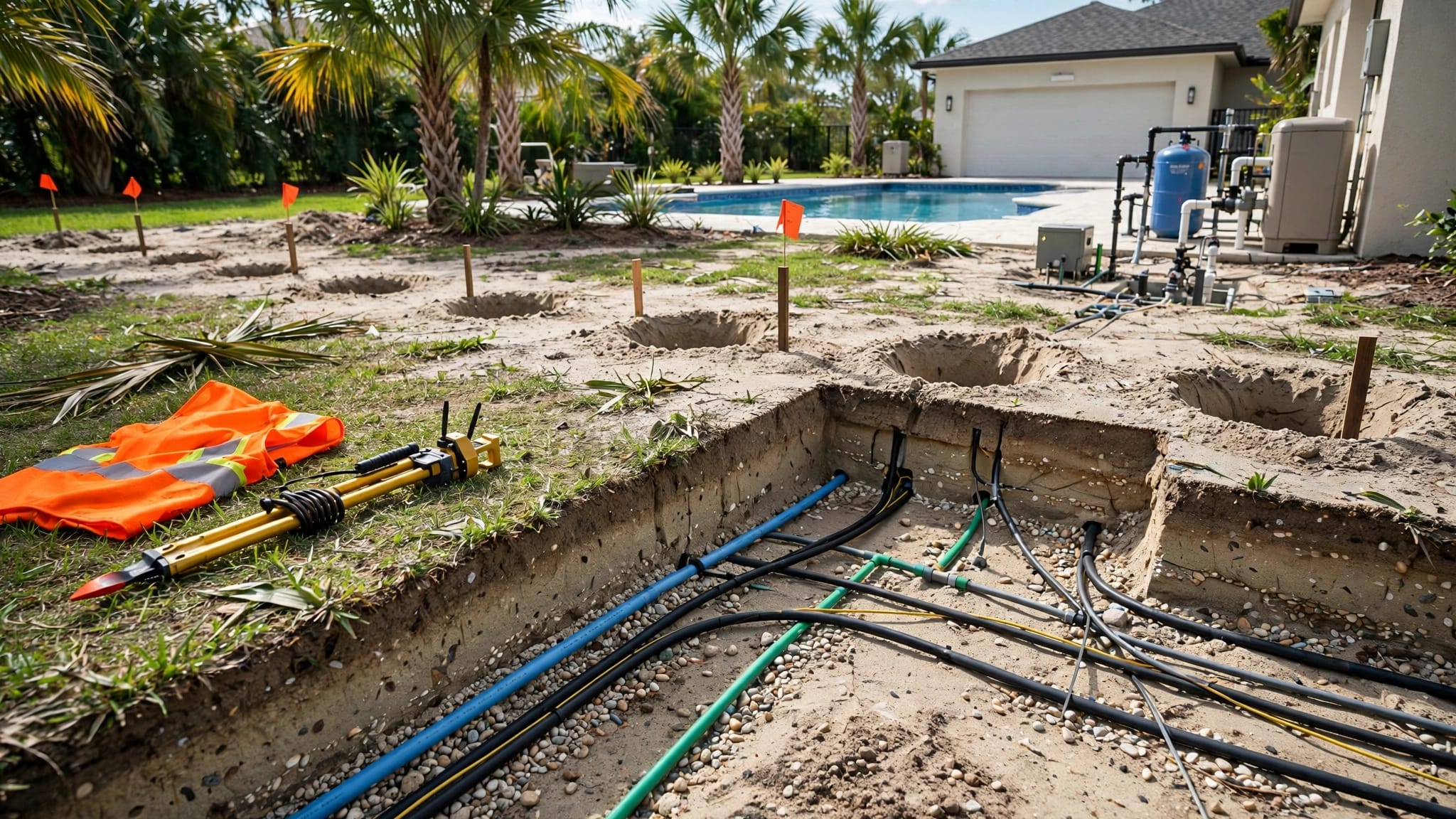
A contractor should inspect the proposed fence line before choosing a post depth or footing method. Start by confirming the property line, checking for drainage features, and contacting Sunshine 811 or the applicable utility-locate service before digging.
A few test holes can reveal more than the surface does. The installer can check whether the shell layer is shallow or deep, whether the material stays firm when disturbed, and whether native soil sits below it. A soil probe or hand auger can help identify changes between post locations.
The following conditions call for extra care:
| Site condition | Likely concern | Possible response |
|---|---|---|
| Thin, compacted shell over native soil | The top layer may provide limited support | Extend the footing into stable soil |
| Deep or loose shell fill | Posts may settle or lean | Obtain a deeper soil assessment |
| Wet or low-lying area | The hole may collapse or lose strength | Adjust drainage and footing details |
| Tall privacy fence | Greater wind pressure | Use closer spacing and deeper footings |
| Fence gate location | Repeated swinging and latch loads | Reinforce hinge and latch posts |
| Unknown fill with debris | Difficult digging and uneven support | Remove unsuitable material before setting posts |
The fill's history also matters. Recent grading, driveway work, pool construction, or drainage changes can leave different materials along the same fence line. If no one knows how the shell was placed, don't treat it as engineered fill.
For Southwest Florida sites, review concrete footing guidance for sandy soil before finalizing the layout. The correct depth depends on the actual site, not a single rule used for every fence.
How to Install Fence Posts Through Shell Fill
The installation method should match the fill and the fence design. A typical process includes these steps.
- Mark every post location carefully.
Lay out corners, ends, gates, and line posts before digging. Confirm the fence won't cross a property line or block drainage. - Dig a test hole at a representative location.
The installer should identify the shell depth and check whether the material holds its shape. Conditions near a gate may require separate testing. - Remove loose or unsuitable fill.
If shell collapses into the hole, the crew may need to excavate wider, remove more material, or use temporary support. Deep fill may require an engineer's recommendation. - Reach stable soil or a designed bearing layer.
Extending the post into native soil often gives the footing a better base. If the fill is approved and well compacted, the footing may remain within it, but that decision belongs to the installer or engineer. - Set the post plumb and align it with the fence line.
Bracing keeps the post from moving while the concrete cures. Corner posts and gate posts need careful alignment because small errors affect the entire fence. - Use the specified footing material and dimensions.
Concrete diameter and depth depend on post size, fence height, wind exposure, and soil. A larger or deeper footing may be needed for solid panels and gates. - Shape the top of the concrete to shed water.
When the design uses concrete at grade, the top should sit slightly above surrounding soil and slope away from the post. This helps prevent water from pooling at the base. - Allow the footing to cure before loading the post.
Follow the concrete manufacturer's directions. Attaching heavy panels or hanging a gate too soon can disturb the post.
In wet shell fill, a contractor may specify clean gravel or another drainage detail at the bottom of the hole. That choice depends on the footing design. Loose shell fragments shouldn't be added as a substitute for a properly sized base.
Post spacing also affects stability. Many residential layouts begin near six to eight feet, but solid panels, taller fences, and windy yards may need closer spacing. Review these fence post spacing guidelines for Cape Coral when planning a local project.
Match the Footing to the Fence Type
Fence material changes the amount of force each post must handle. The same hole size may work for one design and fail for another.
Open aluminum and picket fences allow more wind to pass through. They still need sound footings, especially at corners and gates, but their panels usually place less continuous pressure on posts.
Vinyl privacy fencing has broad, solid sections that catch wind. The posts and connections need firm support, and the manufacturer may require specific reinforcement or installation details. Shell fill that shifts under the footing can cause panels to bow or pull out of alignment.
Wood privacy fences also create substantial wind load. Their weight increases as the fence absorbs moisture, so weak or shallow footings can lead to leaning posts. Chain-link fencing has open mesh, yet terminal, corner, and gate posts still carry high tension and movement.
Gate posts deserve separate attention. Hinges, latches, drop rods, and repeated opening cycles place stress on the surrounding soil. A gate that works during the first week can begin dragging later if its posts settle.
When to Call a Fence Contractor or Engineer
A professional assessment makes sense when the shell fill is deep, wet, recently placed, or inconsistent. It also helps when the fence will be tall, solid, close to a waterway, or exposed to strong wind.
Local building codes may set requirements for height, setbacks, permits, footing depth, and wind resistance. Those rules can vary by municipality. A contractor should confirm the requirements for your property before installation, while an engineer may be needed for unusual fill, retaining conditions, or a high-load gate.
Ask the installer how they plan to verify the fill, where the post bottoms will bear, and how they will handle holes that collapse. You should also receive a layout that identifies corners, gates, post spacing, and any areas requiring special treatment.
A professional crew can adjust the plan when field conditions differ from the initial estimate. On installation day, the work generally includes a layout review, post digging, setting, fence assembly, gate installation, and cleanup. You can review what to expect on fence installation day before work begins.
Conclusion
Fence posts can work in shell fill when the material is stable, compacted, and suitable for the planned footing. Loose or unknown fill needs more attention because concrete cannot stop an unstable soil layer from shifting.
For fence posts shell fill projects in Southwest Florida, the safest plan is to inspect the ground, account for wind and gate loads, and anchor each post in stable material or a professionally designed footing. A careful site assessment matters more than relying on shell fill's appearance.