September 10, 2026
A sidewalk can make a simple backyard fence plan much more complicated. Cape Coral fence layouts must account for the visible edge of the yard, pedestrian access, driveway sight lines, and the actual property boundary.
The sidewalk may feel like the front edge of your lot, but it isn't a reliable marker for where posts belong. A well-planned layout keeps the front of the home open, gives the backyard privacy, and avoids expensive changes after installation.
Why Sidewalks Change a Fence Layout
Sidewalk-facing properties need a plan that works from both the street and inside the yard. The goal is to create a clear boundary without crowding the walkway or blocking views where people drive, bike, and cross the street.
The sidewalk edge is not automatically your property line
Do not use the edge of concrete as a fence-line reference. The sidewalk can sit near a public right-of-way, a utility area, or a drainage feature that does not match your lot boundary.
Start with a current survey, then compare it with the recorded plat, deed information, and any survey notes. Old fences, hedges, and a neighbor's improvements can all create a misleading visual boundary.
A Florida-licensed surveyor can locate corners and identify recorded easements. If a document is unclear, a real estate attorney can explain what an easement allows and how it may affect a proposed fence.
Easements deserve attention before posts go in
An easement can give a utility provider, drainage authority, municipality, or other party access rights across part of a property. A fence may be possible in some easement areas, but it could require a certain design, access route, or later removal.
Review the survey before selecting gate locations or ordering materials. Also mark visible utility boxes, irrigation controls, drainage swales, cleanouts, and air-conditioning equipment during the initial walkthrough.
A fence that follows the visible yard edge can still interfere with an easement or fall outside the actual parcel line.
Cape Coral Fence Layouts That Work Beside Sidewalks
The right layout depends on your home's position, driveway, corner conditions, and how you use the yard. These concepts offer useful starting points, but final placement must match your survey and current City requirements.
| Layout approach | Best fit | Main planning priority |
|---|---|---|
| Straight side-boundary run | Interior lot with a clear side yard | Confirm the boundary and utility conditions |
| Setback side return | Homes needing an open-looking front yard | Place the return where it preserves access |
| Open front section with privacy rear | Lots needing curb appeal and backyard screening | Transition materials or heights behind the home |
| Pulled-back corner layout | Corner lots near an intersection | Protect required sight lines |
A mixed layout often looks more natural than carrying one tall, solid fence all the way to the sidewalk.
Use a side return to screen the backyard
A side return begins along the side boundary and turns inward near the home, garage, or another approved reference point. It can screen patio furniture, pool equipment, pets, or a side yard while leaving more of the front elevation visible.
This layout works well for front-entry garage homes. However, the garage face, driveway shape, and property lines may change where the fence can begin. Walk the route before finalizing it, including the path from the driveway to the backyard.
Combine an open front with a private rear yard
Many homeowners prefer aluminum pickets, spaced panels, or a low decorative section near the sidewalk. Then, behind the house, they switch to vinyl or wood privacy fencing.
That approach can make a smaller lot feel less enclosed from the street. It also directs solid screening toward the spaces where privacy matters most. Review residential fencing options in Cape Coral before deciding whether one material or a blended design fits your home.
Avoid awkward dead-end spaces
A fence return that lands too close to a driveway, front walk, or side door can create a narrow strip that is hard to mow and difficult to use. It may also make trash-bin access and exterior maintenance frustrating.
Mark the planned runs with string or marking paint after confirming the boundary. Then walk the route while carrying a garbage bin, rolling a mower, or opening the proposed gate area. Everyday movement often reveals layout problems that a sketch misses.
Corner Lots, Driveways, and Sight Lines
Sidewalks become more sensitive near driveway exits and intersections. A tall or solid fence can limit what a driver sees when backing out, and landscaping can create the same problem.
Keep visibility areas clear
Cape Coral's Code of Ordinances includes visibility-triangle standards near intersecting streets, driveways, alleys, and bicycle paths. Within a visibility triangle, the area between 30 inches and 8 feet must remain unobstructed.
That rule can affect fences, gates, walls, hedges, shrubs, signs, and decorative features. Property owners also remain responsible for maintaining landscaping in those areas.
A corner lot needs added attention because it has two street-facing sides. Treat both sidewalk corridors as part of the layout conversation, rather than assuming the side street functions like a typical backyard boundary.
Pull back, step down, or choose open pickets
When a proposed fence approaches a driveway or corner, a contractor may recommend ending the solid section earlier, pulling the fence farther into the lot, or changing to an open design where sight lines matter.
Aluminum pickets and spaced wood designs can help retain a defined edge without creating a solid visual barrier. Still, openness alone does not confirm compliance. Confirm the applicable triangle and layout with the City of Cape Coral before work begins.
For more detail on these conditions, review Cape Coral fence height rules for front yards and corner lots.
Choose Materials for the Layout, Not Just the Look
Material should support the fence's location and purpose. A sidewalk-facing section may need a lighter visual profile, while a rear-yard run may need full privacy or pet containment.
Vinyl works well for enclosed living areas
Vinyl privacy panels create a clean, consistent boundary around patios, pools, and backyard seating areas. They are also low-maintenance and don't require painting or staining.
However, a solid panel fence catches more wind than an open picket style. Posts, footings, rails, gates, and hardware need the right specifications for the chosen system and site conditions.
Wood can offer a warmer appearance, yet it needs regular care in Southwest Florida's heat, rain, humidity, and insect pressure. If you are weighing the two, wood versus vinyl privacy fencing can help narrow the choice.
Aluminum keeps the front visually open
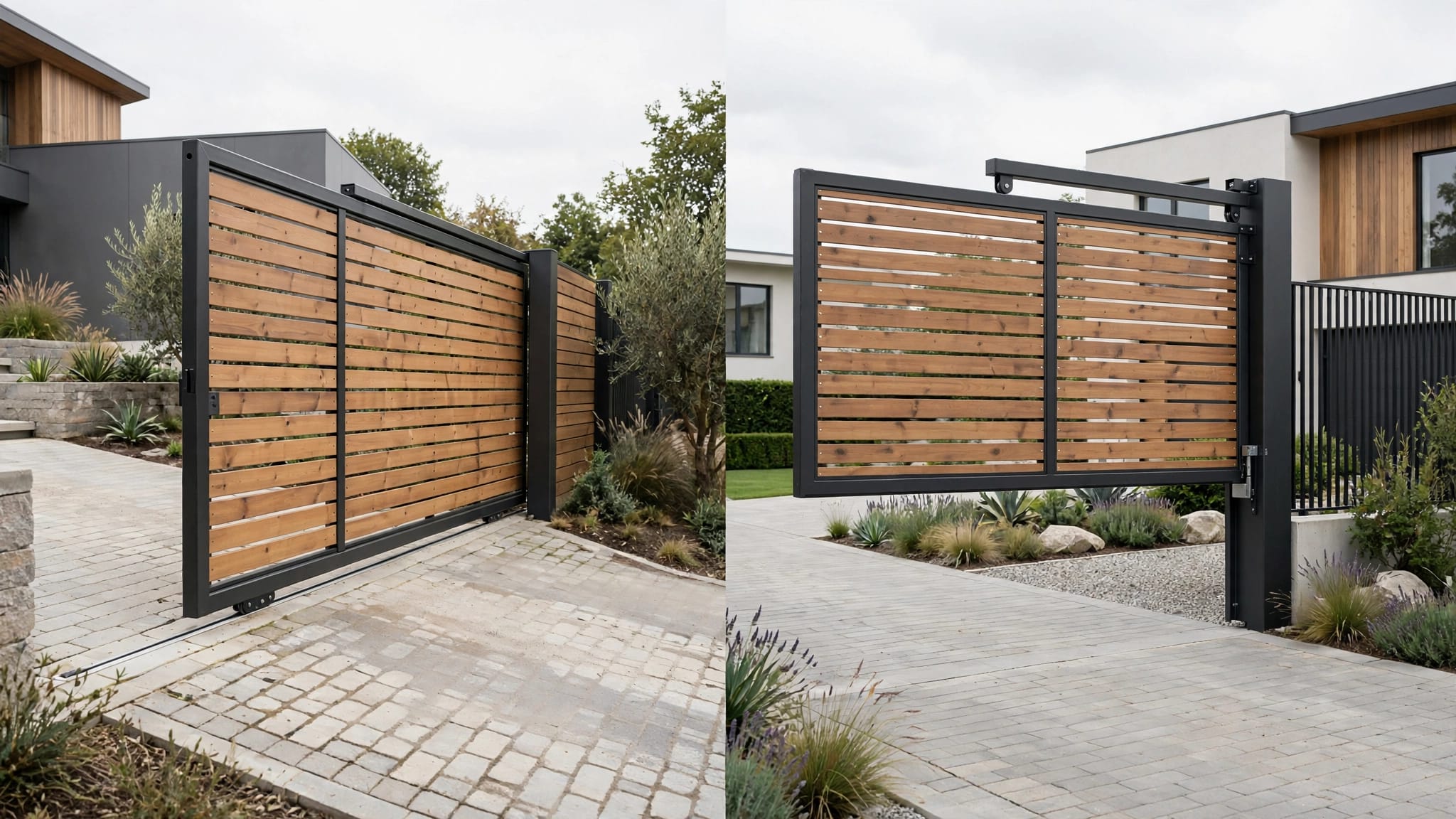
Powder-coated aluminum is a practical option for front and side sections where you want a defined boundary without a solid wall. Its open pickets can suit driveway approaches, street-facing yards, and areas where visibility is important.
Chain link can also work for pet areas or larger side yards, especially when budget and visibility matter more than privacy. Compare the materials against your maintenance expectations, desired privacy level, and the way wind moves across your lot.
A vinyl and aluminum fence comparison can help you decide where each style fits best.
Plan Gates Around Daily Access
A gate isn't a leftover opening between two fence panels. It affects how you bring in equipment, reach outdoor systems, move bins, and access the side yard.
Put walk gates where people already travel
A walk gate often belongs near the driveway, side door, pool area, or rear patio. Its exact location should allow a person to enter without crossing landscaping beds or squeezing past mechanical equipment.
Before choosing the swing direction, check for cars, steps, hose bibs, utility equipment, and the sidewalk route. Keep the gate from opening into a path where it could interfere with pedestrians or vehicle movement.
Reserve wide access for equipment
A wider gate can make sense if you need to bring in a mower, trailer, pool equipment, pavers, or replacement landscaping. It also needs more room, stronger support, and careful hardware selection.
For narrow side yards, installation access can be limited even when the finished gate works perfectly. Discuss whether crews need temporary access from a neighbor's lot, and get written permission if crossing that property becomes necessary.
Permit, HOA, and Contractor Checks Before Installation
Cape Coral requires a permit for residential fences, and the property must be improved before a fence permit can be issued. Fence details can change over time, so verify current requirements directly with the City of Cape Coral for your address.
Build a clear site plan
A useful plan shows the house, driveway, sidewalks, property lines, fence runs, gates, proposed height, and known easements. It should also call out corner-lot conditions, canal features, or drainage areas when they apply.
The City provides an official enclosure and fence application. A complete, readable plan helps reviewers see where the fence goes and whether it conflicts with site restrictions. Use the Cape Coral fence permit checklist to organize surveys, drawings, forms, and specifications.
Get HOA approval in writing
HOA rules may control fence materials, colors, height, gate placement, setbacks, and approval procedures. Those rules do not establish the property boundary, but they can limit what you install.
Read the current covenants and submit the requested drawings before scheduling construction. HOA architectural approval does not replace the City permit, so treat both steps as separate requirements.
Ask your contractor who prepares the layout, pulls the permit, verifies materials, and schedules inspections. Price also depends on material, height, gates, access, demolition, and site conditions. Current Cape Coral fence installation cost factors can help you compare estimates with more confidence.
Key Takeaways
- Start with the survey and recorded easements, not the sidewalk or an existing fence.
- Keep driveway exits, corners, bicycle paths, and pedestrian areas in view while planning the fence line.
- Use an open or pulled-back design where visibility requirements affect the lot.
- Place solid privacy sections where they improve backyard living without crowding the street-facing yard.
- Confirm current City of Cape Coral requirements, HOA rules, property boundaries, easements, utilities, and site-specific restrictions before installation.
Frequently Asked Questions
Can I place a fence directly beside a Cape Coral sidewalk?
Possibly, but the sidewalk edge does not prove where your property ends or where a fence is allowed. Review your survey, property records, easements, and current City requirements before placing posts. Driveway visibility and corner conditions can also affect the final line.
Does a corner lot need a different fence layout?
Usually, it needs closer review. Both street-facing sides can affect the design, and visibility-triangle rules may limit obstructions near intersections, driveways, alleys, or bicycle paths. A lower, open, stepped, or pulled-back section may fit better than a solid fence carried to the corner.
Can an HOA approve a fence that the City will not permit?
HOA approval and City permitting are separate processes. An association may approve a color or style while the City raises a placement, visibility, or easement concern. Secure the approvals required for your specific property before installation begins.
A Safer Way to Plan a Sidewalk-Side Fence
The strongest Cape Coral fence layouts begin with verified boundaries and a realistic view of how the property works each day. Sidewalks, driveways, gates, drainage paths, and corner visibility all deserve attention before materials arrive.
A fence should make the yard more useful without creating access problems or blocking views. Confirm the facts for your lot first, then choose a layout and material that gives you the privacy, curb appeal, and security you want.