September 11, 2026
A fence around gas meter equipment can improve privacy, but only when it leaves the meter safe and reachable. A solid panel in the wrong place can block routine readings, maintenance, emergency shutoff access, or a future gas-line repair.
For homeowners in Cape Coral, Fort Myers, Estero, and Bonita Springs, there is no single clearance rule that fits every property. Your gas utility, meter location, easements, municipality, and fence design all affect the final layout.
Start with access and approval, then choose the fence style and post locations.
Why gas-meter access must lead the fence plan
A gas meter is utility equipment, not a feature to hide behind a permanent wall. Utility crews may need to read, inspect, repair, replace, or shut off the meter without moving panels, cutting locks, or squeezing through a narrow opening.
A fence that leaves a clear path today can become blocked later by a gate swing, shrubs, pool equipment, or stored materials. Plan the entire service route, not only the open space beside the meter.
Keep the meter visible and reachable
Peoples Gas advises customers to keep meters visible and accessible, and its 2026 customer guidance calls for a 3-foot clearance from the meter. That figure is useful for early planning, but it is not a universal Florida rule.
The meter should remain easy to spot from the access side. Avoid placing it inside a closed pen, behind a locked privacy gate, or at the end of a tight corridor. Also keep the utility's shutoff area clear, and ask the provider whether it has a preferred approach route.
Plan for service work, not only meter reading
A technician may need more space than a reader with a handheld device. Repairs can require tools, replacement parts, and a clear place to stand.
A layout that requires a utility worker to remove a fence panel is not a practical long-term access plan.
This matters on narrow Southwest Florida side yards, where air-conditioning condensers, pool pumps, hose reels, and landscaping often compete for the same space. Give the gas meter a dedicated access zone before setting the first corner post.
Check your gas utility's written requirements
The gas utility that serves your address has the strongest voice in meter access. Call before finalizing the drawing, describe the proposed fence, and ask for written placement guidance when available.
Ask whether the meter can sit behind a gate, whether the gate must open in a certain direction, how much clear working space is needed, and whether visibility from the street or side yard is required. Share a simple sketch with dimensions and photos of the area.
Peoples Gas guidance on clearance
Peoples Gas says to maintain 3 feet of clearance around the meter area and keep it visible and accessible. Its guidance also warns against blocking meters with vehicles, decks, or other equipment.
For a property served by Peoples Gas, begin with that 3-foot planning space. Then confirm whether a proposed gate, fence return, or privacy screen affects access from the utility's preferred side.
Pensacola Energy's stricter position
Pensacola Energy requires a 3-foot perimeter around natural gas meters. It also states that gas meters should never be behind a fence and should remain visible and accessible, ideally from the street.
That policy does not automatically govern Southwest Florida homes served by another provider. Still, it shows why homeowners should never assume that a gate solves every access issue. The serving utility must approve the actual arrangement.
Other local standards can add restrictions
The City of Leesburg's gas specifications require 3 feet of clearance around above-ground utilities. They also place gas meters at least 36 inches from known ignition sources, including air-conditioning units and electrical outlets.
Those figures are local specifications, not a statewide rule for every meter. However, they are a reminder to include nearby electrical equipment, vents, doors, windows, and AC pads on the site sketch before planning a fence around gas meter access.
Map the yard before choosing posts and panels
A good fence layout starts with a measured property walk. Bring a tape measure, phone camera, and a copy of your survey or site plan. Photograph the meter from several angles, including the route a technician would use to reach it.
Mark the gas meter, gas riser, electrical meter, water shutoff, irrigation valves, pool equipment, drainage features, gates, property corners, and visible easements. An old fence line is not proof of the legal boundary or a safe route for new posts.
Identify access conflicts early
A meter mounted beside the home may seem separate from the backyard fence. Yet a new gate post can block the walking path, and a fence return can create a corner with too little working room.
Look beyond the meter itself. Measure the clear route from the street, driveway, side yard, or utility easement to the equipment. If an existing AC unit, pavers, or landscape bed already narrows that route, the fence should not make it tighter.
Review surveys and easements
A utility easement can cross private property, even when it is not obvious on the ground. The utility may have rights to enter that area for maintenance and repairs. A fence inside an easement can create removal costs or delays if crews need access.
Review your survey, plat, deed records, and title documents. If the boundary markers are missing or the lot is irregular, hire a surveyor rather than relying on a neighbor's fence or an online map.
Call Florida 811 before fence excavation
Once the utility has reviewed the access concept, request underground utility markings through Florida 811 before anyone digs. Florida Public Utilities lists fence installation among projects that require an 811 locate request.
The service alerts participating utility owners, which mark the approximate location of their underground lines at no cost. Fence posts can conflict with gas, water, electric, cable, communications, and other buried facilities.
Markouts protect public utility lines
Make the request before an auger, shovel, or post-hole digger breaks ground. Pensacola Energy advises calling at least 48 hours before digging, excluding weekends and holidays. Timing and ticket rules can vary, so follow the instructions tied to your request.
After marks appear, compare them with the proposed fence line. If a post conflicts with a marked utility route, stop and revise the layout. Do not treat a narrow gap between paint marks as permission to use powered equipment.
A locate does not approve the fence line
An 811 locate identifies approximate public utility locations. It does not establish property corners, identify every private line, or approve a fence location near a meter.
Private irrigation pipes, landscape-lighting wires, drainage lines, pool equipment connections, and customer-owned gas lines may need separate investigation. Tell the installer about old repairs, soft ground, sprinkler heads, valve boxes, and any unexplained concrete below grade.
Fence layouts that protect access and privacy
The cleanest plan usually places the privacy fence away from the meter rather than wrapping the meter in panels. A short shift in the fence run can preserve service access and still block the view from a patio, driveway, or neighbor's yard.
These common layouts can start the conversation with your utility and fence contractor.
| Layout approach | How it works | Details to confirm |
|---|---|---|
| Offset fence run | The fence stops or turns before the meter area. | Required clearance and a direct service path |
| Open-sided screen | A short return panel blocks a sightline without enclosing the meter. | Utility acceptance and ventilation around equipment |
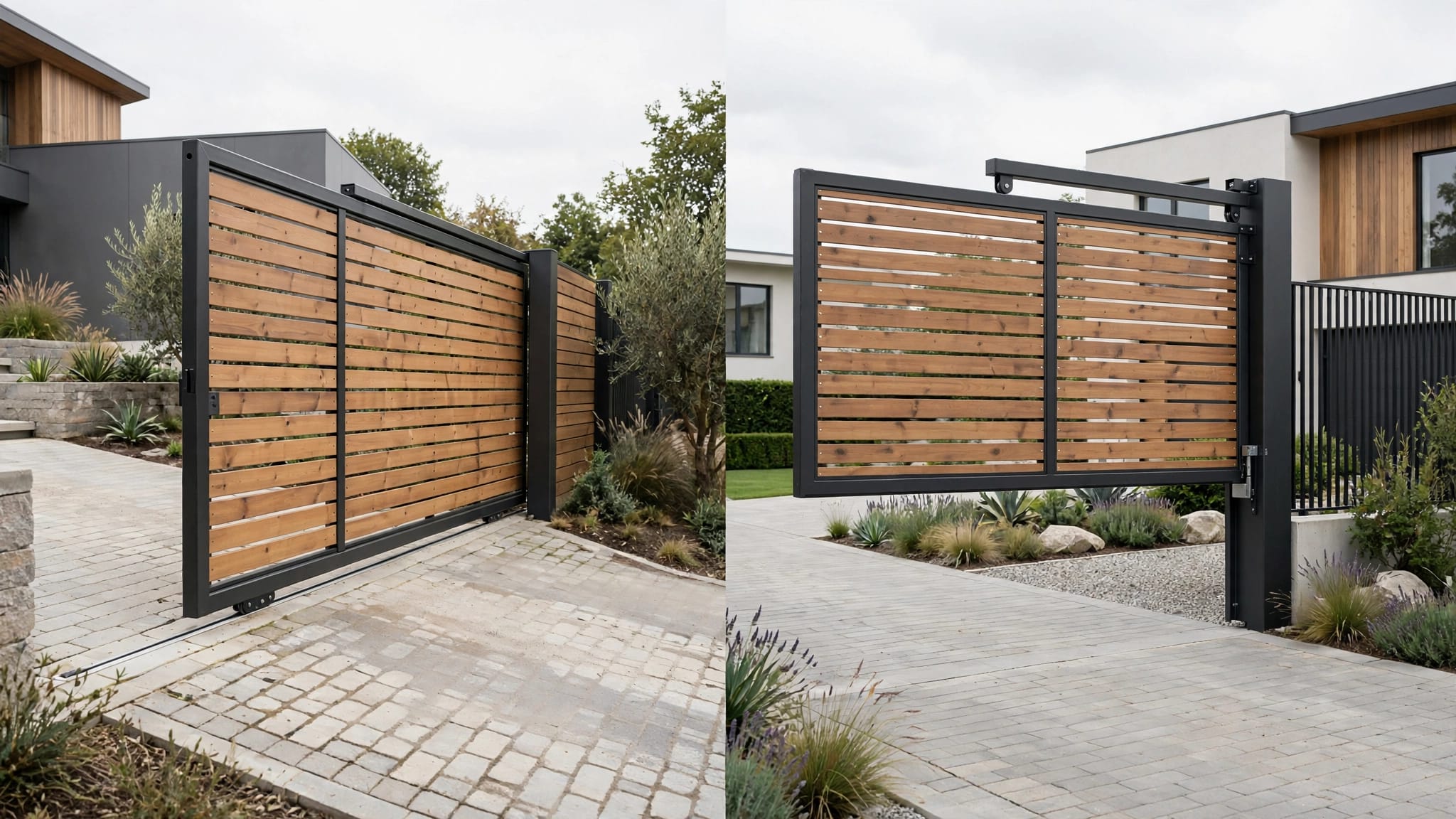
| Approved service gate | A gate provides access beside the meter. | Gate location, width, latch, and utility policy |
An offset run is often the least complicated option. It avoids placing posts close to the service area and keeps the meter outside the fenced yard section.
Shift the fence instead of boxing in the meter
If the meter sits near a side-yard property line, move the fence line inward or end the privacy run before reaching the meter. A return panel farther into the yard can block the view from your outdoor living area without trapping the equipment.
This approach can also preserve space for future repairs. It may cost less than removing and rebuilding a finished vinyl or wood fence after a utility access problem appears.
Use gates only with utility approval
A gate may work for some meter configurations, but it is not a default solution. The gas utility might require unrestricted access, a particular clearance, or an unfenced meter location.
Never assume a locked gate, removable panel, or contractor-installed latch will satisfy the provider. Confirm the exact arrangement before construction. Then keep the gate clear of planters, furniture, grills, and stored yard equipment.
Keep landscaping outside the access zone
Hedges and ornamental grasses can conceal a meter as effectively as a fence. They also grow into service clearances quickly in Florida's warm, wet conditions.
Choose low plantings outside the approved work area, and avoid thorny shrubs near the service path. Leave the meter, shutoff, and fence gate visible after mature growth, not only on installation day.
Coordinate permits, HOA rules, and fence materials
A utility's approval does not replace local permitting. Cape Coral, Fort Myers, Estero, Bonita Springs, Lee County, and individual HOA communities can have different rules for height, setbacks, visibility, materials, drainage, and easements.
Contact the applicable building department or authority having jurisdiction before construction. If the property is in an HOA, get written architectural approval as well. A city or county permit does not override association restrictions.
Choose material after the layout is approved
Vinyl, wood, aluminum, and chain link can all work near utility areas when the approved layout preserves access. The better choice depends on the purpose of the fence, wind exposure, maintenance expectations, and whether the meter must remain in open view.
For example, a short aluminum section may define an area without creating a visual barrier. A vinyl privacy run may work well farther from the meter, where it can screen the yard without obstructing equipment. Review residential fencing services after the clearance plan is confirmed.
Put the approved layout in the installation scope
Give the contractor the same sketch reviewed by the utility and local authority. It should show the meter, required open area, gate location, property line, easements, utility marks, and any no-dig zones.
A clear scope helps prevent a last-minute post move that weakens the fence layout or creates a crooked run. It also gives everyone a record of the access conditions that shaped the project.
Key takeaways before your fence installation
Safe gas-meter access should remain part of the finished design, even after landscaping, outdoor furniture, and pool equipment arrive.
- Contact the serving gas utility before selecting the final fence line or ordering materials.
- Keep the meter and shutoff accessible, visible when required, and free of posts, gates, plants, and stored items.
- Use Florida 811 before excavation, then account for private utilities that standard markings may miss.
- Check current municipal, county, easement, and HOA requirements for your specific address.
- Share the final approved drawing with the fence installer before work begins.
For a Southwest Florida project that needs a site-specific layout, homeowners can request a free fence estimate after gathering utility and property information.
Frequently asked questions
Is there a statewide Florida clearance for every gas meter?
No single statewide distance applies to every meter and fence layout. Peoples Gas calls for 3 feet of clearance, while Pensacola Energy requires a 3-foot perimeter and says meters should not sit behind a fence. Your serving utility and local authority should confirm the rule for your property.
Can I put a privacy fence behind my gas meter?
Do not make that decision without utility approval. A fence behind the meter may block access, reduce visibility, or violate the provider's policy. Moving the fence line or using a non-enclosing screen often creates a better result.
Does calling 811 tell me where I can install posts?
No. Florida 811 markings show approximate locations of participating underground utility lines. They do not approve the fence route, locate every private line, or confirm easements and property boundaries.
Final Thoughts
A well-planned fence gives your home privacy without turning gas service into a future problem. Begin with the utility's access requirements, verify local rules, and locate underground lines before any post holes are dug.
The strongest design keeps the gas meter accessible long after the fence is complete.