September 25, 2026
A gate that opens smoothly for your car can still leave a visitor waiting in the street. A well-placed driveway gate keypad gives approved visitors a way in, but it must work with the gate, operator, and driveway layout.
In Cape Coral, heat, humidity, salt air, and storm outages make those choices more important. Start with how people approach the gate, then choose equipment that fits the site.
How keypad entry works with an automatic gate
A keypad lets someone enter an access code without carrying a remote. When the system accepts the code, it sends an opening command to the gate operator. The operator moves the gate, while separate safety devices help protect people and vehicles in its path.
That means a keypad alone won't turn a manual gate into an automatic one. The gate needs suitable posts, hinges or rollers, an operator, power, and a safe way to enter and exit. If any part drags or shifts, a code won't solve the mechanical problem.
Decide who needs access before selecting controls. A household may want codes for residents, recurring service providers, and occasional guests. A separate pedestrian gate can make sense if people regularly arrive on foot. The installer can then plan each entry point without asking pedestrians to use the vehicle gate.
Choosing a driveway gate keypad for your operator
The first compatibility check is straightforward: can the selected keypad send the command your operator accepts? Confirm the connection method, power requirements, and any additional control equipment with the keypad and operator manufacturers. Don't assume two products will work together because both are sold for automatic gates.
Match the operator to the gate first
Operators have limits for gate size, weight, travel, and frequency of use. A family opening the gate several times a day has different needs from a property with frequent deliveries. The driveway's slope and the gate's condition matter too.
If you already have a manual gate, check whether it opens freely by hand. A sagging leaf or dragging wheel needs repair before automation. These steps to prepare a manual gate for an automatic opener can help frame that conversation with your contractor.
Check what the keypad can manage
Ask whether a prospective system supports separate user codes, temporary access, and a practical way to remove codes. Those features vary by product. If you want to manage entry from a phone or speak with visitors before opening, confirm what extra equipment and service the setup requires.
Put the keypad where a driver can use it safely
A keypad location affects every arrival. Drivers should be able to reach it from a stopped vehicle without pulling into the moving gate's path. They also need room to wait without blocking a sidewalk or creating a queue at the street.
Measure the approach, not only the opening
Walk and drive the route before setting posts. Note the vehicle's turning angle, mirror clearance, and where a driver naturally stops. If you tow a boat, test the approach with the trailer rather than measuring the car alone.
As a starting point, local driveway gate sizing guidance for vehicles and trailers suggests about 12 feet for cars, 14 feet for many trucks, and 16 feet or more for boats on trailers. Your turning room may call for a different opening.
Keep the control out of the gate's travel
A swing gate needs clear space for its leaf. A sliding gate needs space along the fence line. Neither should sweep past a person using the keypad. Compare sliding and swing gates for Cape Coral driveways before fixing the keypad position.
Also check sight lines, irrigation spray, landscaping growth, and drainage. A convenient post location in dry weather may sit in standing water after a summer downpour.
Choose equipment for heat, rain, and salt air
A Cape Coral keypad lives outdoors year-round. Sun heats its face and enclosure; wind-driven rain reaches exposed seams. Humidity and salt air can affect fasteners, terminals, hinges, and operator parts. Waterfront exposure deserves particular attention, but irrigation and persistent moisture matter inland too.
Protect the whole access system
Ask the installer how the selected keypad and its mounting hardware suit the location. Review the manufacturer's environmental specifications rather than assuming every outdoor model belongs on an exposed driveway post.
The operator needs the same scrutiny. Protected connections, appropriate enclosures, corrosion-resistant hardware, and a gate that moves freely all matter. For the motor and related hardware, see these considerations for choosing a gate opener for coastal conditions.
Make inspection easy after storms
Keep vegetation clear of the keypad and gate path. After heavy rain or wind, look for standing water, debris in a track, loose hardware, or a shifted gate before running it repeatedly. If movement sounds strained, stop and arrange service.
A readable keypad can't admit anyone if storm debris prevents the gate from moving.
Give access codes a clear owner
Codes are easiest to manage when one household member knows who has them. If the equipment supports individual codes, assign them by user rather than sharing one number with every visitor. Then a contractor's access can be removed without changing the family's code.
Plan for guests and service visits
Before choosing a driveway gate keypad, consider your routine. Will a cleaner need weekly access? Does a relative visit for several days? Ask whether the model offers temporary or scheduled codes if those controls would be useful.
Share codes directly with the people who need them. Avoid leaving a written code near the gate or including it in instructions visible to passersby. If a service relationship ends, remove that person's access promptly.
Keep a handover record
When the system is installed, ask for instructions on adding and deleting users. Keep the operator manual, keypad information, and authorized manual-release instructions somewhere you can find during an outage. If you sell the home or change property managers, transfer that information and review active codes.
Test a newly assigned code while someone can observe the gate. That catches programming mistakes before a visitor reaches a closed entrance.
Decide what happens when the power goes out
During a utility interruption, an AC-powered operator may stop responding to keypad commands. The gate could remain closed or stop in another position, depending on its equipment and when power fails. A working keypad can't open an operator that has no usable power.
Ask about compatible backup power
Some operators can use a manufacturer-approved battery that charges while utility power is available. Its useful runtime depends on the equipment, battery condition, and gate activity. Compare backup power options for residential gate operators, then have the installer confirm what fits your chosen system.
Account for every device that needs power, including the keypad and any other controls. A battery for the motor alone doesn't answer how the entire entry setup behaves during an outage.
Learn the manual release before you need it
Ask the installer to demonstrate the release and explain how authorized users reach it. Practice the approved procedure while power is on and conditions are calm. Never force a motorized gate without following the operator's instructions.
Also discuss how emergency responders will enter if the gate is closed. The appropriate arrangement depends on the property and local authority's requirements.
Make safety part of installation and testing
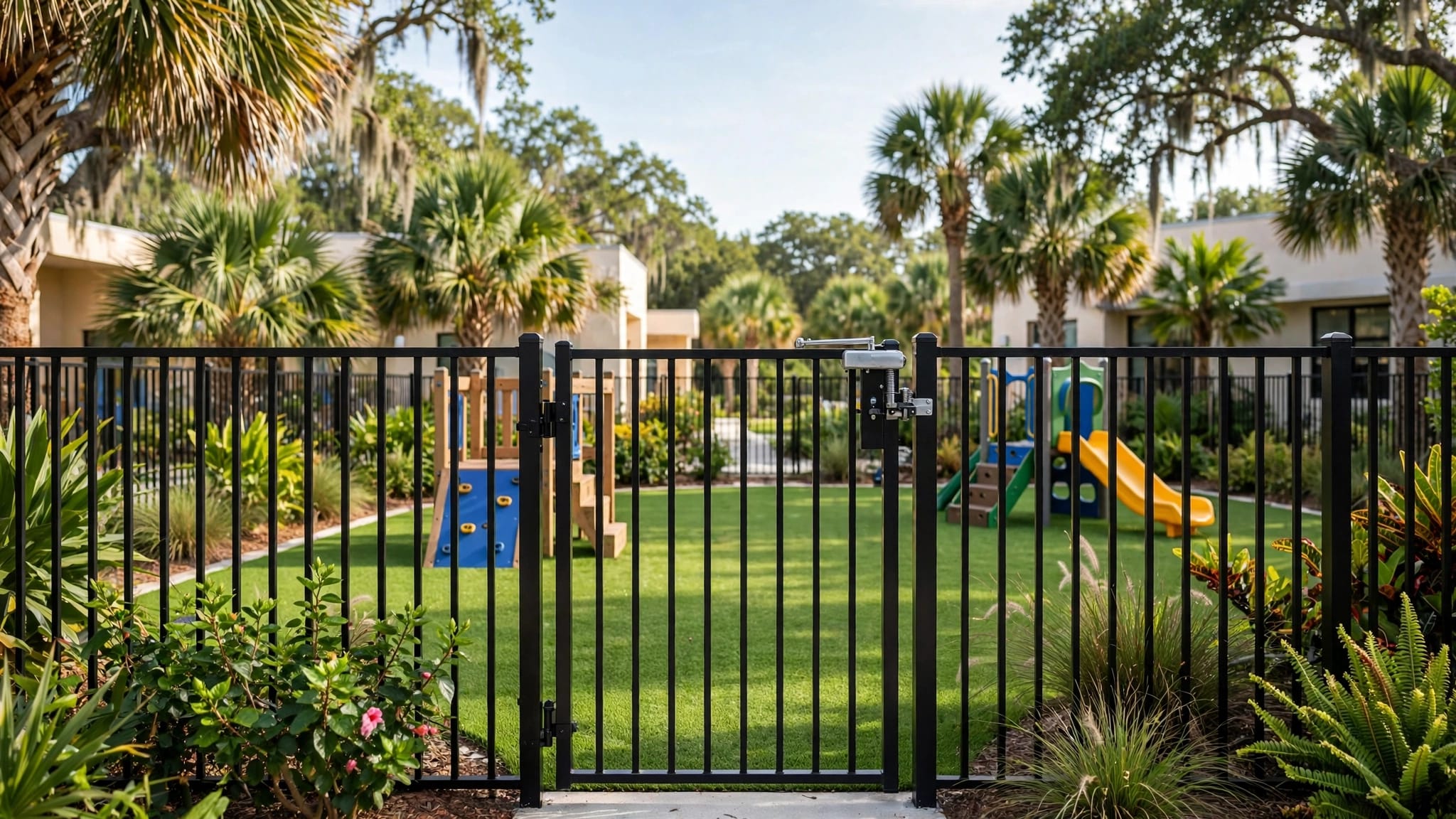
A vehicle gate has moving edges, hinges or rollers, and places where someone could be trapped. The keypad should keep users away from those areas. A separate path for pedestrians may be safer than sending them through the vehicle opening.
The contractor should select the protective devices required for the gate and operator design, then test stopping and reversing behavior. Ask how the installation addresses applicable manufacturer instructions and standards such as UL 325 and ASTM F2200. Never disable a safety device to make an unreliable gate run.
Before accepting the work, watch the gate operate from both directions. Test the keypad, other entry controls, exit method, and manual release with the installer. Repeat the relevant checks after a simulated power interruption. If a safety test fails, resolve it before regular use.
Price the complete project and confirm local requirements
A keypad's purchase price is only one part of the budget. A quote should distinguish the gate and posts, operator, keypad, mounting location, electrical work, safety equipment, and any backup power. An existing gate may also need repairs before it can carry an operator reliably.
Show the contractor your property survey and point out drainage features, utilities, and any HOA requirements. Requirements for the gate, powered equipment, and electrical work depend on the actual scope and site. Review permits for powered driveway gates in Cape Coral, then confirm current installation requirements with qualified local professionals before work begins.
Key Takeaways
- Choose the gate and operator for the opening, vehicle traffic, and site conditions before settling on a keypad.
- Place controls where drivers can stop safely, clear of the gate's movement and drainage trouble spots.
- Confirm code-management features, weather suitability, backup power, and operator compatibility for the exact equipment selected.
- Test safety devices, entry and exit controls, and the outage plan with the installer.
FAQ
Can a keypad be added to an existing manual gate?
Only after the gate has a suitable automatic operator and the supporting controls. First, have a contractor check its posts, movement, and structure. A keypad can't compensate for a gate that sags or binds.
Will a driveway gate keypad work during a power outage?
That depends on how the keypad and operator receive power and whether the complete system has compatible backup. Ask the installer to demonstrate what happens when utility power is off. Learn the manual-release procedure as well.
Where should the keypad go on a Cape Coral driveway?
It belongs where a driver can stop and reach it without entering the gate's path or blocking public access. The exact spot depends on the vehicle approach, gate style, sight lines, drainage, and property layout.
Should everyone use the same entry code?
Separate codes are easier to revoke when a guest or service provider no longer needs access, if the selected equipment supports them. Check its code-management options before buying, and decide who in the household will maintain the active-user list.
A gate you can rely on every day
The most useful keypad is one you can reach safely, manage easily, and still account for when storms interrupt power. Its performance depends on the gate and operator as much as the buttons at the driveway.
Plan the complete entry system around your vehicles, visitors, and Cape Coral site conditions. Then test it before the first guest arrives.