September 26, 2026
A fence can secure a loading dock and still leave a truck with nowhere to turn. For Southwest Florida businesses, dock circulation needs as much attention as the fence material. Good commercial fence planning starts with the vehicles, people, and equipment that use the yard every day.
Before choosing posts or gates, trace how deliveries arrive, back into position, unload, and leave. That route will tell you where a fence can help and where it will get in the way.
Start commercial fence planning with truck movements
Map a complete delivery, not just the property line
Walk the site during a normal receiving period. Note where trucks wait, which dock doors they use, and whether drivers back in from a public road or an internal drive. Mark trailer staging areas, dumpsters, employee parking, and the route to each exit.
Then check the longest vehicles the facility actually receives. A gate may look wide enough on a drawing, yet leave a driver too little room to line up with a dock. Trailer tail swing, tractor position, and turning space all matter. If delivery sizes vary, plan around the demanding regular movement rather than an unusually quiet day.
A contractor can use that marked-up site plan to discuss commercial fence installation without treating every boundary as an identical straight run.
Test the places where traffic crosses
Forklifts may leave the building to reach trailers, storage racks, or an outdoor staging area. Watch those movements before placing posts near dock doors and aisle ends. Keep access to dock equipment, vehicle restraints, and routine maintenance points in the review.
OSHA's rule at 29 CFR 1910.176(a) calls for sufficient safe clearance where mechanical-handling equipment operates, including loading docks, doorways, aisles, and turns. It doesn't set one universal fence setback. The necessary space depends on the equipment and the site's layout.
A gate's clear opening won't solve a tight approach if a truck must make its turn beside a fixed fence post.
Keep pedestrian routes distinct from dock work
Give drivers and employees a usable walking path
A driver who parks outside the gate may still need to reach the shipping office. Employees may walk between dock doors and a break area. Plot those trips alongside the truck and forklift routes, then look for a path that avoids backing zones.
Where practical, use the fence and pedestrian gates to guide people toward a marked crossing rather than through an active trailer position. A gate placed close to a dock door can create an awkward choice: walk around a parked trailer or enter a forklift aisle.
OSHA's powered industrial truck guidance recommends walkways or protective barriers to separate pedestrians and trucks where feasible. Fence placement should support that separation without blocking a driver's view.
Preserve sightlines at corners and approaches
An opaque panel can hide someone approaching a corner. It can also screen a vehicle waiting outside the property. Open fencing may work better near intersections, security checkpoints, and areas where supervisors need to see activity.
Privacy still has a place around stored goods or equipment. Keep it where screening helps, then check sightlines from both sides of nearby gates. Lighting, signs, and cameras also need a clear view of the routes they're intended to cover. If a pedestrian gate leads into a truck lane, moving the gate may do more for safety than adding another warning sign.
Place loading-dock gates around daily operations
Choose the opening and motion together
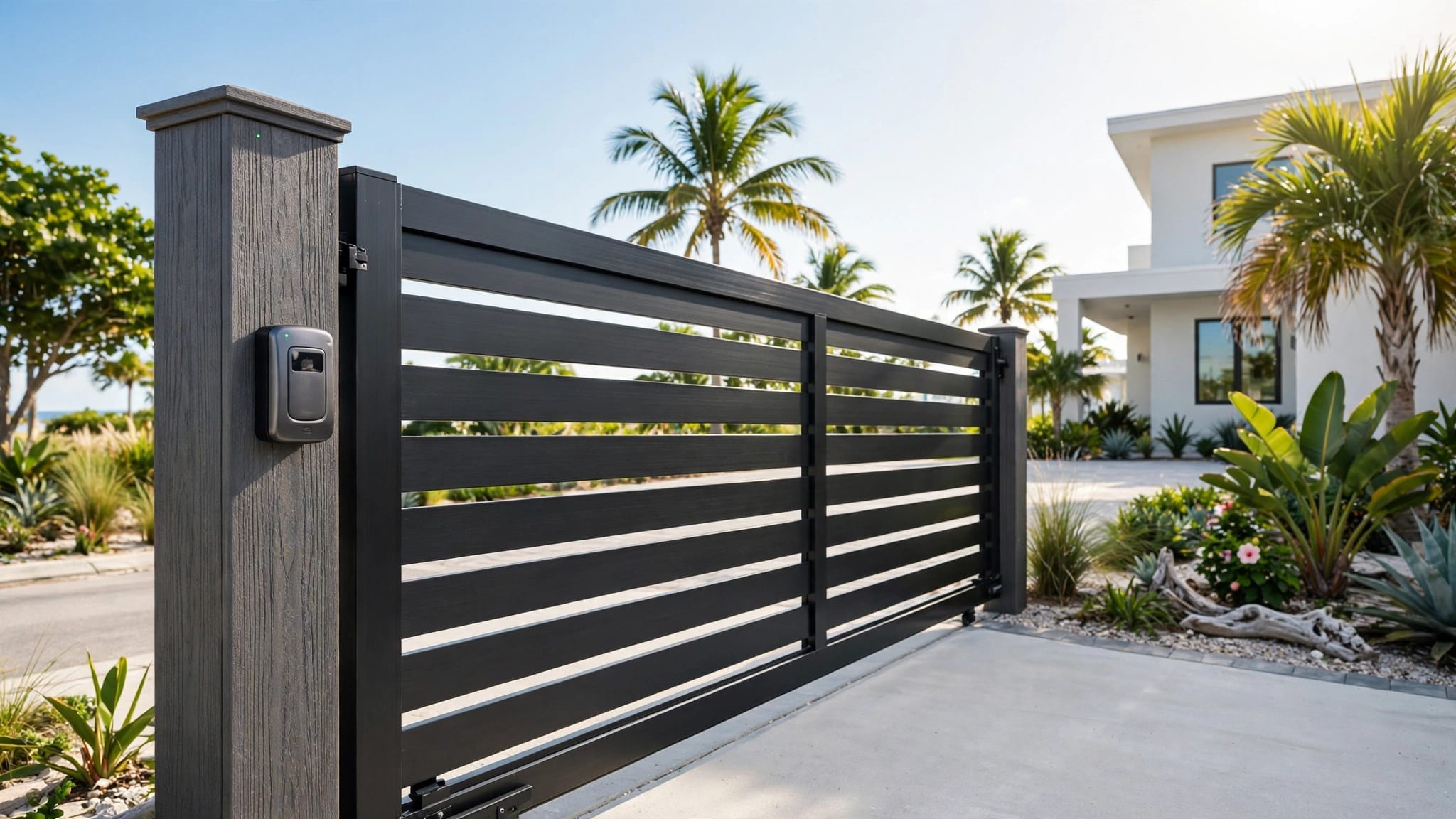
A sliding or rolling gate avoids a leaf swinging into a vehicle path, but it needs room beside the opening to travel. A swing gate needs a clear arc. Neither choice should interfere with parked trailers, pedestrian paths, or equipment access.
Measure the usable clear opening after posts and gate hardware are accounted for. Then test the approach with the vehicles that enter the site. A trailer may need more room to line up than it needs to pass through the opening itself.
If staff must leave a security booth to admit each delivery, consider how that process affects a queue on a busy morning. Royal Fence's discussion of commercial gate and access control systems covers why the fence and gate package should be planned together.
Plan for power loss and emergency access
For an automated gate, discuss controls, safety devices, power-loss operation, and how authorized people will enter when the operator needs repair. Position controls where a driver can reach them without stopping across a sidewalk or blocking a through lane.
Fire lanes, hydrants, and emergency gates deserve a separate review. Confirm access needs with the authority responsible for the site rather than assuming an ordinary delivery gate will satisfy them. Keep shrubs, signs, pallets, and stored materials clear of approved access routes after installation, too.
Match fence materials to the dock's exposure
The best material may change along the same property. An open perimeter near truck turns can preserve visibility, while a shorter screened section can hide stored inventory. Compare each option by its job and its maintenance needs.
| Material | Useful dock-area application | Tradeoff to discuss |
|---|---|---|
| Galvanized or vinyl-coated chain link | Long service-area boundaries with open views | Inspect fabric, fittings, coatings, and gates for damage |
| Powder-coated aluminum | Visible frontage or areas where appearance matters | Check coating and hardware suitability for salt exposure |
| Vinyl privacy panels | Screening selected storage or equipment areas | Solid panels need site-appropriate wind and post design |
| Wood | Limited screening where its appearance suits the property | Moisture, insects, and upkeep demand closer attention |
For many yards, commercial chain link fence installation is a practical starting point. Fabric, framework, fittings, and gate construction still need to match the use. The lightest available package isn't automatically suitable beside frequent vehicle activity.
Privacy panels should solve a defined problem, such as screening inventory from a road. Near a turning area, they may reduce visibility and present more surface to the wind. A mixed layout can address both concerns, provided the transitions and gate posts receive the same design attention as the fence runs.
Design for rain, salt, and storm recovery
Look beyond the panel finish
In Cape Coral, Fort Myers, Estero, and Bonita Springs, humidity and heavy rain can affect gate hardware even when the fence panels look sound. Properties near salt water may need closer attention to hinges, fasteners, brackets, and exposed cut ends.
Ask the contractor to identify the proposed coating and hardware, especially where unlike metals meet. Aluminum doesn't develop red rust like steel, but its coating and connections can still suffer in coastal conditions. Likewise, a vinyl panel avoids some surface maintenance while its hinges and gate frame remain exposed.
Solid screening and wide gate leaves place different demands on posts and connections than open chain link. Avoid buying a fence based on a broad "hurricane-rated" label. The complete installation must suit the site's exposure and applicable design requirements.
Keep water out of the gate's operating path
Heavy rain can leave a sliding gate track full of sediment or create a low spot near an operator. Before installation, check where water travels across the dock yard and whether new footings will disturb existing drainage.
After a storm, inspect posts, latches, gate travel, and any damaged coatings before returning the yard to normal use. Assign that check to a person or team. A fence section may remain standing even though a shifted gate no longer secures the entrance.
Confirm the rules for the actual property
Identify the permitting authority first
A Fort Myers mailing address doesn't, by itself, settle which office reviews a project. Confirm the parcel's jurisdiction before ordering materials. Cape Coral, Fort Myers, Bonita Springs, the Village of Estero, and unincorporated Lee County may have different review paths.
Lee County's fence guidance references the Florida Building Code, 8th Edition (2023), and its Land Development Code. For a commercial dock, ask the responsible local authority what plans, approvals, and fence details it requires for that specific site. Height, location, gate design, and wind documentation can depend on the proposal and jurisdiction.
In Collier County, the Fence/Wall (PRFW) submittal calls for a site plan showing the proposed fence location, gate swing where applicable, height, and materials. Zoning provisions vary by district, so a height allowed at one commercial property shouldn't be assumed for another.
Review constraints outside the fence line
Verify property boundaries before setting a long perimeter run. Then check easements, underground utilities, drainage features, and access needed by service providers. A fence that fits between survey points may still cross an area that must remain accessible.
Also confirm how the proposed work affects fire access and existing site approvals. OSHA's dock and industrial-truck rules address safe operations; they don't replace local fence review or supply a universal aisle width. Bring both the operational layout and the proposed fence plan to the appropriate reviewers.
Get a quote that describes the working yard
A useful proposal shows more than total linear feet. It should identify fence sections by material and height, gate locations and clear openings, post and footing details, finishes, hardware, and any operator work. Ask who handles electrical coordination, pavement restoration, and permit submissions if those tasks apply.
Show the contractor a delivery schedule and a site plan marked with truck turns, pedestrian routes, utilities, and drainage trouble spots. If you manage a warehouse, warehouse fence options in Fort Myers offer a useful comparison of perimeter materials before you settle on a scope.
Discuss installation access as well. Crews may need space near active docks, and deliveries may need a temporary route while posts or gates go in. Agree on work areas and timing before construction starts. That conversation can prevent an avoidable shutdown at a busy receiving door.
Key Takeaways
- Trace the largest regular truck movement before choosing a fence line or gate location.
- Separate walking routes from backing areas and forklift traffic where practical.
- Compare materials by visibility, screening needs, coastal exposure, and maintenance.
- Confirm permits, wind design, and access requirements with the authority for the specific property.
- Request a written scope that describes the gates and operating clearances, not only the fence length.
Conclusion
A secure perimeter works only if deliveries can still reach the dock safely. Start with the working yard: trucks, forklifts, pedestrians, gates, and drainage.
Once those routes are clear, a Southwest Florida fence contractor can recommend materials and installation details that fit the site. The result should protect the property without making an ordinary delivery harder than it needs to be.