November 25, 2026
Sea grape, buttonwood, sabal palm, sea oats, and beach sunflower are good starting points for sunny Southwest Florida landscapes exposed to salt spray. Each fills a different job, so the best choice depends on whether you need shade, screening, or low groundcover.
Salt exposure varies across a property. A plant beside an open canal may face more wind and spray than one protected by a house. Start by matching each part of your yard to the plants that can handle its conditions.
Key Takeaways
For the most exposed areas, consider coastal natives such as sea grape, buttonwood, and sea oats. Cocoplum and pink muhly grass are useful choices for more sheltered fence lines.
Allow room for each plant's mature width, and keep gates, drainage paths, and fence hardware accessible. Young plants also need fresh water while their roots establish.
How Salt Spray Affects a Sunny Landscape
Wind can carry salt onto leaves and stems, leaving exposed foliage with brown edges or damaged growth. Sun, dry soil, and wind can add stress, especially for a plant that has just left the nursery.
A yard in Cape Coral or Fort Myers may contain several growing conditions. An open waterfront edge can receive more salt spray than a bed behind a solid fence. Meanwhile, a strip beside pavement may get intense reflected heat even if it has some protection from wind.
Salt spray and salty water in the soil are different concerns. A plant that handles salt on its leaves won't necessarily tolerate prolonged flooding with salt water. Likewise, a fence may reduce exposure on its sheltered side, but it won't eliminate salt carried over or around it.
Before choosing plants, walk the yard and note sunny areas, places where water collects, and spots that receive direct wind. Our guide to plant selection for Cape Coral landscapes has more ideas for planning around sandy soil and open sites.
Trees for Sun and Coastal Exposure
Trees add height and shade, but they need room beyond the planting hole. Consider the mature canopy as well as nearby fences, buildings, and overhead lines.
Sea Grape
Sea grape ( Coccoloba uvifera ) is a Florida native with broad, rounded leaves and high salt-spray tolerance. It grows in full sun and can be trained as a small tree or allowed to form a large shrub.
A tree-form sea grape can reach roughly 25 to 35 feet tall, while a pruned hedge can stay much shorter. Its spreading growth makes it useful for coastal screening and shade where there's enough room.
Give it space away from narrow walkways and pool decks. Large fallen leaves and fruit can create cleanup, and frequent pruning is needed if you want a compact hedge.
Buttonwood
Buttonwood ( Conocarpus erectus ) is another Florida native suited to sunny coastal sites. It has high salt tolerance and can grow as a tree or be maintained as a hedge. Green-leaved and silver-leaved forms offer different looks.
Depending on pruning and conditions, buttonwood can reach about 15 to 30 feet tall. Use it for a coastal backdrop or a taller screen, rather than squeezing it into a small bed.
Buttonwood can become thin near its base. If privacy at ground level matters, allow space for lower shrubs in front of it.
Sabal Palm
Florida's state tree, the sabal palm ( Sabal palmetto ), tolerates sun and coastal exposure. Its upright form works well where a spreading shade tree would crowd a fence line.
Mature palms can reach roughly 40 to 50 feet tall. Use them as vertical accents in an open yard, and allow room for their wide fronds. Fallen fronds will need occasional cleanup, so placement matters near paths and outdoor seating.
Shrubs for Privacy and Fence Lines
A shrub can soften a fence or add screening where an open fence leaves views into the yard. Choose for mature width first, then decide how much pruning you're willing to do.
Cocoplum
Cocoplum ( Chrysobalanus icaco ) handles full sun, salt exposure, and pruning. It's a practical hedge for a sunny fence line, particularly where the planting has some protection from the strongest beachfront spray.
For a maintained hedge, plan on roughly 3 to 6 feet in height and 6 to 8 feet in width. Plants spaced about 3 to 4 feet apart can grow together, though cocoplum may take time to fill in.
Keep the row far enough from the fence to reach both sides. Our guide to Cape Coral fence-line plants compares cocoplum with other screening choices.
Pitch Apple
Pitch apple ( Clusia rosea ) has thick leaves and high salt tolerance. It grows in full sun and can be shaped into a substantial screen or grown as a small tree.
Left with room to grow, it can reach approximately 15 to 25 feet tall. Its size makes it a better fit for a broad property edge than a narrow strip beside a gate.
Prune for the height and width your space can support, but leave enough room for access behind the planting. A dense hedge pressed against a fence makes both the plants and the fence harder to maintain.
Grasses for Sunny Coastal Beds
Ornamental grasses bring movement to a landscape without creating a solid wall. They also work well in front of taller shrubs, provided each plant has enough space to grow.
Sea Oats
Sea oats ( Uniola paniculata ) are native coastal grasses suited to full sun, sand, wind, and salt spray. Their upright seed heads give exposed coastal plantings a natural look.
Plants commonly grow about 3 to 6 feet tall. Use nursery-grown sea oats in a sandy landscape bed where they have room to spread. Avoid disturbing established dunes or collecting plants from the wild.
Pink Muhly Grass
Pink muhly grass ( Muhlenbergia capillaris ) grows in full sun and produces airy pink flower plumes. It typically reaches about 2 to 3 feet tall and wide, making it useful along a sunny fence border or walkway.
Muhly is best placed where it receives some protection from the heaviest salt spray. Space clumps about 2 to 3 feet apart and leave air between them. Avoid planting them where standing water collects after heavy rain.
Groundcovers for Color and Open Sand
Low-growing plants can soften bare soil beneath taller plantings. They still need space, particularly beside a fence where spreading stems can cover the bottom rail or creep into a gate opening.
Beach Sunflower
Beach sunflower ( Helianthus debilis ) is a Florida native with yellow flowers that grows well in sun and sandy soil. It has salt tolerance and works in coastal landscapes, especially where it has some shelter from direct, heavy spray.
Expect a low plant roughly 1 to 2 feet tall that spreads outward. Use it at the front of a border or along an open fence line, and give it room to spread without covering nearby plants.
Railroad Vine
Railroad vine ( Ipomoea pes-caprae ) is a coastal groundcover with trailing stems and pinkish-purple flowers. It tolerates full sun, sand, and salt spray, making it a candidate for an exposed site with plenty of open ground.
Its vines can extend many feet, so it's better suited to a broad area than a narrow bed. Keep it away from gates and paths where its stems could become a maintenance problem. As with sea oats, use nursery-grown plants rather than removing them from natural dunes.
Pair Plants With a Coastal Fence
A fence and a planting bed work best when they're planned together. Start with the space the fence needs, including gate swings and access to hinges and latches. Then place plants according to their mature size.
For example, a cocoplum that grows 6 feet wide needs roughly 3 feet of space on each side of its center just to accommodate its natural width. Add more room if you need to walk between the hedge and fence for maintenance.
Keep mulch and soil away from fence components, especially wood and metal hardware. Salt can collect on hinges, brackets, and fasteners, so those parts need room for rinsing and inspection.
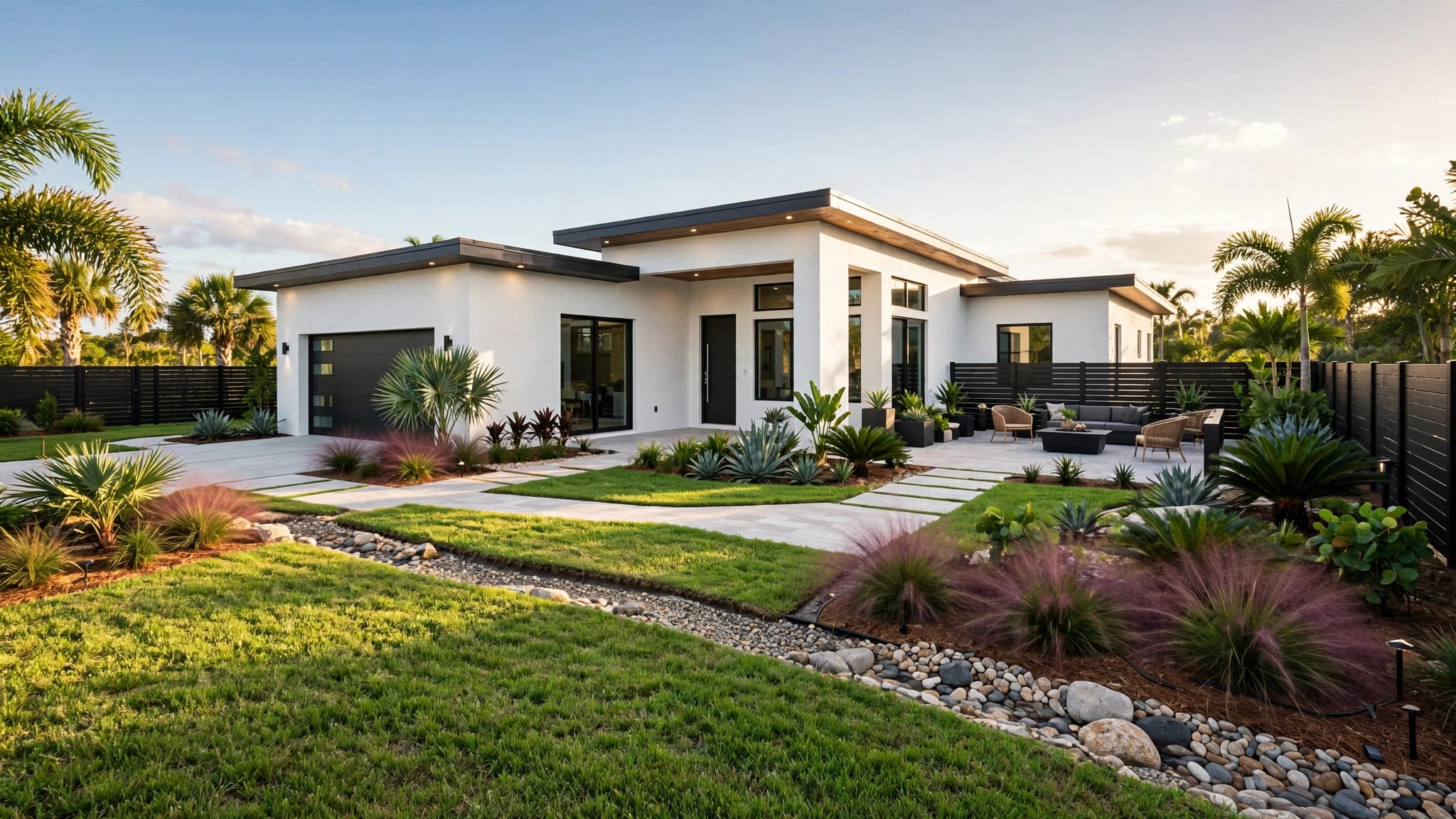
A mix of shrubs and lower plants can provide screening without turning the entire fence line into one dense hedge. See our coastal fence and landscaping combinations for more ways to pair the two.
Planting and Establishment on Exposed Sites
Salt-tolerant plants still need care when they're new. Roots must grow beyond the original root ball before a plant can draw moisture from the surrounding soil.
Prepare the Site
Keep drainage paths and low swales open when laying out a bed. If water regularly stands in one area, choose a better-drained spot for plants that prefer sandy conditions rather than covering the problem with mulch.
Call 811 before digging, and mark known irrigation lines and other private features. Along an existing fence, locate post footings and leave enough room to dig without disturbing them.
Dig a planting hole wider than the root ball and no deeper than necessary. Set the plant so the top of its root ball is level with the surrounding ground. Backfill with the soil removed from the hole, then water it to settle the soil around the roots.
Water and Mulch New Plants
Use fresh water during establishment. Check the root ball's moisture by hand, because sandy soil can dry quickly even when nearby ground looks damp. Water thoroughly when needed, while avoiding constantly saturated soil.
Spread a layer of mulch over the planting area to help conserve moisture and reduce weeds. Keep it away from trunks, stems, and the fence base.
After heavy salt spray, a gentle rinse with fresh water can help remove residue from foliage where practical. Check plants after storms for broken branches, exposed roots, or sand washed away from the bed.
Frequently Asked Questions
Which Plant Provides Coastal Privacy Fastest?
Growth depends on the site, plant size at installation, and care. Pitch apple and sea grape can form substantial screens, while cocoplum may take longer to fill in. For immediate privacy, pair planting with an appropriate fence instead of relying on new shrubs alone.
Can Salt-Tolerant Plants Grow Beside a Saltwater Canal?
Many can handle airborne salt near a canal, but conditions vary across the yard. Choose plants for the exposure and drainage of the planting spot. Salt-spray tolerance alone doesn't mean a plant will tolerate standing salt water around its roots.
Are Native Plants a Good Choice for Coastal Yards?
Yes. Sea grape, buttonwood, sea oats, and beach sunflower are Florida natives with uses in sunny coastal landscapes. They still need placement that fits their mature size and the conditions in each bed.
Choose Plants With Room to Grow
The right salt-tolerant plants can give a sunny Southwest Florida yard shade, privacy, and color. Match the most exposed areas with sturdy coastal choices, then use more sheltered spaces for plants such as cocoplum and muhly grass.
At Royal Fence, we offer landscape design and installation alongside fencing services. Planning both together leaves room for healthy growth and access to your fence.