August 22, 2026
A fence can protect your property and still create a serious emergency problem if it blocks fire department access . In Florida, the route that looks wide enough for a passenger vehicle may not give fire apparatus enough room to enter, turn, or reach the building.
Property owners, builders, and contractors in Cape Coral, Fort Myers, Estero, Bonita Springs, and nearby areas should plan the fence and emergency route together. The Florida code baseline matters, but the local fire marshal or authority having jurisdiction, commonly called the AHJ, has the final say on site-specific access. Start with the route, then design the fence around it.
Start With Fire Department Access, Not the Fence Line
A fence plan usually begins with property lines, setbacks, privacy, and appearance. Those details matter, but emergency access belongs near the top of the planning list when a fence will enclose a commercial site, multifamily property, gated community, equipment yard, or large residential parcel.
Know the statewide starting point
The Florida Fire Prevention Code adopts nationally recognized fire safety standards, including NFPA 1 with Florida amendments. As a general planning baseline, fire department access roads commonly require:
- At least 20 feet of unobstructed width.
- At least 13 feet, 6 inches of unobstructed vertical clearance.
- A suitable turnaround when a dead-end access road exceeds the applicable code limit, commonly 150 feet.
- Access for fire apparatus within required distances of the building and its exterior portions.
These figures are planning references, not automatic approval for every property. The AHJ may require more room based on the responding apparatus, building height, site layout, hydrant location, terrain, or local amendments. A sprinklered building may also have different access-distance allowances than a nonsprinklered building.
Confirm which authority reviews the property
Your reviewing authority may be a city fire department, county fire marshal, community development department, or another designated AHJ. A property in Cape Coral may follow requirements that differ from a site in unincorporated Lee County. Estero, Fort Myers, Bonita Springs, and Collier County properties also require jurisdiction-specific review.
A fence can satisfy a property-line requirement and still fail the fire review if a gate, post, landscape feature, or parked vehicle narrows the approved apparatus route.
Before ordering materials, ask the local fire marshal or building department to confirm the current requirements. Request written guidance when the project includes a secured gate, a dead-end drive, a private road, or a commercial building.
Map the Emergency Route Before Designing the Fence
A site plan should show more than the fence line. It should show how a fire truck enters the property, travels through it, reaches the building, and leaves or turns around.
Draw the route on the site plan
Mark each driveway, private road, gate, building entrance, fire hydrant, fire department connection, and turnaround area. Include existing walls, pools, retention areas, canals, trees, utility equipment, dumpsters, parking spaces, and loading areas.
For a commercial or multifamily project, the civil engineer may need to verify turning movements with the fire department. A route that works for a pickup truck may fail when a large apparatus needs to make a turn without crossing a curb or striking a fence corner.
The route also needs to remain available after construction. A clear plan can become blocked by guest parking, delivery vehicles, trash containers, boat trailers, or temporary construction materials. Mark the fire lane or emergency access area according to the local AHJ's direction.
Check overhead and ground clearance
Measure the full route, not only the center of the driveway. Low tree limbs, decorative entry features, signs, utility lines, awnings, and gate operators can reduce clearance above the path. Bollards, landscape edging, raised pavers, drainage structures, and fence footings can narrow the usable ground area.
Southwest Florida properties add special site conditions. Canal lots may have limited side-yard space. Sandy soil, drainage swales, seawalls, and utility easements can affect post placement and gate movement. A fence contractor should walk the site with the plan before installation begins.
The Cape Coral fence permit checklist provides a useful planning reference for showing fence runs, gate locations, easements, and site features on permit drawings.
Keep the Fence Line Separate From the Apparatus Route
A fence should define the property without forcing emergency vehicles into a narrower path. That may require moving a fence line, changing the gate location, or leaving a designated access opening.
Use the site plan to protect clear width
Posts, hinges, latches, gate leaves, decorative caps, and operator arms all occupy space. Show their actual location on the plan. A gate opening that appears wide on paper may provide less usable clearance after posts and hardware are installed.
Avoid placing fence corners where fire apparatus needs to turn. A curved or angled approach may require more room than a straight driveway. The fire marshal may also require additional clearance around a building, hydrant, fire department connection, or emergency entrance.
For enclosed sites, consider whether one gate provides enough access if the primary gate fails. A second approved access point may be required, or the AHJ may accept another arrangement. Don't add a secondary gate without coordinating its location and lock system with the approving authority.
Account for future use
A property rarely stays empty after installation. Commercial sites may add trailers, storage racks, generators, security booths, or landscaping. Residential communities may add mail kiosks, visitor controls, or pool barriers.
Leave the approved access area usable during these changes. Property managers should include the fire route in parking rules and maintenance plans. Contractors should protect it during construction and keep gate controls accessible for inspections.
Choose Gate Types With Emergency Entry in Mind
The gate is often the most complicated part of a fire access plan. The correct design depends on the road, property type, traffic volume, security needs, and local approval.
Manual gates need an approved access method
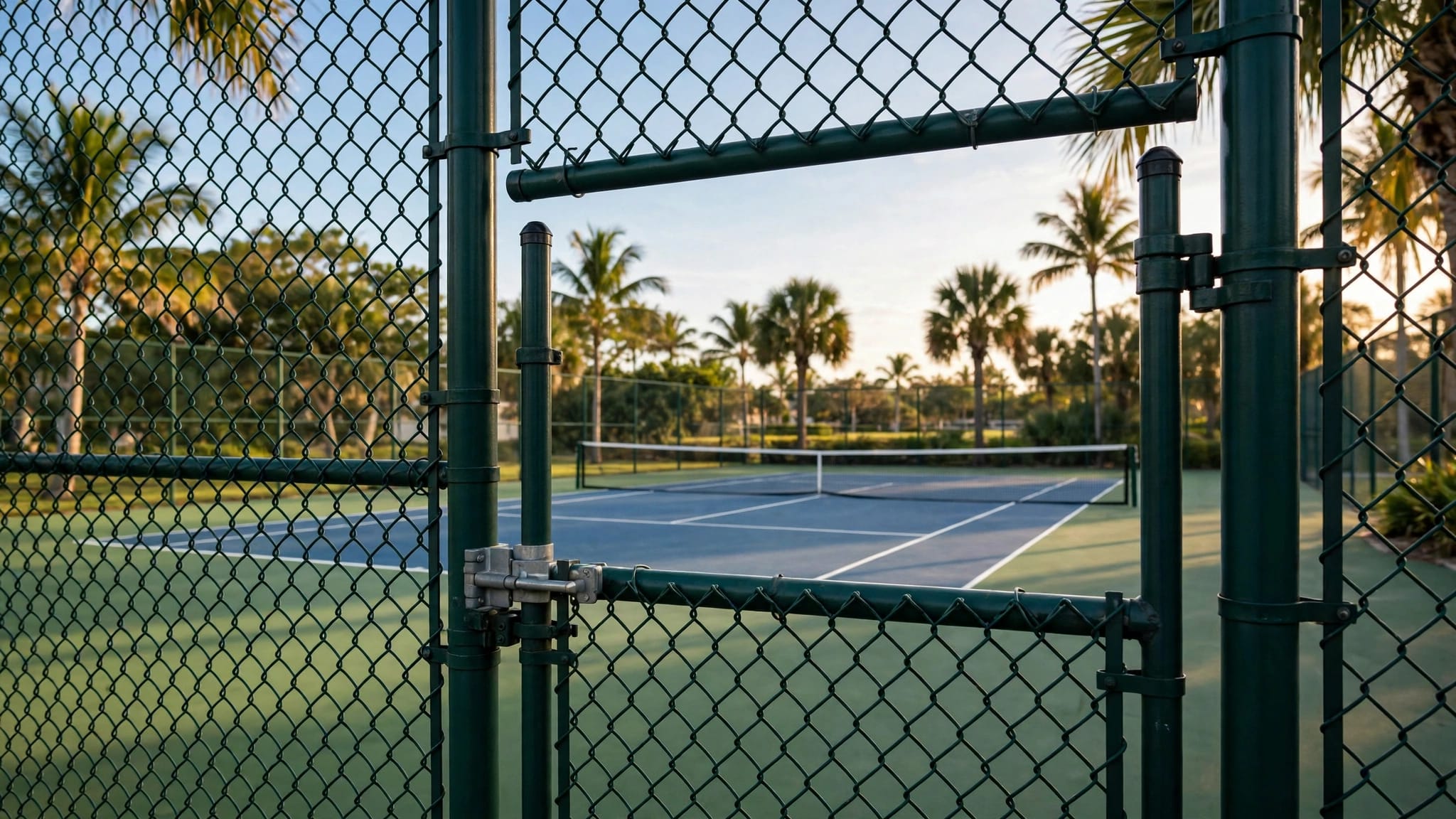
A manual gate across an emergency route can't rely on a homeowner's key, a hidden padlock, or a code known only to the property manager. If the gate is locked, the fire department needs an approved way to open it.
Cape Coral materials state that non-electronic access control gates restricting emergency vehicle ingress or egress, when not constantly attended, require a key box acceptable to the fire official. The city also has requirements for electronic access control gates.
Approval may involve a fire department key box, a Knox device, or another system selected by the local authority. The exact device and mounting location should come from the fire official. Don't purchase hardware based on a system used in another Florida city.
Automatic gates require more than an opener
An automatic gate needs a release method that works during power loss, equipment failure, and emergency response. Depending on local rules, the AHJ may require an approved emergency key switch, radio-operated system, Knox equipment, or another listed method.
Collier County fire-prevention material states that barriers across fire access roadways are prohibited unless specifically approved. It also identifies an emergency-agency-approved Knox electric key switch for automatic gates across fire access roadways.
Those requirements don't automatically apply to every property in Southwest Florida. A gate operator that works in Naples or Collier County may not meet Cape Coral, Fort Myers, Estero, or Lee County requirements. The fire marshal should approve the system before the contractor installs it.
For equipment exposed to salt air and heavy rain, select an operator and enclosure rated for the site. The Cape Coral automatic gate opener guide covers corrosion concerns and gate automation factors for local properties, but the emergency access system still requires AHJ approval.
Coordinate Fire Review With Fence Permits
Fire access and fence permitting are related, but they are not always the same review. A building department may review setbacks and construction details while the fire marshal reviews apparatus access and emergency entry.
Submit a complete plan
Your drawings may need to show the property lines, fence height, materials, gate locations, opening direction, access roads, easements, building footprint, hydrants, and fire department connections. Commercial projects may also need civil drawings, landscape plans, engineering details, or fire protection documents.
Ask whether the fire department must review the plan before the fence permit application. Some jurisdictions require separate approvals. Others route the plans internally. Confirm the process before installation so a finished fence doesn't need removal.
Cape Coral business owners can review the Cape Coral commercial fencing regulations when planning a commercial perimeter. The page addresses local commercial considerations and common fence materials, but the fire official remains the source for emergency access approval.
Keep approvals with the project records
Save approved site plans, gate specifications, product information, inspection notes, and written fire department instructions. Give copies to the property owner and manager after completion.
If the property changes hands, the next owner needs to know how emergency access works. A missing key box, replaced gate operator, or new access-control code can create a problem during an inspection or emergency.
Plan for Southwest Florida Site Conditions
Fire access planning should account for the physical conditions that affect fence installation. A compliant route can become unreliable when posts settle, vegetation grows, or storm damage changes the gate.
Select materials based on location
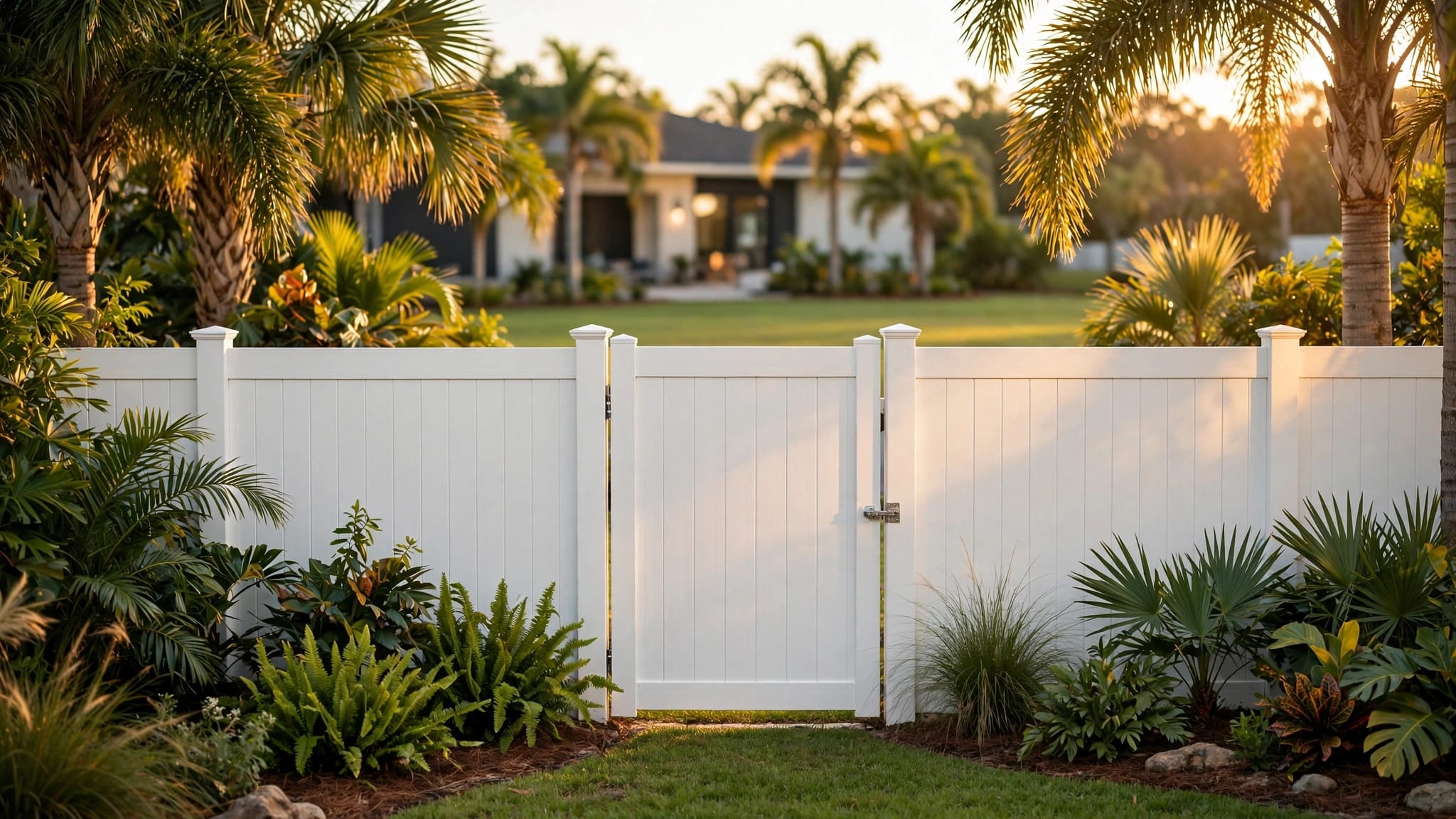
Vinyl, aluminum, wood, and chain link can all suit different parts of a property. The material doesn't replace required clearances, but it affects visibility, maintenance, hardware, and repair.
Open aluminum or chain link may help staff see the gate and access route. Privacy fencing may be appropriate away from the apparatus path, but solid panels can make it harder to see a closed gate, damaged hardware, or a vehicle blocking the entrance.
For equipment yards and commercial properties, Southwest Florida security fencing options can help compare perimeter materials. Keep fire lanes, hydrants, and emergency gates separate from ordinary security decisions.
Protect the gate from storm and drainage problems
Southwest Florida weather places stress on fence posts, hinges, latches, and automatic operators. Water can collect near gate tracks or footings. Wind can shift a large gate leaf and reduce the opening. Salt exposure can corrode hardware, especially near coastal properties.
Ask the contractor how the gate will drain, how posts will be supported, and how the emergency release will remain accessible after a storm. The plan should identify who tests the gate and how quickly the property manager will arrange repairs.
Don't allow landscaping to grow into the opening. Trim branches to maintain the approved overhead clearance, and keep mulch, rocks, signs, and planters outside the access route.
Avoid Common Fire Access Fence Mistakes
Many problems begin with a reasonable fence decision that wasn't reviewed against the complete site plan.
Mistakes that cause delays or rework
- Installing the fence before the fire marshal reviews a locked gate.
- Measuring a gate between fence panels instead of measuring clear opening between finished hardware.
- Placing a gate swing into the fire lane, sidewalk, roadway, or turning area.
- Assuming a standard residential gate opener provides approved emergency entry.
- Adding bollards, landscaping, columns, or decorative arches after approval.
- Letting residents, tenants, or vendors park in the marked access lane.
- Replacing an approved gate with a different model without requesting another review.
- Failing to give the fire department updated keys or access-device information.
- Showing the fence on a permit plan but leaving out hydrants, fire department connections, or apparatus turning areas.
A contractor should compare the approved plan with the finished installation. The final inspection is the right time to identify problems, not the first emergency call.
Property owners in unincorporated areas can also review the Lee County fence permit rules, especially when the parcel sits outside a city boundary. County and municipal requirements can differ within the same region.
Ask the AHJ These Questions Before Installation
A short meeting with the reviewing authority can prevent an expensive redesign. Bring a survey or site plan, a sketch of the proposed fence, gate product information, and details about the building.
Ask:
- Does this property require a dedicated fire access road or fire lane?
- What clear width and overhead clearance apply to this site?
- Does the route require a turnaround?
- Where must apparatus reach the building?
- Are barriers allowed across the access road?
- What emergency entry device is approved for a manual or automatic gate?
- Where should the key box, switch, or receiver be installed?
- Does the city or county require a separate fire review?
- What inspections must occur before the gate is placed in service?
- Who must receive access credentials after installation?
Get answers before selecting the final gate hardware. A reputable fence contractor can coordinate drawings and installation details, but only the local AHJ can approve the fire access arrangement for that property.
Conclusion
Fence planning in Florida should begin with the emergency route, not the preferred fence style. Use the Florida Fire Prevention Code and NFPA 1 as planning references, then confirm dimensions, turning space, gate barriers, and access hardware with the local fire marshal or AHJ.
For property owners in Southwest Florida, early coordination can prevent a fence from blocking a hydrant, narrowing an apparatus lane, or delaying emergency entry. A well-planned fence protects the property while preserving fire department access when seconds matter.