April 2, 2026
Rain hits hard in Cape Coral. You watch water pool along your fence line after a storm, and worry sets in. Will posts lean? Will rot start?
Yards here hold water because of flat ground and high groundwater. The rainy season makes it worse. Poor Cape Coral fence drainage leads to erosion, trapped moisture, and weak structures. You can fix this before it ruins your fence.
These tips help new installs and existing ones. They prevent rot in wood, rust in metal, and washouts everywhere. Start simple, then upgrade as needed.
Spot the Drainage Problems in Your Yard
Water sits because Cape Coral sits low. Groundwater stays close to the surface, especially now in April 2026. Flat lots mean no natural flow.
Check after rain. Puddles lasting over 24 hours signal trouble. Soil feels spongy near posts. Grass dies in low spots. These spots trap water against your fence.
Erosion shows fast. Bare dirt appears under panels. Posts tilt slightly. Neighbors complain if water shifts to their side. Never redirect runoff onto others; city rules ban it.
High water table blocks fixes like deep trenches. Recent reuse water issues cut irrigation pressure too. Test your yard. Dig a hole 12 inches deep. If it fills fast, act now.
Surveys reveal hidden swales. For example, Cape Coral surveys identifying drainage swales for fences spot paths water should follow. Use them early.
Prep Your Yard Before Fence Installation
Plan drainage first. It saves money later. Grade soil away from the house at 1-2% slope. That's one inch drop per 50 feet.
Mark fence line high. Keep bottoms 4-6 inches above grade. Gravel base under posts lets water pass. Avoid low spots for gates; they flood easy.
Dig shallow swales along the line. Line them with gravel. They guide water to street or canal without blocking flow. Check permits for setbacks; site plans for Cape Coral fences respecting drainage rules avoid delays.
In wet areas, elevate posts on concrete footings with gravel fill. Space them 6-8 feet apart. This fights leaning from shifting soil.
Test during dry months, before June rains. Compact soil after grading. Add sod or plants to hold it. Your fence stays straight for years.
Boost Drainage Around Existing Fences
Retrofits work on old fences too. Start small. Clear debris from the base. Trim grass tight, but leave 2 inches air gap.
Add gravel trenches parallel to panels. Perforated pipe inside carries water away. Cover with soil and sod. It pulls moisture from posts fast.
For bad spots, install catch basins. They feed into swales. Sump pumps help extreme cases, but groundwater limits them here.
Raise panels if possible. Trim bottom rails or add spacers. Keeps wood dry, stops rot. Vinyl or aluminum handles this best.
During rainy season, check weekly. Clear clogs from swales. Hurricane prep includes overflow paths. This stops washouts.
Chain link shines in wet yards. See Cape Coral chain link lifespan with proper drainage for canal lots.
Pick Fence Materials That Fight Water
Not all fences handle Cape Coral wet the same. Vinyl resists rot best. It won't warp in humidity. Set it with clearance underneath.
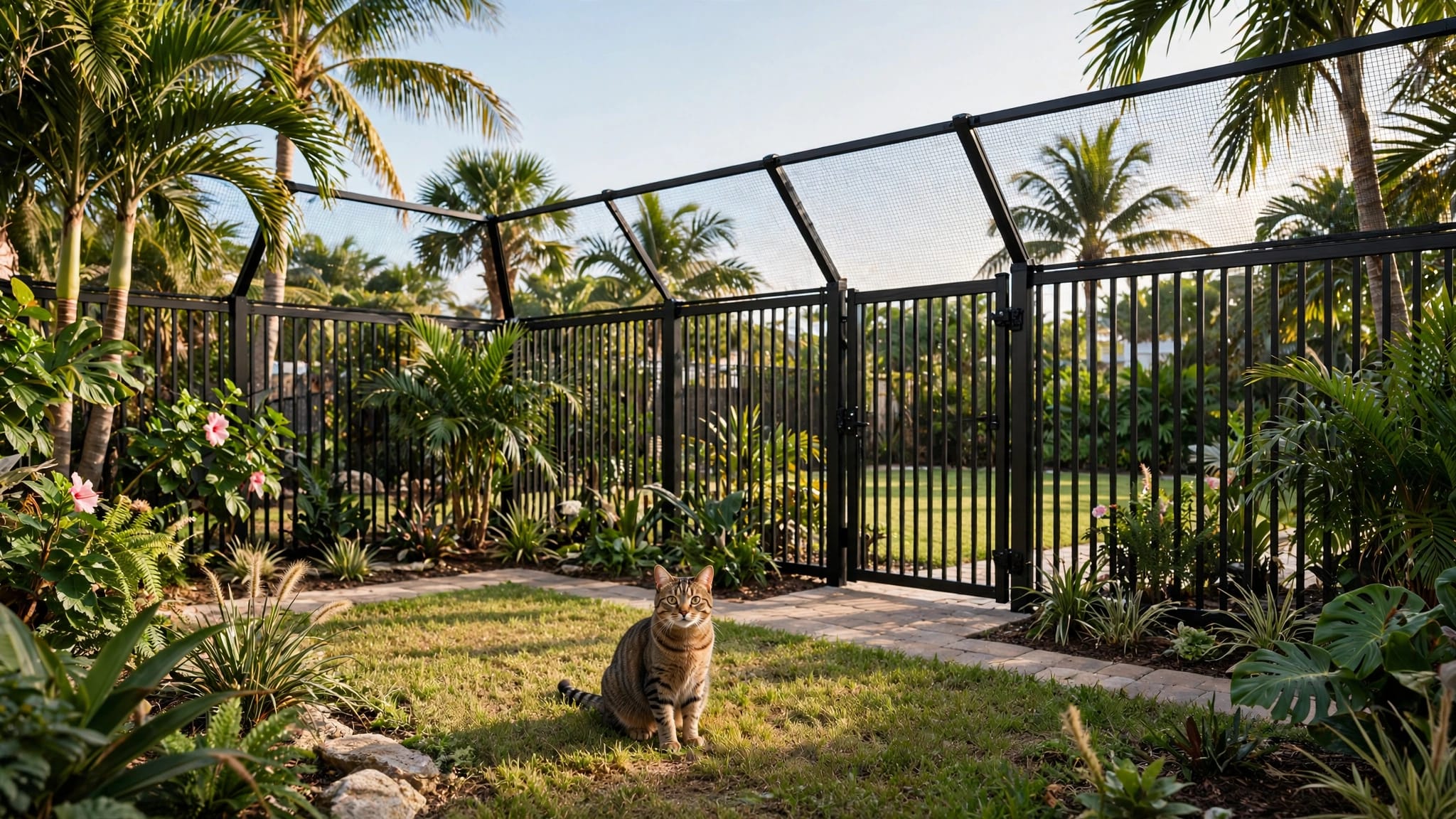
Aluminum allows wind and water through. Open design cuts trapped pools. Galvanized chain link drains fast too.
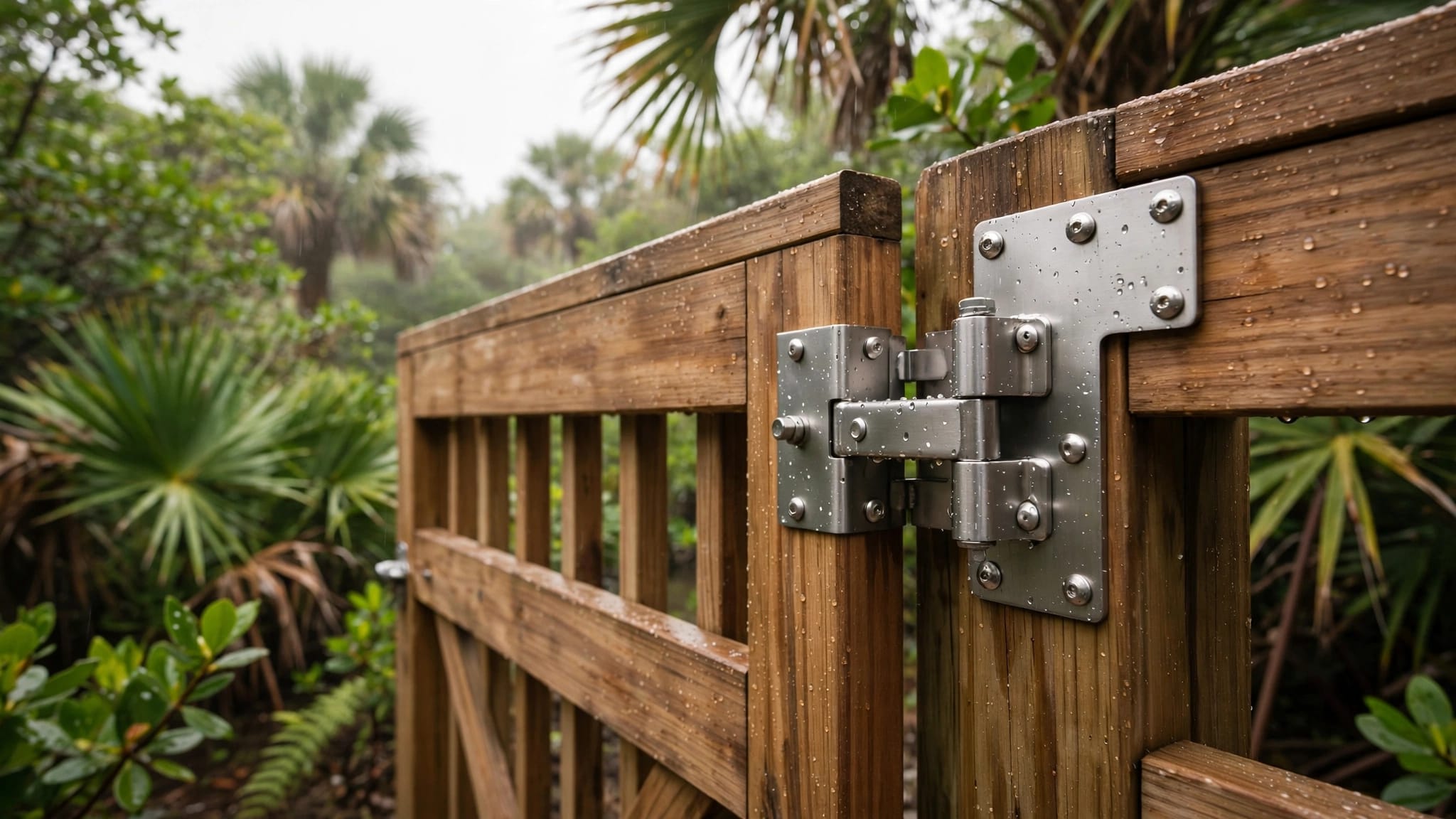
Skip untreated wood in low yards. It soaks and fails quick. Treated options last longer with gravel bases.
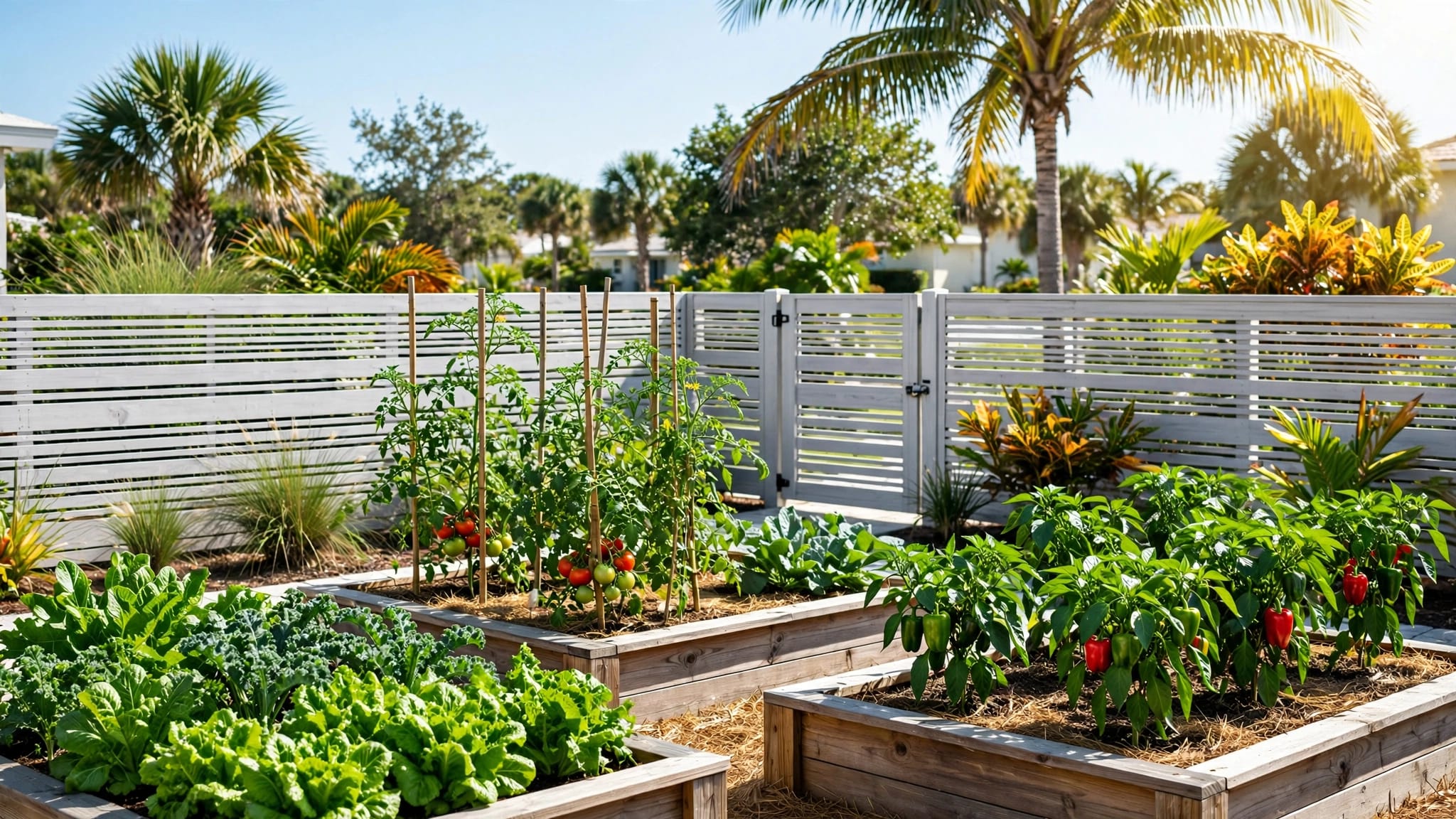
For privacy, louvered styles let water escape. Pair with residential fencing options built for Florida.
Match to your yard. Canal homes need open bottoms. Pools demand tight gates that drain.
Know When Pros Handle the Job
DIY works for gravel or grading. Big issues need help. High groundwater means pros spot limits.
Call for French drains or pumps. They size right for flat land. Local crews know codes, like no neighbor runoff.
Fence installers fix posts in wet soil. They elevate and gravel properly. Get estimates now, before rains.
Permits check drainage too. Lee County fence rules for drainage swales outside Cape Coral guide unincorporated spots.
Trust experience. It prevents leaning posts and early repairs.
Good drainage turns wet yards usable. Posts stay firm. No rot or erosion. Your fence lasts through seasons.
Act today. Grade, gravel, and elevate. Or call a Cape Coral pro for a site check. What's your yard's worst water spot? Fix it before summer storms hit.