July 6, 2026
A pool gate can work perfectly in the morning and drag by late afternoon. In Southwest Florida, humidity changes the way wood, metal, soil, and hardware behave, so a pool gate self-closing problem can show up fast.
That matters because a gate that does not close and latch on its own is more than an annoyance. It weakens pool safety, and it can leave a fence out of step with local code expectations.
The good news is that the cause is usually easy to track once you know where to look.
Key Takeaways
- Humidity can make wood swell, loosen posts in wet soil, and increase friction in hinges and latches.
- A gate that closes in dry weather but fails later often has an alignment problem, not a broken gate.
- Rust, salt air, dirt, and worn springs make the issue worse in Cape Coral and nearby coastal areas.
- A gate must self-close and self-latch every time to do its job as a pool safety barrier.
- Small tune-ups help, but repeated failure usually means the hinges, latch, or post need real adjustment.
Why Humidity Changes How a Pool Gate Moves
Humidity does not usually break a gate in one dramatic moment. It changes the fit by tiny amounts. Wood absorbs moisture and swells. Soil softens around posts. Metal parts collect surface rust, and moving hardware starts to drag.
That small drag matters. A gate does not need to be badly bent to fail. If the latch side rises a fraction of an inch, the latch can miss. If the hinge side binds, the gate may stop short before it reaches the strike.
In Southwest Florida, heat, rain, and coastal air all work together. A gate that seems fine in the morning can feel heavier by afternoon. That is why humid weather exposes weak points that dry weather hides.
A gate can look straight and still miss the latch by a fraction of an inch. That fraction is enough.
Local pool code pays attention to those details too, because Cape Coral pool fence safety regulations focus on self-closing, self-latching hardware and safe gate placement.
The Parts That Fail First
Humidity rarely affects every part the same way. One weak spot is usually the first to show it.
Hinges lose smooth motion
Self-closing hinges rely on steady tension and clean movement. When moisture gets into the hinge pin, springs, or mounting screws, the action slows down. On metal gates, rust can make the hinge feel sticky. On wood gates, swollen boards can add extra weight and strain.
A gate may still open easily, which hides the problem. The trouble shows up when it tries to return home and stops short.
The latch stops lining up
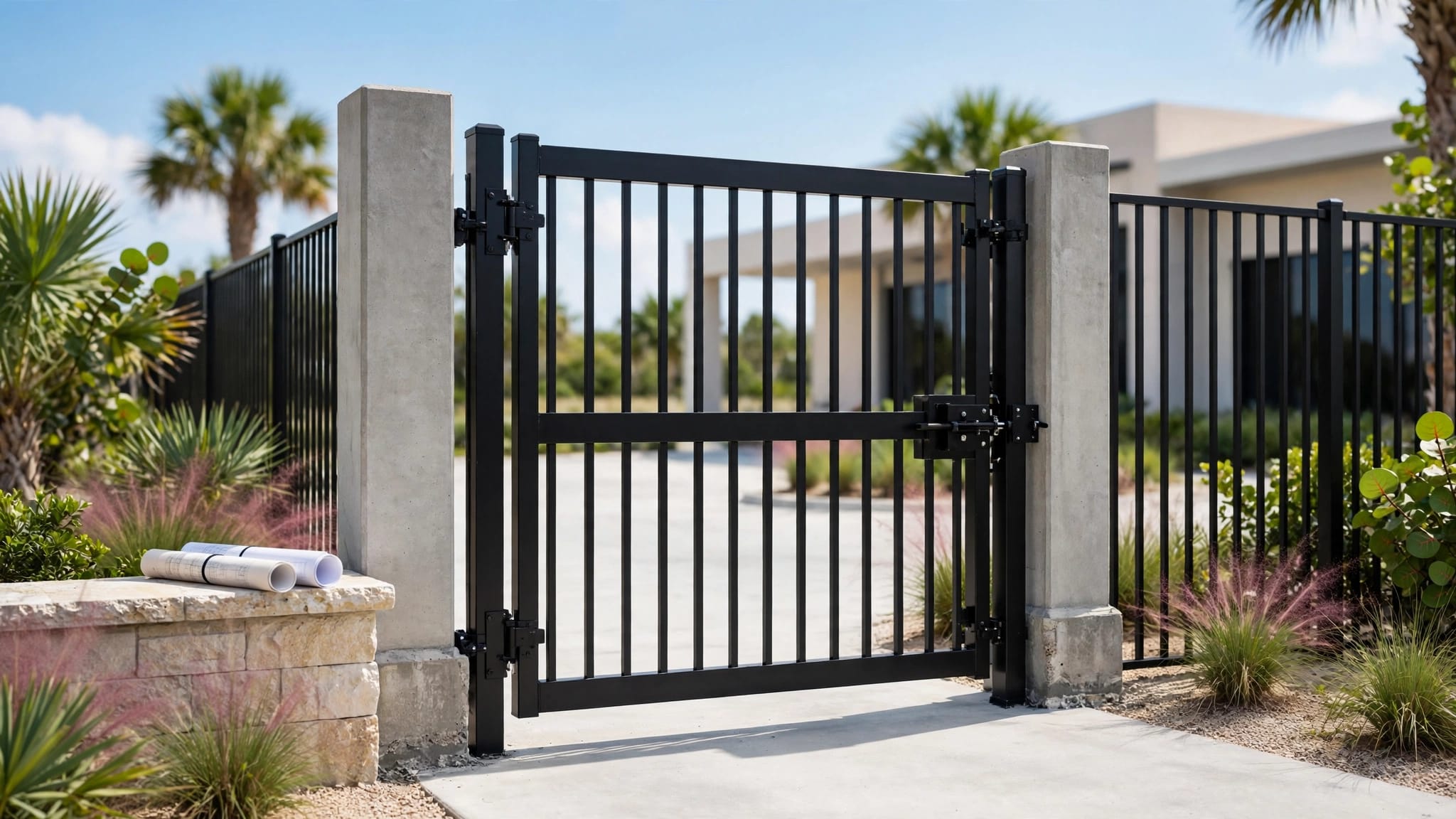
The latch is picky. It needs the gate to land in the right spot, at the right height, with enough force to catch. Humidity can shift the post, swell the gate frame, or change the gap just enough to throw it off.
For homeowners comparing materials, comparing aluminum vs wood for pool areas helps explain why aluminum often stays truer around humid pool decks. Wood can work well, but it usually needs more maintenance to stay aligned.
Posts and frames settle
A gate is only as steady as the post holding it. Heavy rain, soft soil, and paver movement can let a post lean slightly. Once that happens, the gate may sag on the latch side.
That sag is easy to miss by eye. The gate can still look square, yet the latch no longer meets the strike cleanly.
How to Diagnose the Problem at Home
A few simple checks can tell you whether humidity is causing friction, alignment trouble, or a worn-out part.
| Symptom | Likely cause | What to check |
|---|---|---|
| Gate closes partway, then slows or stops | Hinge drag, rust, or swollen material | Hinge pins, screws, paint buildup, rubbing spots |
| Gate closes but does not latch | Latch misalignment or gate sag | Strike plate, latch height, post movement |
| Gate works in the morning, fails later | Moisture swelling or heat-related movement | Wood boards, bottom gap, post plumb |
| Gate slams instead of closing smoothly | Too much spring tension or damaged closer | Spring hinges, closer settings, mounting points |
Start with the gate open and let it swing shut on its own. Watch the last 6 to 8 inches. If it slows near the latch side, the gate is probably out of alignment. If it moves freely but still misses the latch, the latch itself may be off.
Then test it again after a humid afternoon or after rain. If the failure shows up only when the air feels heavy, moisture is likely part of the problem.
One more check helps a lot. Push up gently on the latch side of the gate. If it lifts or shifts, the hinges or post may have loosened. If the gate is wood, look for swelling where boards meet the frame. If it is metal, look for rust, dirt, or paint buildup around the moving parts.
Fixes That Restore Self-Closing and Self-Latching
Some gate problems only need a simple tune-up. Others need hardware replacement or a post reset. The right fix depends on what you found.
Clean the moving parts first
Dirt, sand, and old lubricant can make a gate feel heavier than it really is. Rinse the hinges and latch area, then wipe off grit. Use a lubricant made for gate hardware if the manufacturer allows it. Sticky household oil often grabs more dirt, which makes the problem come back.
After cleaning, test the gate again. If it improves, the issue was friction rather than structural damage.
Tighten and realign before replacing parts
Loose screws can change the gate angle by just enough to break the latch catch. Tighten the hardware, then check the gap on both sides of the gate. If the latch is close but not landing, the strike may need to move a little.
Make small adjustments, then test the gate every time. Over-correcting can make the gate slam, which puts more strain on the hinges and closer.
Fix sag before it gets worse
A sagging gate usually needs more than a latch tweak. Sometimes the hinge screws have loosened in the post. Sometimes the post itself has moved. In those cases, no amount of latch adjustment will keep the gate reliable.
If the gate leaf is warped or the post is no longer plumb, a fence contractor can reset the post, replace worn hinges, or rebuild the gate so it closes square again.
Replace parts that no longer hold position
When springs lose tension, hinges rust through, or wood swells every rainy season, repairs can turn into a cycle. Replacing the weak part is often the better choice. A spring hinge that no longer closes with enough force will keep failing, especially in humid weather.
A gate that shuts only when you push it is not a self-closing gate.
If you are dealing with repeated failures, the safest move is to restore the gate so it self-closes and self-latches without help, every time. That is the standard that protects the pool area, not a gate that works on a good day.
When Humidity Points to a Bigger Fence Problem
Sometimes the gate is only the first warning sign. If the post is leaning, the fence panels are shifting, or the gate keeps going out of alignment after every rainstorm, the problem may be in the structure around it.
That is common in Southwest Florida, where soil movement and moisture can affect the whole fence line. In those cases, another hinge adjustment may buy time, but it will not solve the root issue.
A stronger repair usually comes down to three things, a straight post, reliable hardware, and a gate built from material that can handle local weather. That is why so many homeowners prefer fence systems that stay stable around pools and patios, especially when they need the gate to stay code-ready year-round.
Conclusion
Humidity does not usually break a pool gate all at once. It reveals weak spots in the hinges, latch, post, and gate frame until the gate stops closing the way it should.
When that happens, treat it as a safety issue, not a small annoyance. A gate that only closes some of the time is not doing its job as a pool barrier.
If your gate starts failing on damp days, the first step is a careful check of alignment, hardware, and sag. The best fix is the one that keeps the gate self-closing and self-latching through heat, rain, and daily use.