September 23, 2026
A fence can look secure from the parking lot while a loose play-yard gate goes unnoticed. School fencing Southwest Florida campuses need must protect children, support staff supervision, and stand up to heat, rain, and coastal air.
Those goals don't point to one material. A daycare play yard, a school frontage, and a service entrance each need a different balance of visibility and control. Start with how each space is used, then choose the fence and gate together.
What school fencing Southwest Florida sites need to do
Before comparing panels, identify which rules apply to each part of the property. Child-care play areas, school campuses, and pool enclosures can have different requirements.
Licensed child-care play areas
Florida Department of Children and Families (DCF) standards call for outdoor play areas to have a continuous fence or wall at least 4 feet high . The standards also address gates, openings no larger than 3.5 inches , a base maintained at ground level, and protection from access to water hazards.
The DCF child-care handbook calls for at least two exits from outdoor play areas, including one remote from buildings. These details affect where gates go, not only which fence material looks best. Have the facility's licensing contact and a qualified professional confirm the current requirements for its program before approving a layout.
School perimeters and other hazards
A school-campus perimeter has broader jobs: defining the property, guiding visitors toward an entrance, and separating children from traffic or hazards. Florida Department of Education guidance for school-board educational plants calls for safe, durable, structurally sound fencing without jagged or sharp projections. It prohibits razor wire, barbed wire, and electrically charged systems.
That guidance doesn't establish one fence height for every school. A pool also needs its own barrier review. Don't assume the main perimeter fence satisfies pool-access requirements; confirm the applicable barrier and gate rules for the site.
Compare fence materials by visibility and upkeep
Most campuses benefit from more than one fence type. Open fencing can help staff see across a play yard, while screening may make sense beside a service area.
| Fence option | Where it can fit | Main tradeoff |
|---|---|---|
| Galvanized or vinyl-coated chain link | Long play-yard or perimeter runs needing visibility | Open mesh offers little privacy and can invite climbing |
| Powder-coated aluminum pickets | Entrances and visible play-yard edges | Higher finish expectations raise the importance of coating and hardware quality |
| Vinyl privacy panels | Selected areas needing screening | Solid panels block supervision and take more wind pressure |
| Wood privacy fencing | Limited screening where its appearance matters | Boards and finishes need more frequent attention in humid weather |
The installed cost of each option depends on height, openings, gates, posts, and site conditions. Material alone won't tell you the final price.
Open fences keep sightlines available
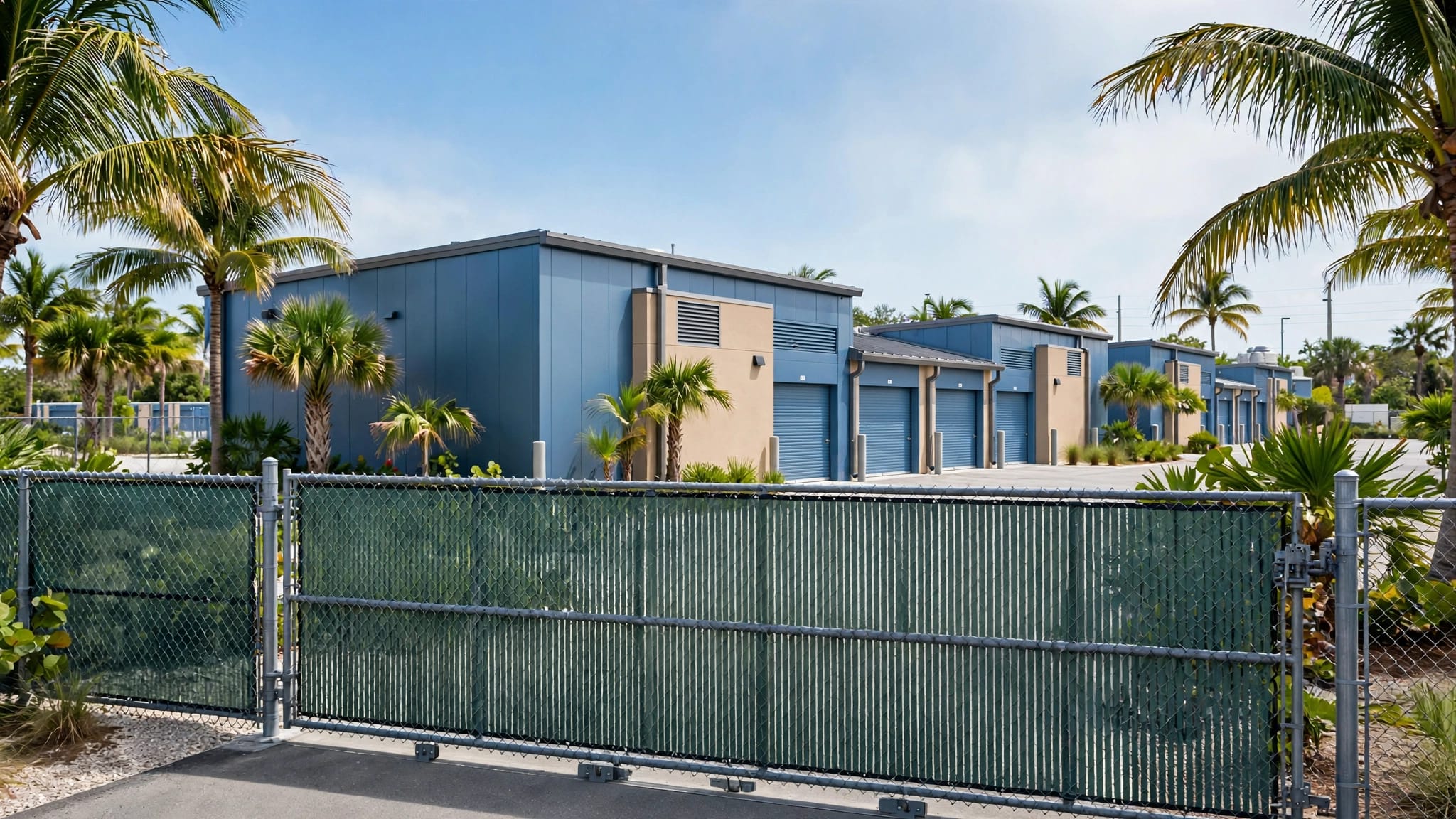
Chain link is a practical choice for long runs because staff can see through it, and crews can replace damaged fabric or components. Specify the mesh, finish, framework, and gate construction rather than accepting "chain link" as a complete description. A child-facing design should avoid sharp wire ends and foothold details that make climbing easier.
Aluminum pickets give entrances a more finished appearance while preserving visibility. Ask about picket spacing, top profiles, and where horizontal rails sit. Neither material removes the need for supervision, but both can make blind spots easier to avoid.
Use privacy fencing selectively
Vinyl can screen dumpsters, equipment, or a neighboring view with relatively simple cleaning. Yet a solid fence may hide activity at a gate or create an isolated corner. Wood offers a different appearance, but moisture, sun, insects, and splinters make inspection and finish care more demanding.
For a mixed-material site, review the options offered for commercial fencing in Cape Coral alongside the school's actual supervision needs.
Separate children from traffic and water
Trace a child's route through the property before drawing the fence line. The important boundaries are often between the play yard and pickup lane, between a classroom exit and parking, or beside a pond, canal, or drainage feature.
A single long perimeter may leave these internal hazards exposed. A separate play-yard enclosure can give staff better control during outdoor time, provided its exits and gates meet applicable requirements. Keep the fence base in view during planning, especially where grades change or water can wash soil away.
Also check what staff can see from the places they actually supervise. A tall privacy panel beside an arrival gate may create a hidden waiting area. An open fence beside a busy road may offer excellent visibility but little screening. Place each material where its tradeoff makes sense.
Design gates for arrival, dismissal, and emergencies
A fence line is only as dependable as its busiest opening. At schools and daycare centers, that usually means a pedestrian gate used many times a day.
Make daily access clear
Decide where parents enter, where deliveries go, and which gates stay secured during outdoor play. A latch that's convenient for an adult must also suit the site's child-access rules. Staff shouldn't have to prop open a play-yard gate to manage arrivals.
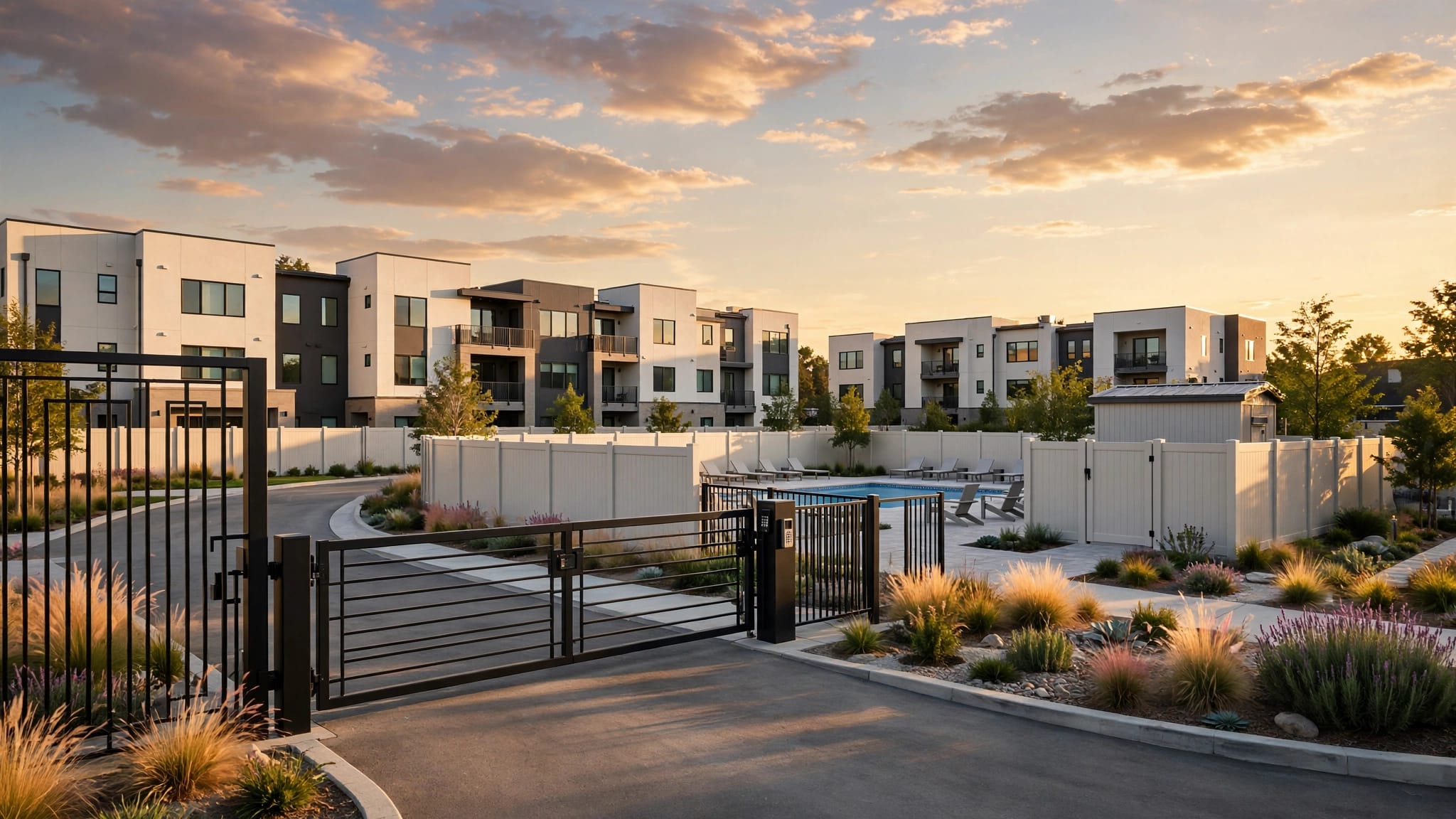
For higher-traffic sites, access-control equipment may help manage authorized entry. However, an operator, keypad, or credential reader adds electrical work and maintenance. Review the full gate package, including hinges, posts, latches, and any operator, when comparing commercial gate access control systems.
Keep emergency routes workable
Emergency access and child containment have to coexist. Show gate locations and intended operation to the facility's licensing contact, local fire authority, and qualified design professionals before installation. Confirm how staff can open each required exit during a power outage or equipment failure.
A vehicle gate also needs room to move without conflicting with pedestrians. Where a gate crosses a walkway or pickup queue, a better layout may be more useful than a more expensive operator.
Choose details that survive Southwest Florida weather
Heat, heavy rain, humidity, and salt exposure affect a fence differently across Cape Coral, Fort Myers, Estero, and Bonita Springs. A canal-side play yard may put more pressure on metal connections than a sheltered inland frontage.
Inspect the small metal parts
Powder-coated aluminum doesn't rust like steel, but chips, fasteners, and gate hardware still need attention near salt air. Chain link needs suitable protection on the fabric, posts, rails, and fittings. Ask how a contractor will treat cut ends and choose compatible hardware.
Gates deserve close scrutiny because they move daily. Corroded hinges or a shifting hinge post can leave a latch misaligned even when the panels look sound.
Match posts and panels to exposure
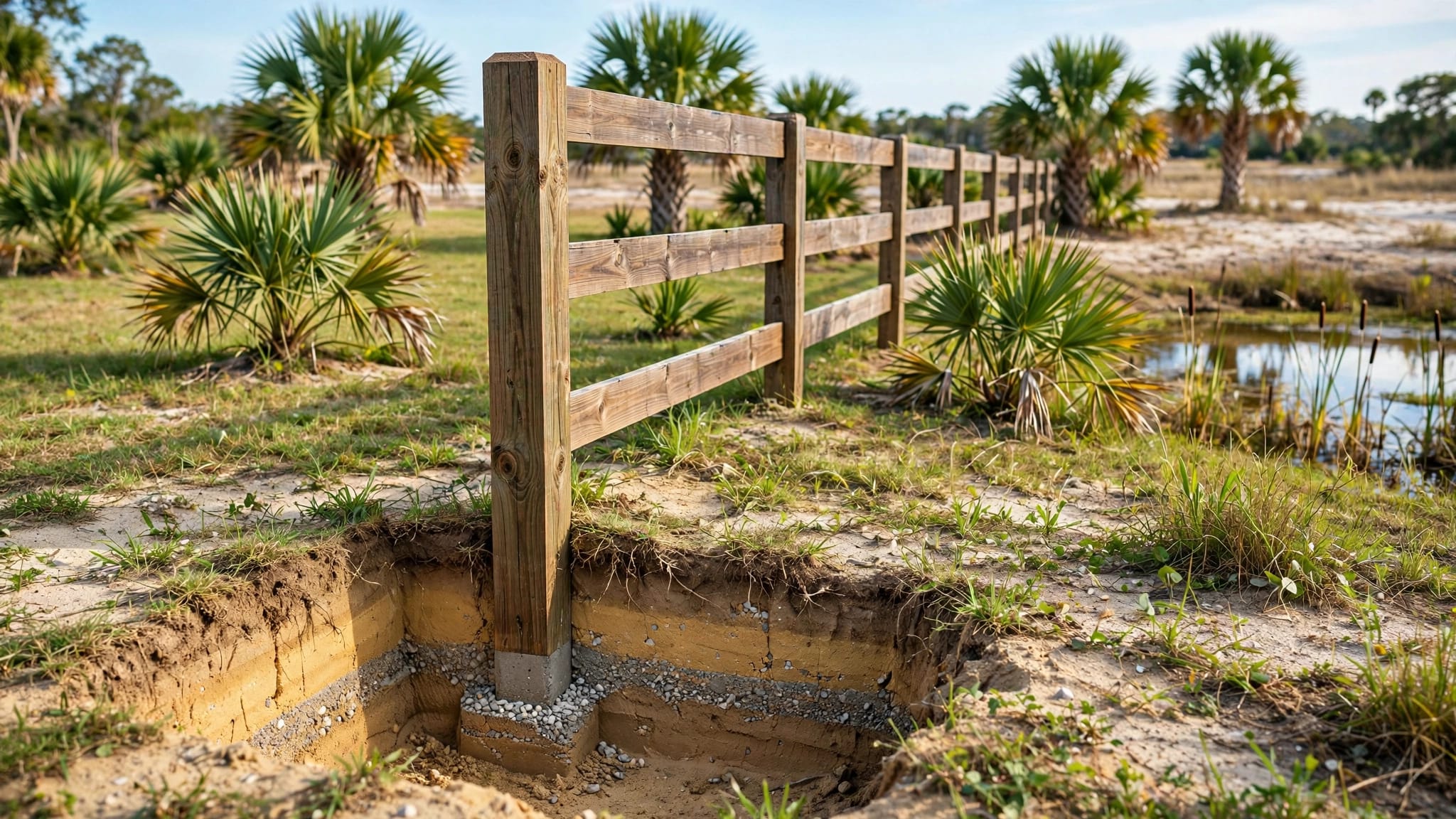
Open chain link and picket fences let more air through than solid privacy panels. That distinction matters in storm planning, but no material is hurricane-proof. Post spacing, footings, panel connections, gate construction, and site-specific wind requirements all affect the design.
After storms, check for leaning posts, loose fittings, and changes in bottom gaps. Clean vinyl as needed, rinse salt from suitable finishes according to manufacturer instructions, and repair damaged wood before children encounter splinters.
Budget for the complete installation
For school fencing Southwest Florida contractors propose, compare the full installed scope , not a panel price. Two bids can describe the same material while allowing for different posts, gate frames, finishes, or site work.
Ask each bidder to identify the fence height and length, material specifications, gate count, hardware, removal of old fencing, grading needs, and permit-related work. Discuss access-control equipment separately so its power supply and ongoing service don't disappear inside a general gate allowance.
A lower initial cost may fit a long, open boundary. Elsewhere, easier cleaning or fewer finish repairs may justify a different material. Wood's upkeep can change its long-term cost, while a poorly supported gate can create repeat repair calls regardless of fence type. Request a site-specific quote rather than relying on a generic price per foot.
Confirm the layout and approvals before work starts
Mark property lines, utilities, driveways, play areas, and water features on a site plan. Then walk it with the people who use the grounds: administrators, facilities staff, and those responsible for arrival and outdoor supervision. They can identify gates that must stay locked or routes a proposed fence would interrupt.
Permits and allowable heights can depend on the municipality, parcel, and type of facility. The discussion of commercial fence permits in Cape Coral is a useful local starting point, but it doesn't set the rules for Fort Myers, Estero, or Bonita Springs.
Before ordering materials, confirm current requirements with the local building department, the relevant child-care or school authority, and qualified professionals. Ask who will verify the final gate operation and inspect the completed fence.
Key Takeaways
- Start with the space's purpose. A licensed play yard, a school perimeter, and a pool area may need different layouts and approvals.
- Open chain link or aluminum can support supervision; use privacy panels where screening won't create a blind spot.
- Compare gates, hardware, footings, weather exposure, and maintenance along with the fence material.
Frequently Asked Questions
Is a four-foot fence enough for every school?
No single height fits every school project. Florida's four-foot minimum applies to the child-care outdoor play areas covered by DCF standards, not automatically to every school perimeter. Confirm the rules for the facility and each area before selecting a height.
Which fence is easiest to maintain near the coast?
Vinyl panels and powder-coated aluminum generally need less routine finish work than wood. Neither is maintenance-free: salt can affect hardware, and gates still need inspection. Galvanized or vinyl-coated chain link is another practical option when open views and repairability matter.
Should a daycare use a privacy fence around its play yard?
Only where screening fits the supervision plan. Solid panels can block views into a play area and take more wind pressure than open fencing. Many sites benefit from open fencing around active play space and privacy panels at selected edges.
Conclusion
The loose gate in the parking-lot view is a reminder that details matter more than appearances . Start with the applicable rules and the way children and staff move through the site. Then compare materials as part of a complete fence and gate system.
The strongest choice is the one staff can supervise, maintain, and use safely every day.