May 12, 2026
Fence quotes can look similar until you read the warranty line. That small section often decides who pays when a post shifts, a gate sags, or a panel fails after the first storm season.
In Cape Coral, that matters more than it does in many places. Salt air, wind, heavy rain, and shifting soil can test a fence fast. A clean quote should spell out coverage in plain language, not hide it in fine print.
The biggest fence warranty red flags usually show up where the wording gets vague. The next sections show what to look for before you sign.
Material warranty and workmanship warranty are not the same thing
A lot of homeowners see "warranty" and assume the whole fence is covered. That's where confusion starts. A manufacturer warranty covers the product itself, while an installer workmanship warranty covers the labor and how the fence was put in.
That difference matters because a strong material warranty still won't help much if the fence was installed poorly. A sturdy vinyl panel can still lean if posts were set wrong. A premium aluminum rail can still rattle if the fasteners were rushed.
Here's a simple way to compare them:
| Coverage type | Usually covers | Common red flag | Why it matters |
|---|---|---|---|
| Manufacturer material warranty | Defects in the product itself, such as cracking, peeling, or factory flaws | No claim process, prorated limits hidden in the fine print, or broad exclusions | The product may be covered, but only for certain defects |
| Installer workmanship warranty | Labor tied to installation mistakes, like loose posts, sagging gates, or poor alignment | Short coverage term, no labor mention, or a promise that sends all claims back to the supplier | Most post-install problems come from the installation, not the material |
A quote that lumps both together without detail deserves a closer look. Ask who handles the claim, what proof they need, and whether labor is included if a repair is approved. If the answer stays fuzzy, that is a warning sign.
If you want a side-by-side way to review the rest of the estimate, how to read a fence quote is a useful place to start.
A simple rule helps here. Material coverage protects the product, workmanship coverage protects your install. You need both.
Quote language that hides weak coverage
Some warranty language sounds safe at first glance, but it leaves too much room for confusion. A quote can look polished and still leave the homeowner holding the bill when something breaks.
Watch for these warning signs:
- The quote says "manufacturer only" and never mentions labor. That means you may pay the installer if the fence needs to come apart.
- The warranty term is missing or buried in another document. If you can't find the number of years, don't assume it's generous.
- The wording says "limited warranty" without naming the limits. Limited is normal, but the limits should be clear.
- The contractor promises coverage verbally, but it never appears in writing. If it's not written, it can disappear later.
- The claim steps are missing. You should know who to call, what photos to send, and how long a response should take.
- Maintenance rules are vague. If the warranty depends on cleaning, sealing, or hardware checks, the quote should say how often and how.
If a warranty sounds broad but the exclusions take up half the page, treat it as thin coverage.
Cape Coral homeowners should also watch for storm wording that shifts everything to the customer. It's normal for some storm damage to be excluded, but the quote should still explain what happens if wind exposes a workmanship problem. A loose post that fails in a storm is different from a fence that was built right and hit by debris.
This is where a careful read pays off. The goal isn't to find a perfect warranty. The goal is to find one that matches the way fences fail in real life.
Cape Coral weather can make small exclusions matter
Coastal Southwest Florida puts extra pressure on fencing. Salt air can wear on metal finishes. Heavy rain can soften soil around posts. Strong wind can push on panels and gates. Over time, those conditions expose weak installation work fast.
That's why local homeowners should ask how the warranty handles real Cape Coral conditions. A coverage term that looks fine on paper may fall apart when the fence meets daily weather.
Ask about these points before you accept the quote:
- Salt exposure, especially on aluminum hardware and coated parts.
- Wind damage, including whether loose gates or leaning posts count as workmanship issues.
- Ground movement after heavy rain, irrigation, or settlement.
- Storm debris, which often causes damage that no warranty covers.
- Maintenance requirements for wood, vinyl, or metal finishes.
Wood fencing needs the most upkeep. If the installer says sealing or staining is required, ask how often and what products are allowed. A vague "regular maintenance" rule can become a reason to deny a claim later. Vinyl and aluminum also have care rules. Harsh cleaners, pressure washing, or damaged coatings may matter more than you expect.
If you want a simple refresher on upkeep, fence material maintenance tips can help you think through what reasonable care looks like.
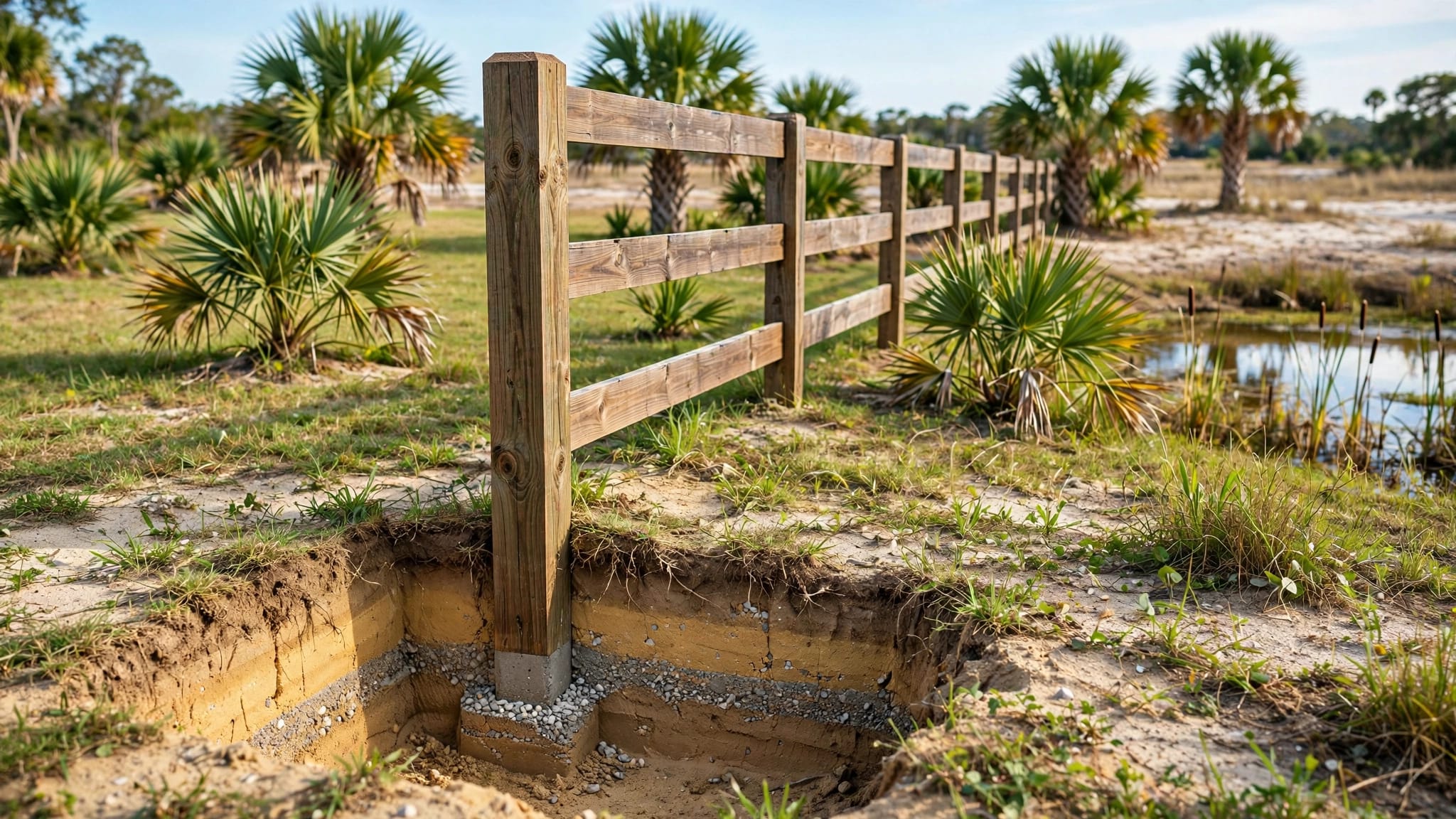
Cape Coral also has ground conditions that can shift over time. Posts can move a little after storms or wet seasons. That doesn't always mean failure, but it does mean the workmanship warranty should spell out what counts as a repair issue. If a contractor installs a fence and never addresses post depth or gate alignment, the first rainy season may tell the truth.
What a solid warranty should say before you sign
A good warranty reads like a clear promise. It tells you what's covered, for how long, and what happens if the fence needs attention.
Before you sign, make sure the quote or contract includes these points:
- The material warranty term is written in years, and the product brand or grade is named.
- The workmanship warranty term is written separately, with labor coverage spelled out.
- Exclusions are listed in plain language, including wind, storm damage, misuse, and maintenance failures.
- The claim process explains who to contact, what proof is needed, and how long the response should take.
- Any verbal promise about stain, touch-up work, gate adjustments, or cleanup appears in writing.
- Transfer rules are clear if you plan to sell the home later.
That last point matters more than many people think. Some warranties stay with the original owner only. Others transfer under certain conditions. If the quote says nothing, ask.
A strong final signoff also helps. The fence project completion checklist is the kind of tool that keeps paperwork and the finished fence lined up. It's easier to fix a missing warranty term before payment than after a problem shows up.
The best contracts don't hide behind broad language. They show the fence type, the labor term, the material term, and the care rules in writing. That clarity gives you something solid to point to if a panel loosens or a gate stops closing right.
Conclusion
Fence warranty red flags usually show up in vague wording, missing labor coverage, and hidden maintenance rules. In Cape Coral, those details matter because salt air, storms, and shifting soil put extra stress on every fence.
Read the material warranty and the workmanship warranty separately. Then check the exclusions, the claim process, and any upkeep rules before you agree to the job.
If the promises sound good, ask for them in writing. Clear terms beat a smooth sales pitch every time.