June 12, 2026
A side-load garage changes how a fence works before it changes how it looks. The driveway sits in plain view, the side yard becomes part of the street-facing scene, and a gate in the wrong place can make daily use feel clumsy.
That matters in Cape Coral, where bright sun, salt air, and strong storms all shape what holds up well. The right Cape Coral fence layouts protect privacy, keep the yard usable, and still leave the home looking polished from the curb. The smartest plan starts with how you enter, park, store, and move through the property.
Why a side-load garage changes the fence plan
With a front-load garage, the driveway blends into the front of the house. With a side-load garage, the driveway runs beside the home, so the fence has to work harder.
That side area often becomes a daily route. You may use it for trash bins, bikes, lawn tools, pool gear, or a walk to the backyard. If the fence narrows that space, you feel it every time you open a gate or push a cart. If it opens too much, the lot can look unfinished.
The best plan treats the garage side like part of the home's face, not leftover space. It also keeps sightlines clear from the street and from the house itself. In other words, you want a fence that frames the property instead of boxing it in.
A good layout also depends on what you want people to see first. For street-facing ideas, front yard fence design ideas for Cape Coral homes can help you compare open styles that still look finished.
Cape Coral fence layouts that fit side-load garages
These common layouts solve different problems. The right choice depends on privacy, curb appeal, and how you use the side yard.
| Layout | Best for | Main strengths | Tradeoffs |
|---|---|---|---|
| Full perimeter with a side gate | Pets, privacy, simple containment | Clear boundaries, strong backyard privacy, easy to define the whole lot | More fence shows from the street, front view can feel tighter |
| Split front-and-back layout | Curb appeal, open front yard, flexible use | Keeps the street view light, puts height where you need it most | Less front containment, may need more planning for gate access |
| Side-yard service corridor | Trash bins, tools, pool equipment | Hides clutter, keeps the backyard clean, works well with garage-side traffic | Can feel narrow, needs careful gate placement |
| Wraparound privacy court | Larger lots, family use, pets | Creates one protected outdoor zone, good for play and gathering | Uses more fence and can reduce openness |
The strongest layout is usually the one that balances use and appearance . On a side-load garage lot, that balance matters more than adding fence everywhere.
Split front-and-back layouts that keep curb appeal
A split layout keeps the front portion lower or more open, then uses taller fencing around the backyard. That works well when the garage, driveway, and front walk already create enough visual structure.
This approach gives the home a lighter street presence. The front yard stays open to the eye, while the back of the property gets the privacy you want for relaxing, grilling, or letting kids and pets play. It also helps the lot feel bigger, which matters on smaller Cape Coral parcels.
Many homeowners choose aluminum or a low decorative fence at the front, then switch to vinyl or privacy panels behind the home. That mix keeps the front clean without giving up backyard privacy. If the street-facing side matters most, shared boundary fence styles for Cape Coral homes can also help when the fence line sits near a neighbor and both sides need a neat finish.
The main drawback is simple. You get less front-yard containment. If you need a secure area for children or pets near the driveway, this layout may need an extra gate or a more complete side run.
Side-yard service corridors for bins, pets, and gear
Some Cape Coral lots work best with a fenced side corridor. The side-load garage already creates a natural path, so the fence can turn that route into a clean service area.
This layout works well when the side yard carries the daily mess. Think trash cans, a mower, pool chemicals, or the hose reel. A taller fence or screen section near the garage can hide those items from the street. Then a more open section farther back can keep the yard from feeling boxed in.
It also helps when you want pets to move easily between the house and the backyard. A straight path is easier to manage than a cramped turn near the garage corner. The same is true for bins and lawn tools.
This is where the back side of the fence matters, too. If the line sits close to a neighbor, shared boundary fence styles for Cape Coral homes can help you plan a finish that looks good on both sides.
The tradeoff is space. A corridor can feel tight if the lot is narrow. That means gate width, fence height, and corner placement all need extra care.
Gate placement that makes daily traffic easy
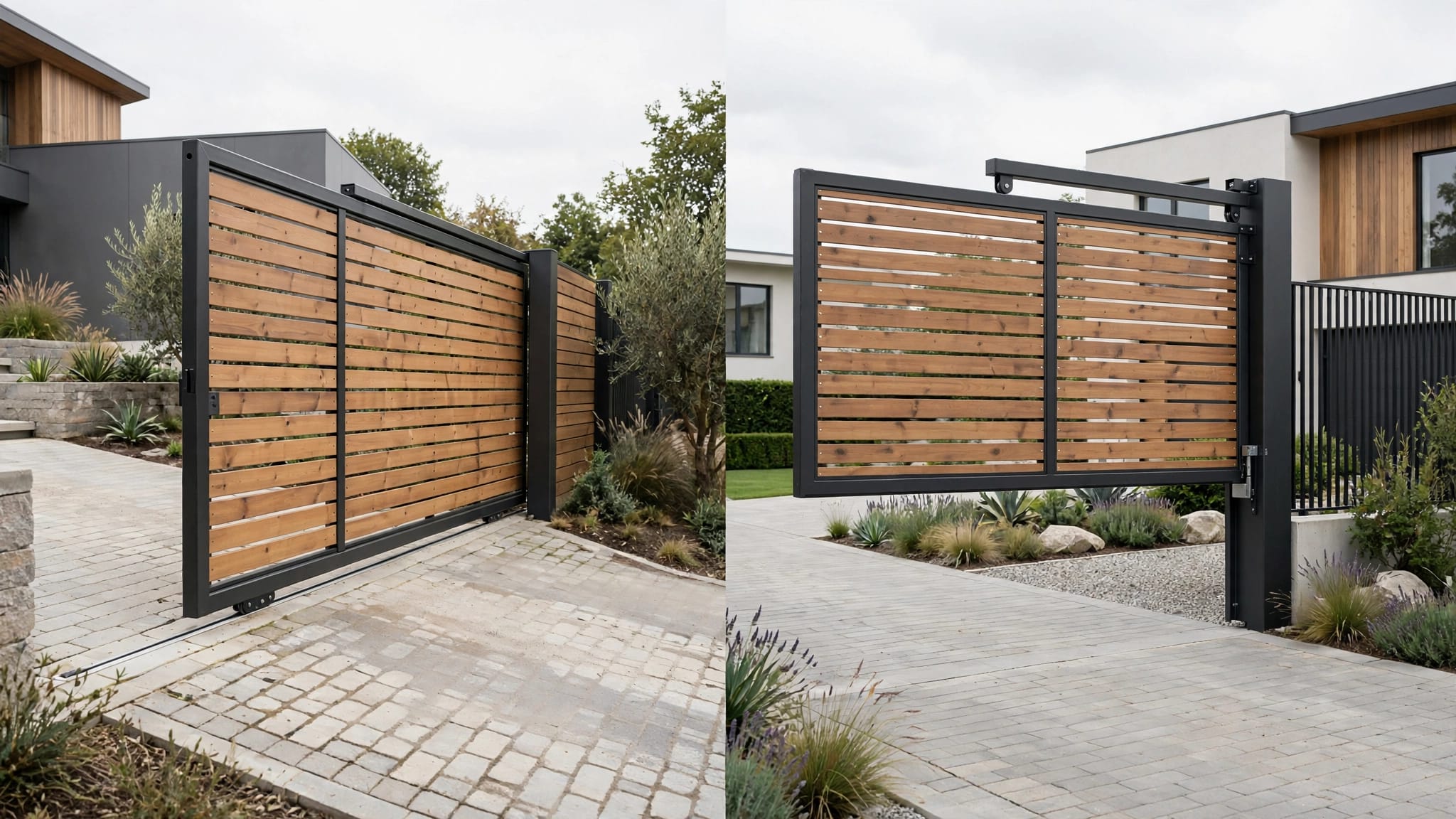
A fence gate should match how you already move through the lot. If you cut across the side yard every day, the gate should sit on that line. If the backyard is the main family space, the gate should open near the patio or the most-used door.
The best gate placement usually follows three simple rules. It stays close to the main path, it avoids car doors and parked vehicles, and it leaves room for carts, bins, or a mower. A gate that saves five steps every day feels better than a prettier one in the wrong spot.
If the gate feels awkward on day one, it will still feel awkward after the fence is finished.
A wide gate also helps when the side yard does double duty. For example, if you need to move patio furniture or yard equipment through the side yard, a narrow pedestrian gate can turn into a headache fast. On the other hand, a wide gate placed too close to the driveway can get in the way of parking.
Sightlines matter here, too. You want to see the gate from the kitchen, porch, or driveway without having to hunt for it. That makes the space easier to use and safer after dark.
Materials and styles that fit Cape Coral weather
Cape Coral weather asks a lot from a fence. Sun, humidity, rain, and salt air all punish weak materials and cheap finishes.
Aluminum works well on street-facing sections because it keeps the view open and holds a clean look. It fits front yards, side setbacks, and areas where curb appeal matters most. Vinyl is a strong choice for privacy. It gives a clean line, blocks views, and fits backyard zones well. Wood brings warmth, but it needs more upkeep. If you like that look, plan for regular care.
Chain link can make sense in utility areas, especially when the goal is simple containment. It does the job, but it usually works best out of sight or with added screening. Louvered or privacy-style sections can help near the garage when you want airflow and cover at the same time.
The style should match the house, too. Stucco homes often look best with clean lines and simple colors. White, tan, bronze, and black all work well when they fit the trim and roof tones. The fence should look like it belongs with the house, not like it was added after the fact.
Common mistakes that hurt the final look
A few planning mistakes show up again and again on side-load garage lots:
- Placing the main gate where a car door opens.
- Making the front fence too tall, which can shrink curb appeal.
- Blocking access to meters, pool gear, or AC equipment.
- Mixing too many fence styles without a clear reason.
- Ignoring how trash bins, mowers, and pets move through the side yard.
The biggest mistake is treating the side yard as an afterthought. That space is often the most active part of the lot. If it feels cramped, the whole property feels cramped.
A fence plan should fix problems, not create new ones. Good access, clear sightlines, and the right height in the right places will do more for the home than extra fence line ever could.
Conclusion
The best fence layout for a Cape Coral home with a side-load garage is the one that fits the way the property actually works. It should protect privacy, leave room for daily traffic, and keep the street view clean.
When the driveway side feels organized and the backyard feels private, the whole lot starts to work better. That balance is what makes a fence feel finished instead of forced.