September 5, 2026
A fence can improve privacy without turning your exterior electrical equipment into a hard-to-reach corner. Electrical panel fence clearance needs attention before posts go in, especially when the panel, meter, or service disconnect sits along a side yard.
A few inches can determine whether a gate opens properly, a technician can work safely, or a utility worker can reach the meter. Plan the fence around the equipment first, then shape the rest of the layout around that protected area.
Electrical Panel Fence Clearance Starts With Working Space
Electrical panels need clear working space for inspection, maintenance, repairs, and emergencies. A fence, gate, planter, storage box, AC unit, or dense hedge cannot take up that space.
The National Electrical Code framework in Section 110.26 sets the baseline for safe access around electrical equipment. Local inspectors apply the adopted code, and the final requirement can depend on the equipment, voltage, location, and conditions opposite the panel.
Understand the basic working-space dimensions
For many residential panels operating at 0 to 150 volts to ground, the commonly required clear depth in front of the panel is 3 feet . The required width is at least 30 inches or the width of the equipment, whichever is greater .
Clear height is generally at least 6 feet 6 inches , or the height of the equipment if it is taller. This space needs to remain open from grade upward.
The panel door also needs room to open at least 90 degrees. A fence may sit beyond the basic clearance line yet still fail if it blocks the door swing or narrows the path behind an open door.
The fence line is only acceptable if a person can safely stand, work, enter, and leave the panel area with the equipment door open.
Treat the fence as a possible obstruction
Homeowners often measure from the back of the panel box or the exterior wall. That is not the right reference point. Measure outward from the front face of the electrical enclosure , because that is where the working space begins.
A fence across from the panel can count as the opposing surface that affects required depth. A side fence can also limit working width. Even an attractive louvered screen may obstruct access if it sits within the protected work area.
Keep electrical panel fence clearance clear after construction, too. Trash bins, patio furniture, potted palms, and pool tools should not migrate into that area later.
Identify Every Piece of Service Equipment
An exterior panel may share a wall with more than one electrical component. Before finalizing a fence run, look beyond the panel cover.
Find the meter, disconnect, and utility equipment
Many Southwest Florida homes have a meter-main combination, a separate disconnect, or additional equipment near the main panel. Solar equipment, generator transfer switches, surge protection devices, and pool subpanels can add more access points.
The serving utility may need access to the meter. An electrician may need access to the disconnect. First responders may need to reach service equipment during an emergency. A fence that leaves room for only one box can still create a problem for the full installation.
Check whether the equipment is on a side wall facing an easement, driveway, sidewalk, or neighboring property. The utility's meter-access rules and easement rights can affect the design even when the fence is entirely on your property.
Protect ventilation and the service route
Outdoor-rated equipment is built for exterior conditions, but it still must be installed as its manufacturer directs. Don't cover factory vents, crowd heat-producing equipment, or build a tight enclosure around gear that requires air circulation.
Also trace the route a worker would use to reach the equipment. A narrow corridor with a locked gate, loose pavers, standing water, or landscaping branches can make a service call harder and less safe.
In Fort Myers, the city publishes fence regulations and standard details and directs applicants to its permit checklist for full project requirements. Cape Coral, Estero, and Bonita Springs may review similar concerns differently, so confirm the current rules before construction.
Measure the Site Before Choosing Fence Materials
A good layout starts with a simple site sketch. Include walls, equipment, property lines, gates, driveways, AC condensers, pool equipment, and visible utility boxes.
For a panel on a narrow side yard, the easiest answer may be shifting the fence line. That small revision is usually less costly than moving electrical service equipment after installation.
Mark the protected area on the ground
Use painter's tape, stakes, or marking paint to outline the proposed fence and the electrical work area. Then stand where a technician would stand and open the panel door fully.
Measure the clear space with the door open, not closed. Check the path to and from the area as well.
Before approving a layout, mark these points:
- The face of each panel, disconnect, meter, and related electrical enclosure.
- The full door swing for hinged covers and panel doors.
- The clear working depth, width, and height required for the equipment.
- The route through any proposed gate to reach the service equipment.
- Nearby utility easements, drainage swales, irrigation lines, and underground conduits.
- Fence posts that could land near buried service lines or conduit runs.
Photos and measurements help the fence contractor, electrician, permitting staff, and homeowner discuss the same plan. They also reduce last-minute changes once crews arrive.
Account for gates, hinges, and grade changes
A gate can solve an access issue only when it opens wide enough and stays out of the required working space. Its hinges, latch post, swing arc, and stop hardware all need review.
Sloped or uneven ground deserves the same attention. The electrical work area should provide a safe standing surface. Avoid placing the panel behind a gate where water pools after a summer storm or irrigation cycle.
For lots with limited side-yard space, a current survey is more reliable than an old fence line or a rough property measurement. It also helps reveal easements that can affect access.
Check Local Rules and Utility Access Early
Electrical clearance rules do not replace fence permitting rules. A fence can satisfy panel access requirements and still conflict with a property setback, drainage area, sight triangle, HOA rule, or utility easement.
That is why fence placement near electrical service equipment needs two reviews: one for electrical access and one for the property layout.
Verify current permit requirements
Show the panel, meter, disconnect, fence line, and gates on your plan. Add measurements between the equipment and proposed fence. If the panel sits in an unusual location, ask the building department whether the drawing needs more detail.
Requirements vary by jurisdiction, panel type, utility rules, and equipment instructions. The adopted electrical code also changes over time. Never rely on a clearance figure from an old online post or a neighbor's project.
For Cape Coral homeowners, this fence permit checklist can help organize site drawings, surveys, dimensions, and gate locations before an application goes in.
Call 811 before setting posts
Fence posts can hit underground electric, gas, water, sewer, communications, irrigation, or low-voltage lines. Sunshine 811 coordinates public utility locating in Florida, but private lines may need separate locating.
Arrange 811 utility locating before fence installation before digging. Keep the locate markings visible, and tell the contractor about pool wiring, landscape lighting, invisible pet fences, and irrigation systems.
A marked utility line does not settle every access question. If a utility easement crosses the yard, the utility may need entry later. Review fence placement around utility easements before building a permanent barrier across that route.
Fence Designs That Keep Electrical Equipment Accessible
A screen does not need to wrap tightly around the panel. In many cases, a thoughtfully placed return fence gives the yard privacy while leaving the panel on the accessible side.
Material choice matters less than the final space. Vinyl privacy fencing, aluminum fencing, wood, chain link, and louvered panels can all work when the layout protects required clearance.
Use a gate when access must cross the fence
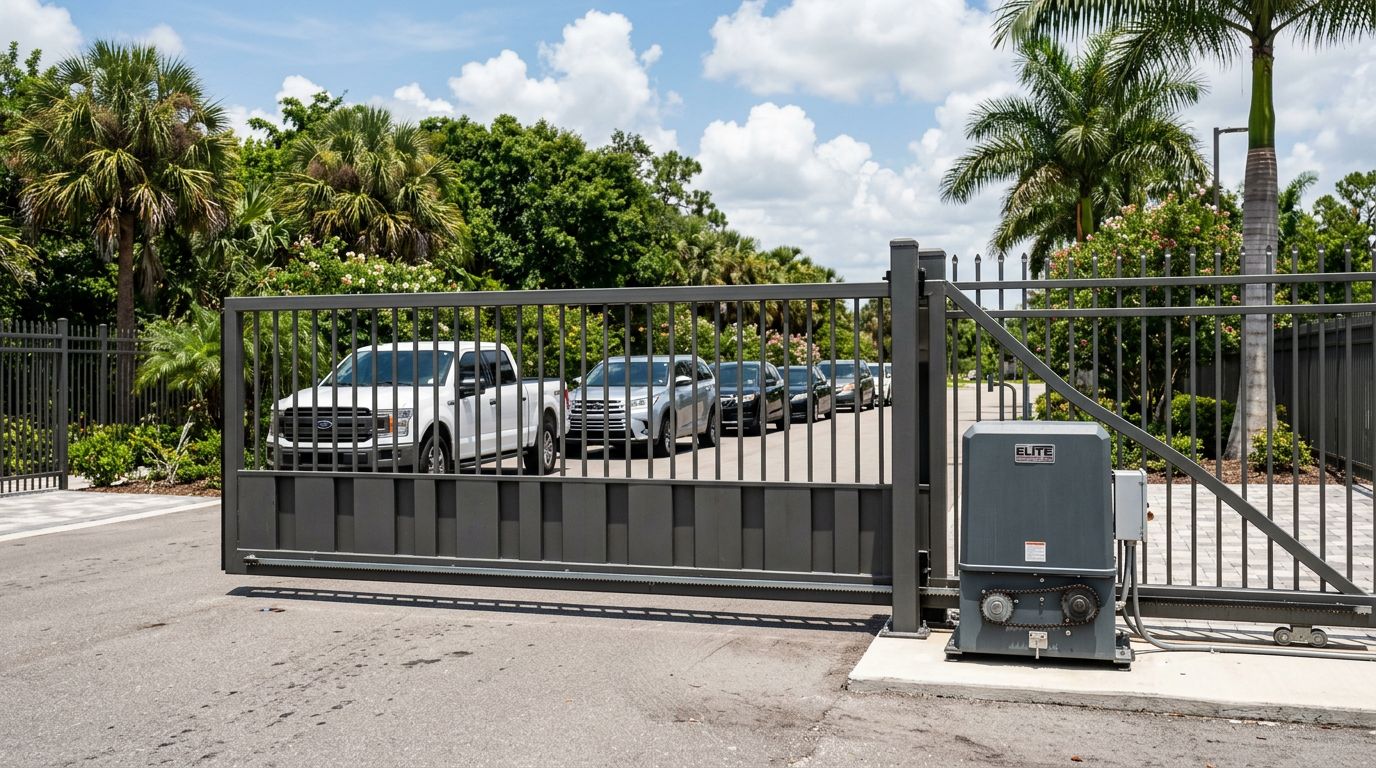
If the best fence line places electrical equipment inside a fenced yard, place a gate where workers can reach the panel without squeezing around corners. The gate should open away from the working area whenever possible.
A wide manual gate often works better than a narrow decorative gate. Avoid designs that need furniture moved or landscaping trimmed every time the panel is serviced.
For commercial properties, a locked equipment yard may need a documented access method that satisfies the utility, property manager, fire officials, and electrical inspector. Don't assume a padlock or hidden key meets every access requirement.
Move the fence line instead of boxing in the panel
When the panel occupies a tight side yard, use one of these safer options:
- End the privacy fence before the panel wall and use an open side-yard layout near the equipment.
- Shift the fence several feet away so the required work area remains outside the enclosed yard.
- Run the fence perpendicular to the home farther from the panel, then turn it after the protected zone.
- Use landscaping away from the working space for visual softening, while keeping plants pruned and accessible.
- Ask a licensed electrician whether relocating equipment is practical when no fence layout can preserve access.
A contractor should never solve a privacy concern by creating a narrow cage around electrical gear. The panel needs a clear service route for its entire life, not only on installation day.
Common Fence Placement Mistakes Near Panels
The most frequent problem is treating the panel wall as unused space. That wall may become the most important service area on the property during an outage, inspection, or repair.
Avoid these field changes
Do not let a crew "make it fit" after posts are already set. Moving a fence post is far easier than correcting a failed inspection, damaged conduit, or blocked disconnect.
Watch for these common mistakes:
- Building a privacy fence directly in front of an exterior panel.
- Placing the panel behind a locked gate with no practical service access.
- Letting an open gate swing into the required work area or exit path.
- Installing shrubs, trellises, or storage beside the panel after the fence passes inspection.
- Blocking meter access because the meter appears separate from the panel.
- Ignoring drainage and leaving the service area muddy or difficult to stand in.
When there is any doubt, consult a licensed electrician or the local building department before construction. They can evaluate the actual panel, equipment labels, service configuration, and planned fence layout.
Final Thoughts on Electrical Panel Fence Clearance
A durable fence should improve your property without restricting the equipment that keeps it powered. The safest plan preserves electrical panel fence clearance , full door swing, ventilation, utility access, service routes, and emergency access from the start.
Measure from the equipment face, mark the working area, verify local and utility requirements, and adjust the fence line before posts are installed. That approach protects your privacy, your investment, and safe access to the electrical system.