October 2, 2026
Your cat only needs one workable escape route, even when most of your backyard fence looks secure. A cat-proof fence needs a coordinated design that addresses climbing, squeezing, and jumping from nearby objects.
In Cape Coral, that design also needs to handle salt exposure, summer rain, and storm-related movement. Start with the whole perimeter , then choose containment features that suit your fence, your property, and your cat's behavior.
Key Takeaways
- Fence height alone doesn't reliably contain cats. Gates, corners, trees, and nearby structures deserve the same attention as the fence top.
- Rollers and inward-facing mesh extensions address climbing, but they don't fix openings below panels or beside gates.
- Before buying a topper, confirm the proposed assembly with Cape Coral Development Services. Its height, projection, location, and attachment details can affect approval.
Even a carefully planned enclosure needs supervised testing and routine inspections. Keep an indoor backup space available while you assess how your cat responds.
Find Every Escape Route Before Choosing a System
Walk the yard before selecting hardware. Look at the fence from your cat's side, including places you rarely inspect.
Check climbing and jumping routes
Wood rails, chain-link mesh, and exposed brackets can provide footholds. Meanwhile, a chair, grill, storage box, or air-conditioning enclosure can shorten the jump to the top.
Pay particular attention to trees, sheds, and neighboring structures. A containment topper can't control a route that lets a cat jump beyond it.
Move portable objects away from the perimeter. For established landscaping, discuss pruning or layout changes that remove access without damaging the plants.
A topper can stop a climb up the fence while leaving a tree-to-roof escape route completely open.
Inspect openings at cat level
Check under every panel and around gate hinges, latch posts, and corners. Uneven ground can leave openings that are easy to miss from standing height.
Don't judge containment by whether a dog could escape. Cats can use much smaller openings, and kittens need separate consideration.
If the existing fence has loose posts or damaged panels, repair those first. Royal Fence's residential fencing options provide a starting point when the base fence needs replacement rather than modification.
Choose a cat-proof fence top for your yard
Two common approaches interrupt a cat's ability to grip or climb over the upper edge. Neither replaces a sound perimeter.
Rollers need continuous coverage
A roller rotates when a cat tries to gain purchase at the top. Its usefulness depends on placement, clearance, and whether the cat can bypass it.
Ask how the design handles corners, gate tops, and changes in fence height. Short uncovered sections can undermine a long run of installed rollers.
Also check moving parts for pinch hazards and coastal durability. Bearings, brackets, and fasteners need inspection because corrosion or debris can prevent movement.
Request manufacturer documentation for your fence type. Don't assume a generic roller will attach safely to every vinyl cap or aluminum rail.
Inward-facing extensions need secure mesh
An inward-facing arm and mesh assembly interrupts the climbing path before the cat reaches the outside edge. Some designs include moving or pivoting components.
Purrfect Fence Cat-Proofer is one named system worth discussing with an installer. Obtain its current installation instructions before deciding whether it suits your existing fence.
Mesh should remain securely attached without loose loops, exposed sharp ends, or pockets that could entangle a paw. Follow the selected product's instructions rather than improvising its angle or projection.
Avoid spikes, barbed wire, and exposed sharp wire. Containment details should prevent escape without creating an injury risk.
Match Containment Details to the Fence Material
The base material affects climbing opportunities and attachment methods. However, no common fence material is automatically cat-proof.
These differences help narrow the design.
| Fence material | Cat-containment concern | Installation priority |
|---|---|---|
| Vinyl | Cats may jump to the top or use nearby objects. | Confirm brackets attach to suitable structural components. |
| Wood | Rails and rough surfaces can provide climbing purchase. | Repair weak boards and verify sound mounting points. |
| Aluminum | Open picket spaces may allow passage. | Address openings without compromising the fence assembly. |
| Chain link | The mesh offers climbing footholds. | Coordinate top containment with gates and lower edges. |
A smooth privacy panel can reduce footholds, but it doesn't eliminate jumping. Similarly, an open aluminum fence preserves views while requiring attention to spaces between pickets.
If you're considering vinyl fence installation, ask how the proposed containment hardware will connect without damaging panels or interfering with manufacturer requirements.
Avoid covering an open fence with improvised solid sheeting. That changes how wind acts on the structure and may create a separate approval issue.
The right choice balances containment, privacy, upkeep, and site conditions. It also gives the installer dependable attachment points for the selected system.
Check Cape Coral Rules Before Adding Height
Local requirements affect the base fence and may affect proposed extensions. Confirm the exact design before ordering materials.
Verify the complete height and projection
Cape Coral's residential fence handout lists a general maximum height of 6 feet , with an 8-foot allowance where residential property abuts commercial property. Those figures don't settle every parcel-specific question.
The available City guidance doesn't establish that rollers or angled toppers are automatically permit-exempt. It also doesn't resolve how every projecting assembly counts toward fence height.
Give Cape Coral Development Services the proposed total height, inward projection, product information, and location. Ask what approvals and documentation apply to that complete assembly.
If your neighborhood has an HOA, check its requirements separately.
Review canal lots, easements, and placement
The City's handout states that, within the rear 20 feet of a lot abutting a waterway, fence material above 3 feet must be open mesh.
Canal-side owners should confirm how this provision applies to their layout and proposed containment materials. Don't assume a privacy panel or added screening is acceptable there.
The handout also addresses visibility triangles, placement, and public easements. In addition, the City's application warns that owners may bear removal costs when utility work requires access to a fence in an easement.
Use your survey during planning so boundaries and access areas receive attention before installation.
Treat Gates and Ground Gaps as Separate Jobs
A cat-proof fence can still fail at a gate that closes imperfectly. Inspect it in the closed position, then watch it operate through its full swing.
The latch should engage reliably without lifting or pushing the gate into place. Check whether sagging creates an opening beside the latch post or beneath the frame.
Top containment needs a gate-specific detail. A roller or mesh extension shouldn't obstruct operation, create dangerous pinch points, or interfere with required safety hardware.
Where a fence is part of a pool barrier, have the contractor verify that modifications preserve applicable pool-safety requirements.
Ground gaps need an equally deliberate solution. Depending on the fence system, that may involve panel adjustments or a securely attached lower barrier.
Don't pile loose rocks or scrap wire into openings. Those materials can shift, create sharp edges, or complicate mowing.
Keep drainage working as you close gaps. After heavy rain, inspect the lower edge again because runoff or soil movement may expose a new opening.
Build for Salt Air, Sun, and Storms
Cape Coral's climate tests more than the visible panels. Connections and moving parts often need attention first.
Specify compatible coastal hardware
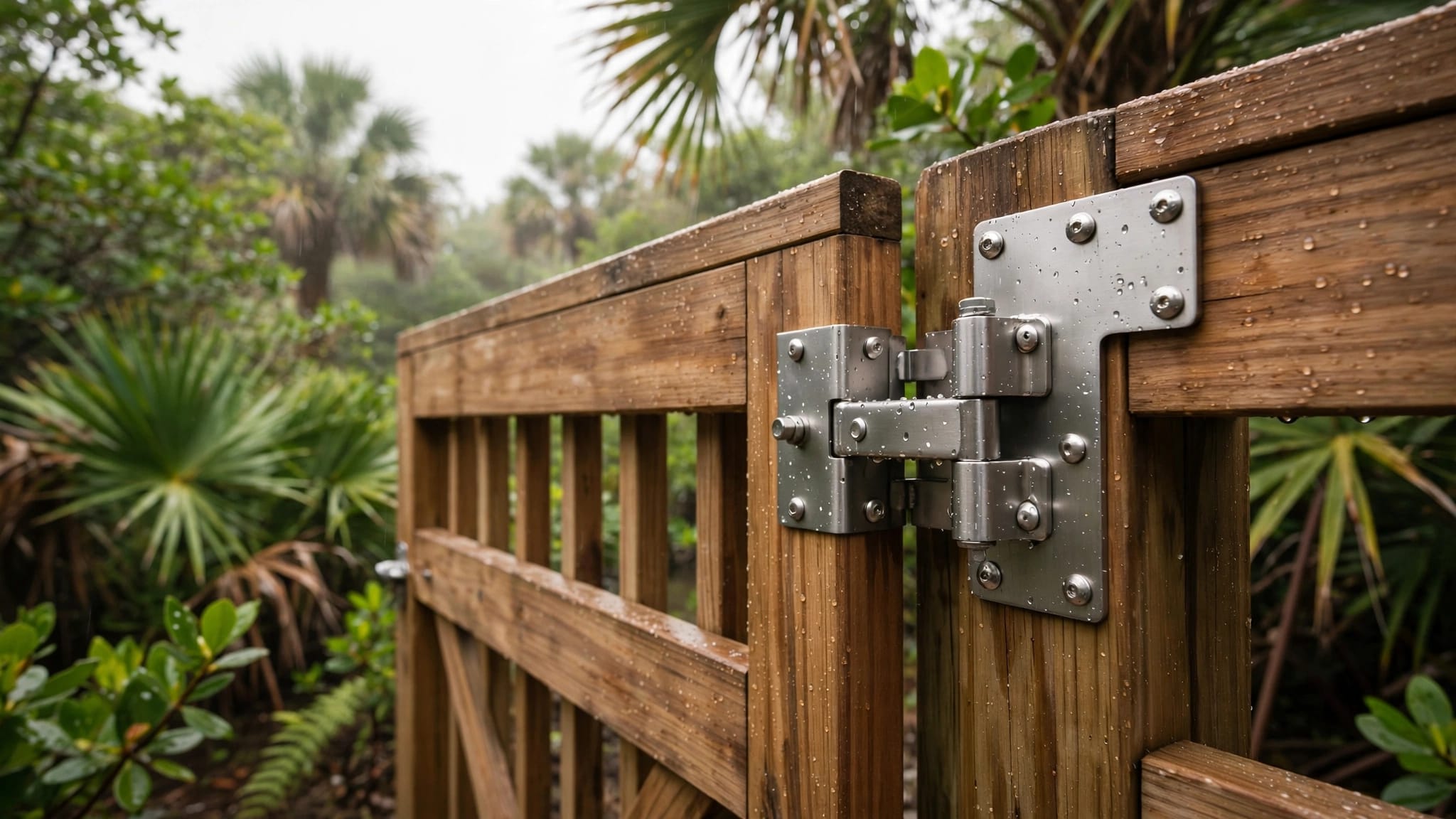
Salt deposits and persistent moisture can damage hinges, brackets, screws, and roller components. Therefore, ask the installer to identify the hardware's material and protective finish.
"Corrosion-resistant" should come with product details. Hardware also needs to be compatible with the fence metal, mounting surface, and any pressure-treated lumber.
Inspect coating damage, rusty fasteners, stiff hinges, and loose brackets during routine yard checks. Follow manufacturer cleaning instructions, and redirect sprinkler spray where practical.
Mesh and plastic components need suitability for outdoor UV exposure. Sun damage can weaken containment parts even when the fence underneath remains sound.
Account for added loads and post condition
Open aluminum and chain-link designs allow more wind through than solid privacy panels. However, that doesn't make either system hurricane-proof.
Added mesh, arms, and brackets change the complete assembly. Ask the contractor to assess the posts, connections, and proposed attachments rather than treating the topper as weightless.
Don't adopt a generic footing depth or post-spacing rule for every yard. Soil conditions, fence design, and applicable requirements affect installation details.
Keep cats indoors during severe weather. Afterward, inspect for leaning posts, damaged mesh, gate movement, and gaps before allowing backyard access again.
Ask for an Itemized Installation Proposal
A meaningful estimate separates the base fence work from the containment additions. Without that detail, two quotes may cover different projects.
Ask the proposal to identify the fence material, repair scope, topper product, attachment method, gate treatment, and lower-gap work. It should also clarify cleanup, approval responsibilities, and warranty terms.
Installed cost depends on perimeter length, existing fence condition, access, and the number of gates or difficult corners. A retrofit on sound posts differs from replacing a deteriorated fence.
Royal Fence's guidance on comparing Cape Coral fence estimates can help you review bids consistently.
Also confirm who will install the containment components and whether the selected manufacturer supports that installation method. Don't assume the base-fence warranty covers aftermarket attachments.
Arrange a final walkthrough before using the yard. Check closures and attachment points, then introduce your cat under close supervision.
FAQ About Backyard Cat Containment
Is a 6-foot privacy fence enough?
Height alone doesn't reliably contain a cat. Climbing ability, nearby objects, and access to the upper edge all matter.
Inspect the individual cat's behavior before deciding what additional measures are needed. Because a taller panel doesn't address every route, supervised observation remains important.
Can an existing fence accept a topper?
Some existing fences can accept a compatible system, but the structure must be sound. Loose posts, brittle panels, and deteriorated wood need attention first.
Have the installer confirm attachment details and manufacturer requirements. Also check the complete proposed assembly with the City rather than assuming a retrofit requires no approval.
Will containment mesh stop other animals entering?
A system intended to keep your cat inside doesn't necessarily exclude wildlife, unfamiliar cats, or other animals. Its design may work differently depending on the direction of approach.
Don't treat backyard fencing as predator-proof protection. Continue supervising outdoor time, and bring your cat indoors when you can't monitor the yard.
Conclusion: Secure the Whole Perimeter
Reliable containment depends on continuous protection at the top, bottom, corners, and gates. A well-chosen topper helps only when the surrounding fence and yard layout support it.
Confirm the complete design with the City, specify suitable coastal hardware, and inspect the enclosure after storms. Discuss your layout and installation needs with Royal Fence through its fence and landscaping services.
Your cat's outdoor space should stay secure through daily use, not merely look finished on installation day.