May 14, 2026
A fence can make a waterfront yard feel finished, but one bad layout can turn dock trips into a daily hassle. On Cape Coral canal lots, the best fence layouts protect privacy, keep the yard neat, and still leave a clean path to the water.
That balance matters more here than on an inland lot. You have permits, survey lines, canal setbacks, and gate placement to think about, so the first sketch should solve real movement, not just look good on paper.
Start with the dock path, not the fence line
On a waterfront lot, the dock route should shape the whole layout. If you plan the fence first, you often box yourself into a narrow opening or a clumsy turn near the seawall.
Cape Coral homeowners usually get the best results when they map three things before choosing a style:
- the shortest path from the house to the dock
- the spot where carts, hoses, or coolers need to pass
- the area that should stay open for service access and cleanup
A survey helps here because it shows property lines, easements, and any space that should stay clear. It also helps you avoid the common mistake of setting a fence too close to a canal edge or across a utility strip.
On many Cape Coral canal lots, the fence that looks neat from the street is the one that causes the most trouble near the water.
Cape Coral rules also matter. New fences usually need a permit, and waterfront areas can have added limits. In many cases, the rear part of the lot near the canal must stay open enough to preserve access and visibility. That means your most private fence often belongs closer to the house, not at the waterline.
Fence layouts that work around a dock
The best layout depends on how you use the yard. Some homeowners want a clean side path. Others want a wider gate near the dock. A few need both.
The table below gives a quick way to compare common options for cape coral fence layouts on dock-access properties.
| Layout | Best for | Why it works |
|---|---|---|
| Rear line with a side dock lane | Larger lots with room along one side | Keeps the yard enclosed while leaving a straight route to the water |
| Side-yard access corridor | Narrow lots or side-mounted docks | Makes dock trips easy without crossing the full yard |
| Split-yard layout | Homes that want privacy near the house and openness near the canal | Places solid fencing where screening matters, then opens up near the water |
| Open rear corner with a wide gate | Kayaks, paddleboards, and maintenance carts | Creates a natural turning area and reduces pinch points |
For many homes, the smartest setup is a split layout . Solid fencing gives you privacy near the patio or pool, then a lighter, more open section protects access near the canal. That approach works especially well when you want a finished look without making the dock feel cut off.
If you like a cleaner, more modern profile, a horizontal fence guide for modern Florida homes can help you think through spacing and visual balance. The key is still the same, keep the dock route direct and leave the rear water edge workable.
Gate placement should make the dock feel easy to use
A gate should feel like a shortcut, not a stop sign. When the gate sits in the wrong place, every trip to the dock gets longer and more annoying.
Most waterfront homeowners do well with a gate that lines up with the natural walking path from the back door or patio. If the dock gets frequent use, a side-yard gate often beats a rear gate because it keeps foot traffic out of the middle of the yard.
A few layout choices make a big difference:
- Put the main gate where you already walk, not where it simply fits.
- Choose a wider opening if you move gear, coolers, or a small cart.
- Make sure the gate swing does not block the dock route.
- Keep latches easy to reach, but secure enough for kids and pets.
- Leave room for a person to stand and close the gate without stepping into the canal side path.
Double gates help when you need extra width for lawn tools or patio furniture. They also reduce the chance of scraping fence posts on the way through. If the dock sits at an angle, it helps to mirror that angle with the gate path so the walk feels natural.
Security matters too, but it should not slow you down. A well-placed latch gives you control without making every dock trip feel like a chore.
Materials that hold up better near salt water
Cape Coral's waterfront air is hard on weak materials. Salt, sun, moisture, and wind all work on a fence at the same time, so the material choice matters as much as the layout.
Aluminum is a strong fit for canal homes because it resists corrosion and keeps sightlines open. It works well along water-facing stretches where you want safety and a light look. Vinyl can also be a smart choice when you want privacy closer to the house, especially in the best vinyl fence styles for Florida homes that use clean lines and low-maintenance finishes.
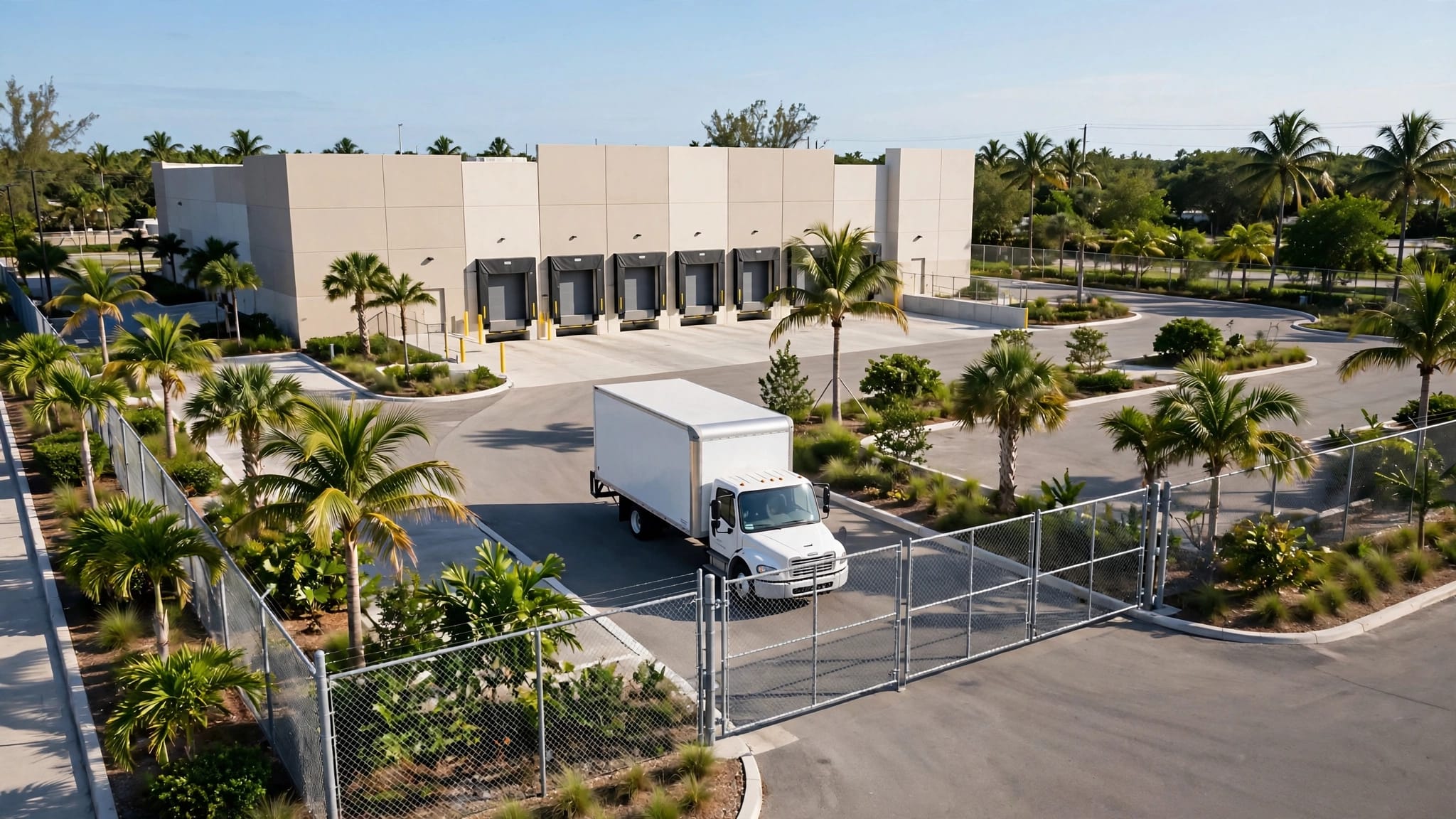
Wood still has a place, but it needs more care in this climate. It can look great around a patio or enclosed yard section, yet it asks for more upkeep and can wear faster near wet areas. Chain link, especially without slats, fits the canal side when the goal is open visibility and compliance with waterfront access rules.
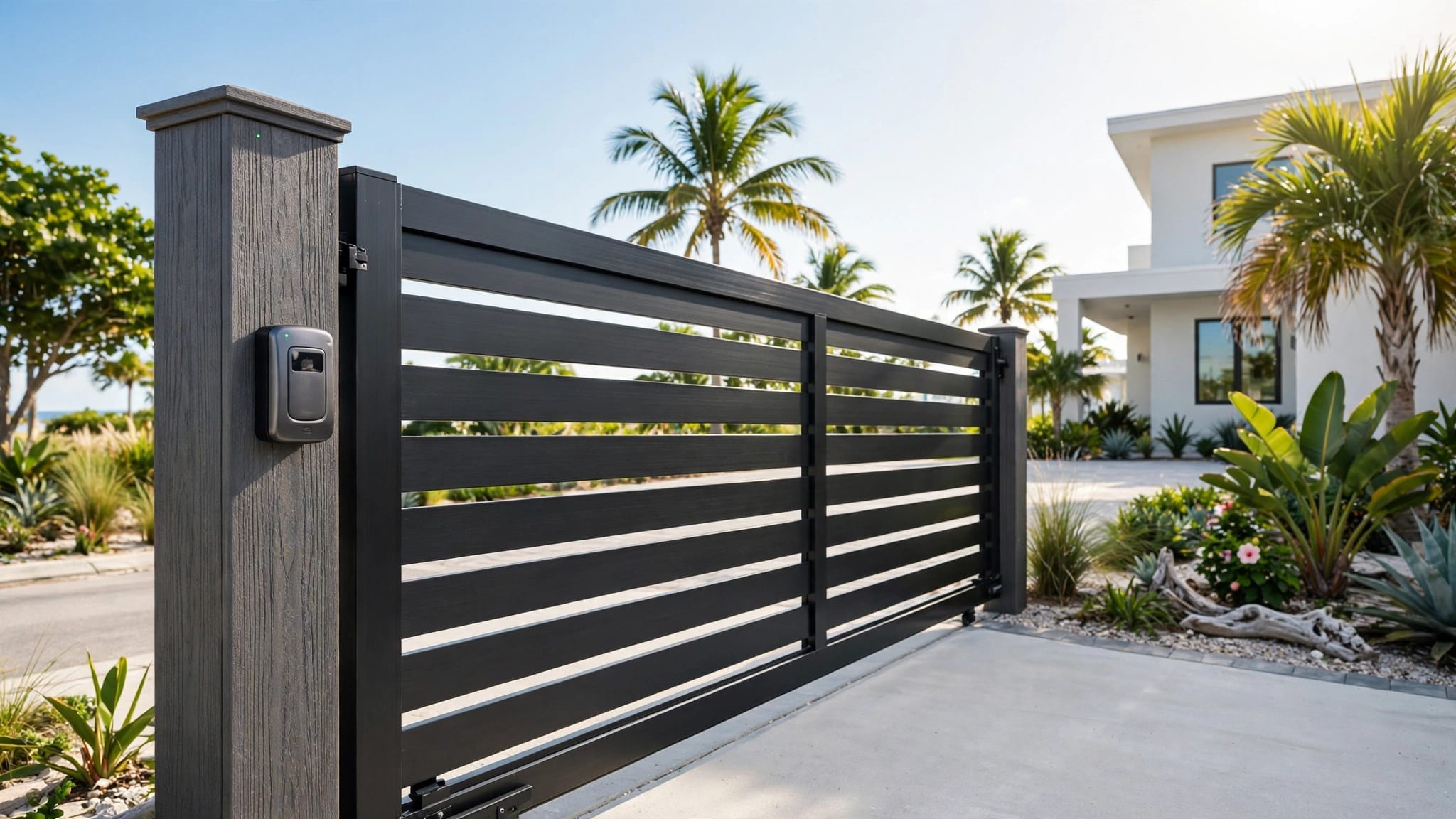
Horizontal designs can also work when they are planned for wind and spacing. They look modern, but the structure has to be built for Florida weather. That means solid posts, smart spacing, and a layout that does not trap too much wind on the open water side.
The best rule is simple. Use the heavier privacy materials where people spend time, then use lighter, more open materials where the yard meets the canal.
Mistakes that cause problems on waterfront lots
A lot of fence headaches in Cape Coral come from the same few layout mistakes. Once you know them, they are easy to avoid.
- Putting a solid privacy fence too close to the canal, especially in the rear water zone where open mesh may be required.
- Skipping the survey and guessing at the property line.
- Blocking an easement, drainage strip, or corner visibility area.
- Choosing a gate that opens into the dock path or hits a post, planter, or seawall cap.
- Using a beautiful fence style that fights the lot shape instead of working with it.
- Forgetting to show the fence path clearly on the permit plan.
Another common problem is overbuilding the water edge. A tall, solid wall may look private, but it can make the dock feel boxed in and may run into local limits. A better approach is to keep the most enclosed area near the house and let the canal side stay practical and open.
Also, pay attention to the finished side of the fence. The good side should face outward, and the layout should still look clean from the yard. Waterfront homes need function, but they should not look pieced together.
Conclusion
The best dock-access fence plan is the one that fits the way you live. It protects the yard, keeps the walk to the water easy, and respects the rules that come with a Cape Coral canal lot.
If the fence line, gate placement, and material choice all support the same path, the whole property feels calmer and more usable. That is the real payoff of a smart Cape Coral fence layout , it works every day, not just on install day.