May 27, 2026
Yes, you can mix fence materials on one Cape Coral lot in many cases. The catch is that the full design still has to follow Cape Coral rules, permit requirements, placement limits, and any HOA standards that apply.
That means your fence can't be built like a free-form collage. It needs a plan. The safest mixed fence designs use approved Cape Coral fence materials, keep heights within code, and make sense for the lot's layout, visibility, and wind exposure.
If you're weighing materials for a home in Southwest Florida, the right mix can save money and improve curb appeal. The wrong mix can create permit headaches, neighbor complaints, or a fence that looks pieced together.
Why homeowners mix fence materials in Cape Coral
A single material does not always fit every part of a property. In Cape Coral, many lots have different needs at the front yard, side yard, and rear yard. You might want privacy in back, open views near the street, and stronger gate sections near driveways or pool areas.
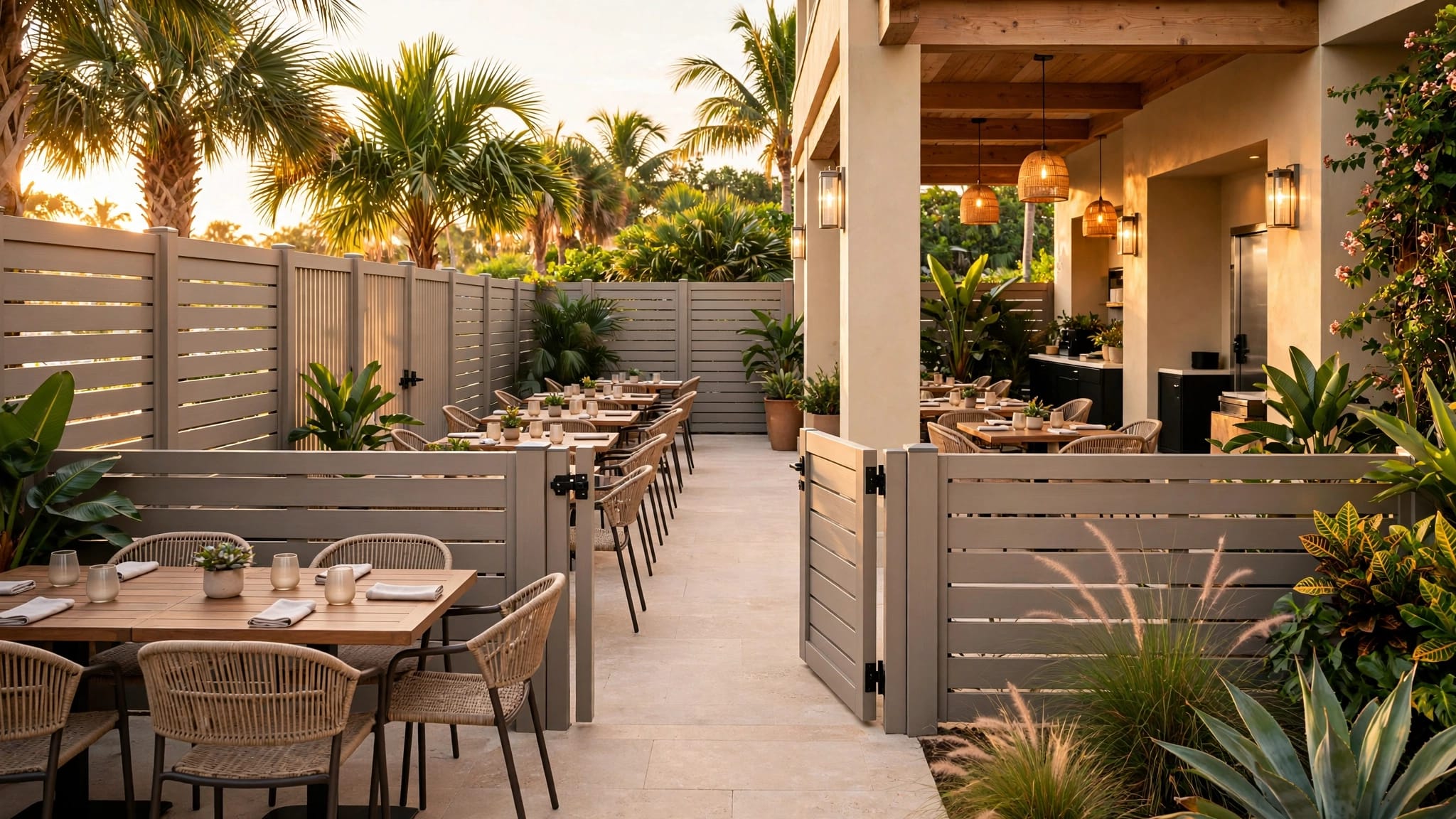
That's where a mixed approach helps. For example, vinyl may work well for a private rear run, while aluminum fits a front section that needs visibility and airflow. Wood can add warmth in a backyard feature zone, while block or stone can create a sturdy base at an entry point.
Local weather also matters. Salt air, sun, and wind put stress on fences fast. If you want a quick comparison of how two common options handle local conditions, this vinyl vs. aluminum fence comparison for Cape Coral is a useful place to start.
The mixed fence that works best is usually the one that fits the lot, not the one that uses the most materials.
In plain terms, mix materials where each one solves a real problem. Don't mix them only to make the fence look busy.
The Cape Coral rules that shape your fence plan
Cape Coral allows several residential fence materials, but the layout still has to fit code. That includes height limits, easement limits, and placement rules near streets, corners, and waterways.
Here's a simple way to think about the main checks before you build.
| Factor | What it affects | Why it matters |
|---|---|---|
| Material type | Which products are allowed | Some materials are approved, others may not be |
| Fence height | Front, side, and rear limits | Different zones can have different height rules |
| Placement | Property lines and setbacks | A fence too close to the wrong area can fail review |
| Easements | Utility and drainage areas | Some fence types may be restricted there |
| Corner lots | Street visibility | Sightlines often matter more on corners |
| HOA rules | Style and finish | HOA standards can be stricter than city code |
The main takeaway is simple. A mixed-material fence can still pass, but every section has to fit the same legal map. A beautiful design won't help if one panel lands in the wrong spot.
If your lot is a new build, timing matters too. Planning early lets you line up the fence with sod, irrigation, and access needs. This new construction fence planning guide for Cape Coral lots is useful if you want to avoid rework later.
Mixed-material fence layouts that often work well
A good mixed fence design usually keeps the front clean and the back private. It also keeps the transition points simple, so the fence looks intentional instead of patched together.
These layouts often make sense on Cape Coral properties:
| Layout | Best use | Why it works |
|---|---|---|
| Aluminum front, vinyl rear | Homes that need curb appeal and privacy | Keeps the street view open while protecting the backyard |
| Wood accent with vinyl main runs | Backyards and patio zones | Adds warmth without making the whole fence high-maintenance |
| Block base with metal top | Lots that need a stronger entry feel | Gives a solid look and handles wear near gates |
| Chain link utility area, privacy fence elsewhere | Side yards or service zones | Keeps costs down where looks matter less |
| Aluminum shared boundary, vinyl backyard | Side lines near neighbors | Balances airflow, visibility, and privacy |
For many Cape Coral homes, aluminum works well in the front because it handles wind better and keeps views open. Vinyl often makes sense in the rear because privacy matters more there. If a side yard borders a neighbor, a more considerate style may help both properties feel better defined. In that case, shared-boundary fence styles for Cape Coral homes can give you a better starting point.
A mixed layout should also feel balanced from both sides of the yard. If the front fence is sleek and the back fence is bulky, that can still work. The key is making the transitions clean, with matching post colors, cap styles, or gate hardware.
Common mistakes that create permit or design problems
Mixed-material fences go wrong when people treat each section like a separate project. In reality, the fence has to work as one system. That's where most mistakes happen.
Here are the issues that cause the most trouble:
- Ignoring height changes : A lot may need different height limits in front and rear areas, so one tall fence line can create a code problem.
- Using unapproved material in the wrong zone : Some materials are fine in one area but not in another, especially near easements or streets.
- Forgetting the HOA : HOA rules can limit colors, styles, or materials even when the city allows them.
- Mixing too many finishes : Too many transitions can make the fence look chopped up and less durable.
- Skipping gate planning : Gates need stronger posts and hardware, especially when you combine heavy and light materials.
- Building before checking property lines : A few inches can matter, and mistakes near a line can lead to removal or changes.
- Overlooking drainage and utility access : Cape Coral lots often need room for service access, and a fence can't block it.
A simple rule helps here. If a design choice does not solve a real problem, leave it out. Clean, practical fences usually age better than complicated ones.
How to plan a mixed fence so it works on the first try
The easiest way to avoid trouble is to plan the fence in the same order a contractor would build it. That means starting with the property needs, then matching the materials to each area.
- Map the lot first. Mark front, side, and rear boundaries, plus any easements, pool areas, or corner exposure.
- Check city and HOA rules. Confirm height limits, approved materials, and any special limits before picking a style.
- Choose the main job for each section. Privacy, airflow, security, curb appeal, or low upkeep should guide the material choice.
- Keep the transitions simple. Use matching post colors, clean corner details, and one clear style change at a time.
- Plan gates early. Entry gates, side gates, and pool gates need the right hardware and support from the start.
That process keeps the design practical. It also helps when you're comparing Cape Coral fence materials for a new lot or a replacement project. A little planning up front is cheaper than changing posts, panels, or gate locations later.
When a mixed fence is a smart choice, and when it is not
A mixed fence is a smart choice when your lot has different needs in different zones. It can help with privacy, wind exposure, shared boundaries, and cost control. It also gives you room to use the best material where it matters most.
It is a poor choice when the design feels random or when you're unsure about the rules. If you want a fence with several transitions, make sure each one has a clear purpose. Otherwise, a single-material fence may look cleaner and be easier to approve.
On Cape Coral properties, the best results often come from a simple formula. Put the strongest visual style where people see it most, then use the most practical material where privacy, durability, or airflow matters more.
Conclusion
You can mix fence materials on one Cape Coral lot, and in many cases, that's the smartest way to build. The key is to let the lot, the code, and the HOA guide the design, not the other way around.
A mixed fence works best when each section has a job. Front areas can stay open and neat, while rear and side sections handle privacy and everyday use.
Rules can change, so confirm the current Cape Coral city requirements and any HOA rules before you build. A quick check now can save time, money, and a lot of repair work later.