February 23, 2026
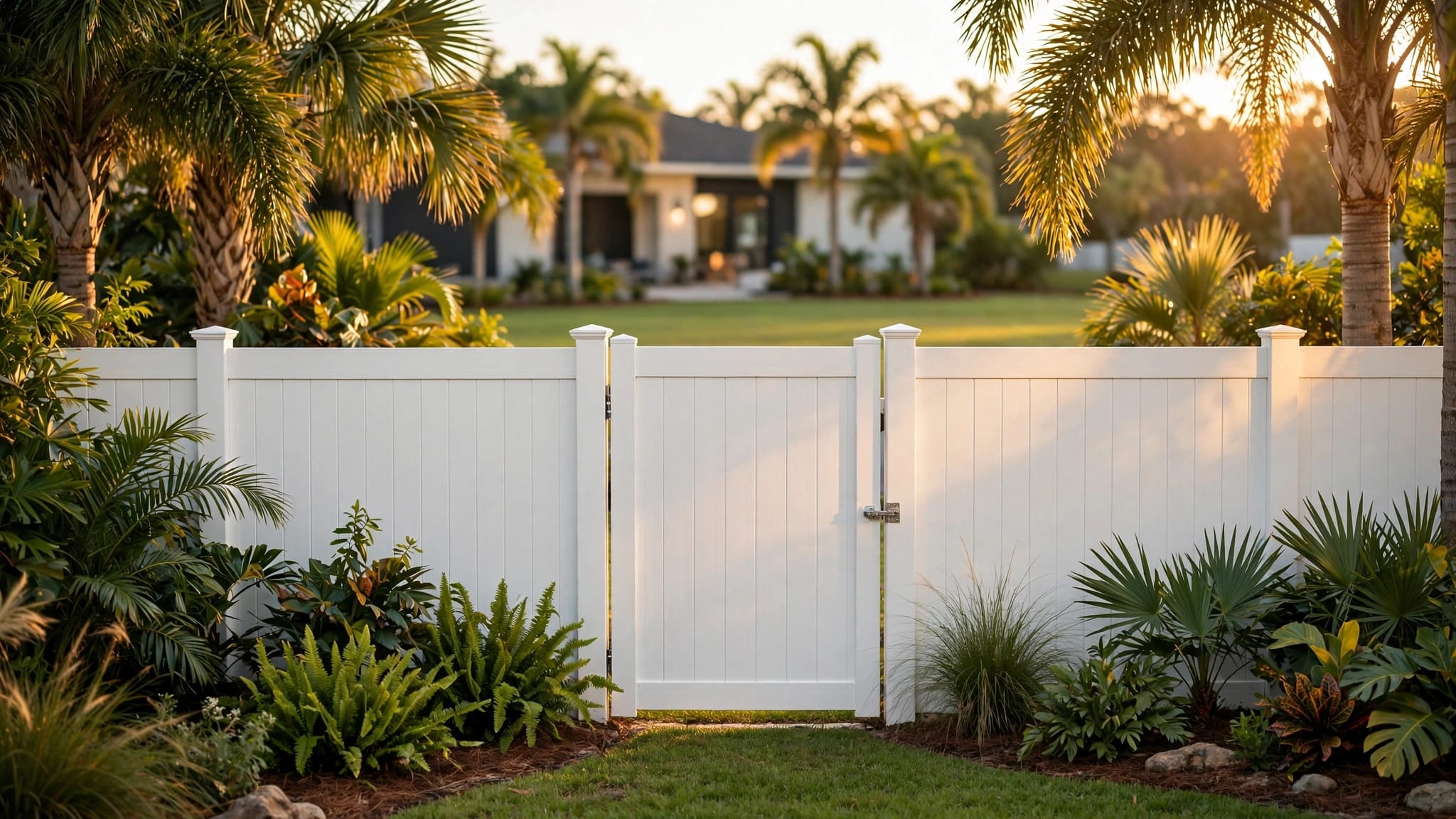
Florida sun can be brutal on anything left outside, including your fence. If you've noticed a "dusty" white film, patchy color, or panels that look older than they should, you're not alone. Vinyl fence fading is one of the most common appearance complaints in Southwest Florida, especially in open backyards with all-day sun.
The good news is that most fading complaints have a clear cause, and many are preventable. The key is knowing what's normal aging, what's a fixable surface issue, and what points to a material or install choice that didn't match our climate.
Below is a homeowner-focused guide to why color changes happen here, what to look for when choosing vinyl, and a simple routine that keeps a fence looking clean for years.
Why vinyl fences fade faster in Southwest Florida
Sunlight is the main driver, but it's not the only one. Florida's UV exposure speeds up chemical changes at the surface of vinyl (PVC). Over time, that can show up as a lighter, flatter look, especially on the sides that face west and south. Research on outdoor vinyl products shows that weathering and formulation affect how well the surface holds its properties over time, which is why not all vinyl fences age the same way (see NIST's weathering research on vinyl).
Heat adds stress too. In Cape Coral, Fort Myers, Estero, and Bonita Springs, fence panels heat up fast, then cool off during storms or evening shade. That repeated expansion and contraction (heat cycling) can slightly change surface texture over time. It also helps dirt stick more easily, which makes fading look worse than it is.
Then there's the Florida "extras" that many homeowners overlook:
- Oxidation and chalking : The surface can form a fine powder that rubs off on your hand. This often looks like fading, even when the color underneath is still solid.
- Humidity and organic growth : Mildew and algae can create gray or green tones that mimic discoloration.
- Coastal salt : Salt film can dull the sheen and trap grime, especially near canals and open water.
- Sprinklers and pool splash-out : Chlorinated water, harsh pool chemicals, and even iron in well water can stain vinyl and leave a blotchy look.
- Fertilizer and cleaners : Overspray from yard products can speed up surface wear or leave residue.
If the "fade" wipes off as a light powder, you may be seeing chalking , not permanent color loss. Cleaning and rinsing habits matter more than people think.
If you're deciding whether vinyl still makes sense for your home, start with material quality and a plan for sun and water exposure. Local style options and install considerations are covered on vinyl fencing in Cape Coral.
Choosing vinyl that resists fading before installation
Preventing color change starts before the first post goes in the ground. In Florida, you want vinyl that's built for long-term UV exposure, not the cheapest panel on a pallet.
A few material features make a real difference:
Look for UV-stabilized vinyl and protective outer layers
Higher-quality fencing often uses UV inhibitors mixed into the vinyl, plus tougher outer surfaces designed to handle sun. Many premium systems use a co-extruded "cap" layer (capstock) or acrylic-style protective materials (often discussed as ASA-type protection in the plastics world). For a plain-language overview of capstock and weatherable compounds used in exterior building products, see capstock and ASA compounds for outdoor use.
Cap layers matter because the sun attacks the surface first. Putting more protection at the surface is a practical approach, similar to how some decking boards and siding are made. Research in other outdoor composites also shows that a stabilized cap layer can improve resistance to photodegradation, which supports the same general idea for exterior plastics (see stabilized cap layer photodegradation study).
Consider color, finish, and placement
White vinyl tends to "show" chalking less than darker tones, but it can still dull. Tan and gray fences can hide dirt, yet they may show uneven sun exposure more clearly on some lots. Texture also plays a role. Light wood-grain textures can hide minor surface changes better than high-gloss panels.
Placement matters just as much as the material. A vinyl fence set right next to a pool deck or directly in the path of sprinklers sees more chemical exposure. If you can, adjust sprinkler heads so they don't hit the fence daily. Also keep mulch, soil, and rocks from piling against the bottom edge, because trapped moisture invites staining.
Finally, don't ignore paperwork. Review your warranty terms before you buy, follow the care instructions, and keep proof of purchase . If a fading claim ever comes up, those details save time.
A prevention and maintenance plan that actually works
Florida doesn't require high-maintenance fencing, but it does reward consistency. The goal is simple: reduce surface buildup, limit chemical contact, and clean gently before grime becomes "baked on."
Safe cleaning method for vinyl (simple and effective)
Use this basic process for routine cleaning:
- Rinse first with a garden hose to remove sand and loose dirt.
- Wash with mild soap (dish soap works) and warm water.
- Scrub lightly using a soft brush or non-abrasive sponge.
- Rinse thoroughly from top to bottom so dirty water doesn't streak.
For mildew or algae spots, start with soap and water. If staining lingers, spot-test a vinyl-safe cleaner in an out-of-the-way area. Many homeowners also use a mild vinegar-and-water mix for organic growth, then rinse well. Skip solvents, harsh degreasers, and abrasive pads, because they can scratch the surface and make future dirt stick faster.
Pressure washing can help, but only with restraint:
- Use a wide fan tip (not a zero-degree or turbo nozzle).
- Keep pressure low (around 1,200 PSI or less when possible).
- Hold the wand 12 to 18 inches away and spray at a slight angle.
- Avoid forcing water into seams, post routes, and gate hardware areas.
For deeper guidance on routine care, see cleaning vinyl fences in Cape Coral.
A simple cadence (monthly, seasonal, annual)
Use this schedule as a baseline, then adjust for canals, heavy shade, or sprinkler exposure.
| Timing | What to do | Why it helps |
|---|---|---|
| Monthly | Quick rinse of sun-facing sections and corners | Prevents dull film and uneven "fade" look |
| Seasonal (3 to 4 times per year) | Soap-and-water wash, check sprinklers for overspray | Removes buildup before it bonds to the surface |
| After big storms | Rinse salt film and wind-blown grit, clear debris at the base | Salt and sand speed up surface wear |
| Annual | Full inspection of posts, gates, and panel fit, address small issues early | Stops minor movement from turning into damage |
If color change comes with cracking, brittleness, or loose sections, treat it as more than a cosmetic issue. A fence that's structurally tired can fail sooner in heat and storms. This guide on when to repair vs. replace a Cape Coral fence helps you spot the difference.
The most common "prevention" win is boring but true: keep sprinklers off the fence and rinse salt and chlorine residue early.
For homeowners weighing materials because of sun and storm exposure, it also helps to compare real-world performance in our area. See vinyl vs aluminum fence in Cape Coral hurricanes for a practical local comparison.
Conclusion
Florida sun will test any outdoor material, but vinyl fence fading doesn't have to be the norm. Start with UV-stabilized vinyl (ideally with a protective outer layer), keep sprinklers and pool water from soaking the panels, and clean gently on a steady schedule. Most importantly, treat chalking and buildup early, because they make fading look worse than it is. A fence that stays clean and cared for usually stays good-looking longer, even through Southwest Florida summers.