September 1, 2026
A propane tank needs more than a screen from the street. It needs room for deliveries, inspections, emergency response, and safe operation in Southwest Florida's heat, storms, and flood-prone conditions.
A well-planned propane tank fence can improve privacy without creating a service problem or violating a placement rule. The right layout starts with the tank and its required clear area, then works outward to the fence design.
Before choosing panels, posts, or a gate, confirm who controls the tank installation and what rules apply to your address.
Start With the Propane Supplier and Tank Details
Your propane supplier should be the first call, even if the fence seems like a simple backyard improvement. Suppliers may set access requirements beyond the minimum code rules, especially when their driver must reach the tank with a delivery hose.
Ask the supplier to review the proposed fence location before construction begins. A fence can create problems if it narrows a delivery path, blocks the tank's valves, limits inspection access, or prevents emergency crews from reaching the equipment.
Confirm the tank's size and installation type
Tank capacity changes the planning process. A small residential cylinder, a 120-gallon tank, a 500-gallon above-ground tank, and an underground tank do not follow one identical set of placement conditions.
Above-ground ASME tanks often need more surrounding space than smaller residential containers. The tank's location relative to structures, property lines, windows, air intakes, ignition sources, and overhead conditions also matters.
Do not measure from a fence post or concrete pad and assume the result applies to the tank. Placement standards commonly measure from the outer shell of the container, and the supplier can confirm the applicable measurement point.
Get the existing installation information
Keep the conversation practical. Provide the supplier with photos, a rough lot sketch, tank capacity, and the proposed fence material and height. Ask whether the plan affects delivery, maintenance, shutoff access, regulator access, or emergency procedures.
A gate does not fix a bad propane fence layout if the enclosure still blocks ventilation, required clearance, or access to the tank's valves and relief equipment.
If the supplier wants the tank moved, relocated, or reconfigured, settle that issue before a fence contractor sets posts.
Propane Tank Fence Clearances Are Site-Specific
There is no one fence distance that works for every propane tank in Cape Coral, Fort Myers, Estero, or Bonita Springs. Tank size, installation type, local code enforcement, supplier policy, and site conditions all affect the approved layout.
NFPA 58 is a major code basis for LP-gas installations. However, homeowners should not treat a general online distance as permission to build. The current installation, the tank's capacity, and the authority having jurisdiction determine what applies at a particular property.
Keep the service and emergency zone open
A propane tank enclosure cannot prevent a technician from inspecting the container, reading labels, operating valves, reaching the regulator, or responding to a leak. It also cannot obstruct a relief valve or emergency shutoff.
For some tank arrangements, public NFPA 58-based guidance refers to fenced areas with a 6-foot industrial or chain-link fence and at least 3 feet of emergency-access clearance to an exit path. That does not mean every home propane tank needs that exact fence or distance.
Your supplier and local fire authority must approve the spacing for your installation. They may require open space around the tank, a wider gate, an unobstructed hose route, or a different fence location.
Avoid solid, sealed enclosures
Do not build a closed box around a propane tank. Wood privacy panels, vinyl panels, masonry walls, decorative screens, shrubs, and lattice can all create access or ventilation concerns when placed too close or arranged on every side.
Some guidance for concealed propane containers calls for at least one long side to remain open and clear access above the tank for emergency hose-stream cooling. That principle should guide the fence concept, but it is not a substitute for project approval.
A visual barrier belongs outside the approved tank area. It should never trap gas, hide damaged equipment, or make the tank harder to reach.
Build the Layout Around Access, Not Appearance
Privacy matters, particularly when the tank sits beside a lanai, driveway, pool area, or neighbor-facing property line. Still, the fence layout needs to support the people who service the tank.
Mark the tank, regulator, fill connection, relief valve, and delivery approach on a simple site plan. Then mark nearby buildings, doors, windows, AC equipment, pool equipment, utility boxes, drains, septic components, and property lines.
Plan a clear delivery route
Delivery drivers need a workable route from the truck to the tank. A fence placed between the street or driveway and the container may create a longer hose run or a route through a gate, around corners, and across landscaped areas.
Confirm where the delivery truck normally stops. Tell the supplier if you plan to add a locked gate, change driveway access, install a pool cage, or create a new side-yard barrier.
A gate should open wide enough for approved service access and should not swing into the tank's working area. The supplier may also have preferences for latch placement or lock procedures.
Use landscaping carefully
Plants can soften the look of a propane tank fence, but mature growth changes the space. A young clusia hedge, palm, bougainvillea, or ornamental grass may look harmless on installation day and become a dense wall within a few seasons.
Keep plantings outside the supplier-approved access area. Avoid thorny shrubs near service paths, and do not let irrigation heads spray valves, regulators, or metal components.
Choose low-maintenance landscaping that can be trimmed without workers entering the tank area. A clean planting bed also makes leaks, corrosion, and storm damage easier to spot.
Check Local Permits, Easements, and Flood Conditions
Fence rules are local, while propane requirements also involve fire-code enforcement and the supplier. A project can satisfy a neighborhood preference yet still interfere with an easement, setback, tank permit condition, or flood requirement.
Cape Coral offers separate fence permit documents, and its LP tank permit guidance calls for site plans showing tank location, buildings and structures, property lines, openings, ignition sources, and whether the tank is above or below ground. The city's guidance also states that LP tanks cannot sit within a 6-foot utility easement and that above-ground LP tanks cannot be located in front property setbacks.
Contact the authority having jurisdiction
The authority having jurisdiction, often called the AHJ, may be a city building department, county office, fire marshal, or fire-rescue department. Contact the correct local office before finalizing a fence around the tank.
Fort Myers, Estero, Cape Coral, and Bonita Springs can have different permitting routes and local interpretations. Bonita Springs regulates fence construction and approved materials through its building process, but a fence permit does not replace propane installation approval.
Share the same drawing with the propane supplier, fence contractor, and local authority when review is needed. Conflicting sketches cause expensive changes after posts are already in the ground.
Account for flood zones and storm exposure
Southwest Florida's flood zones add another layer of review. Flood exposure, storm surge risk, saturated soils, and wind loads can affect tank anchoring, support systems, fence post depth, and material selection.
Do not attach a fence to a propane tank, tank stand, regulator support, or anchoring system. Those components must remain accessible and must perform as designed during severe weather.
A licensed contractor can evaluate soil conditions and fence construction needs. The propane company and AHJ should address any tank anchoring or flood-related questions.
Choose Fence Materials That Fit the Approved Plan
Once the approved footprint is clear, choose a material that handles Florida sun, rain, salt air, and hurricane-season wind. Material choice affects appearance and upkeep, but it cannot override required access or spacing.
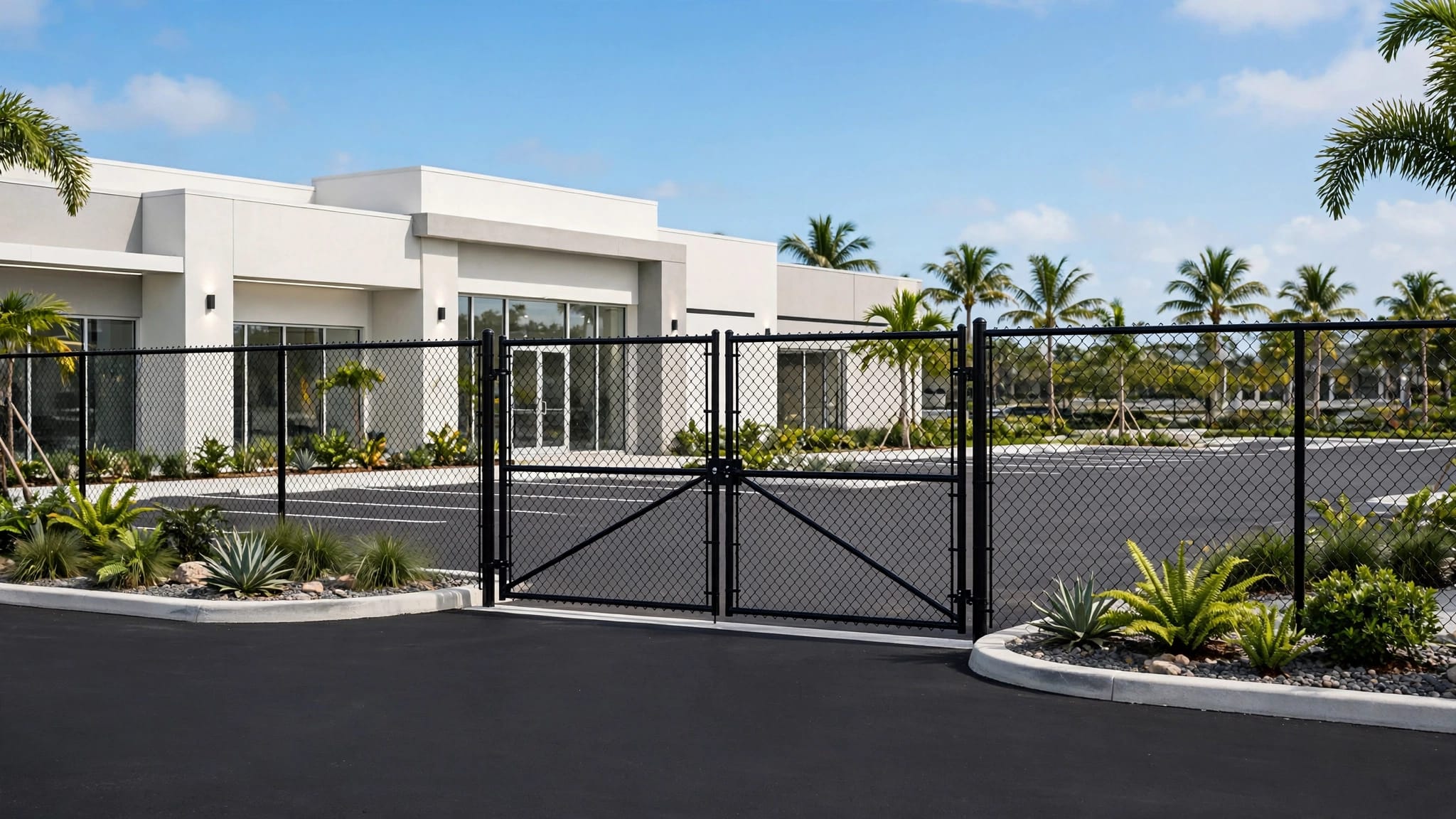
For an open barrier, aluminum or chain link may work well because air can move through them. Aluminum offers a cleaner residential appearance and resists corrosion when it has a quality powder-coated finish.
Vinyl works only with a compliant layout
Vinyl privacy fencing gives a tidy, low-upkeep look. However, solid panels should stay outside the approved propane tank clearance and access area. A fence contractor may use offset panels, return sections, or a partial screen to block views without enclosing the equipment.
Vinyl also needs a wind-conscious design. Large solid panels catch wind, so post spacing, reinforcement, and gate hardware matter in exposed yards.
For help weighing open aluminum against solid privacy panels, review this vinyl vs. aluminum fence comparison. The best visual choice is the one that fits the approved tank layout.
Wood and louvered screens need extra thought
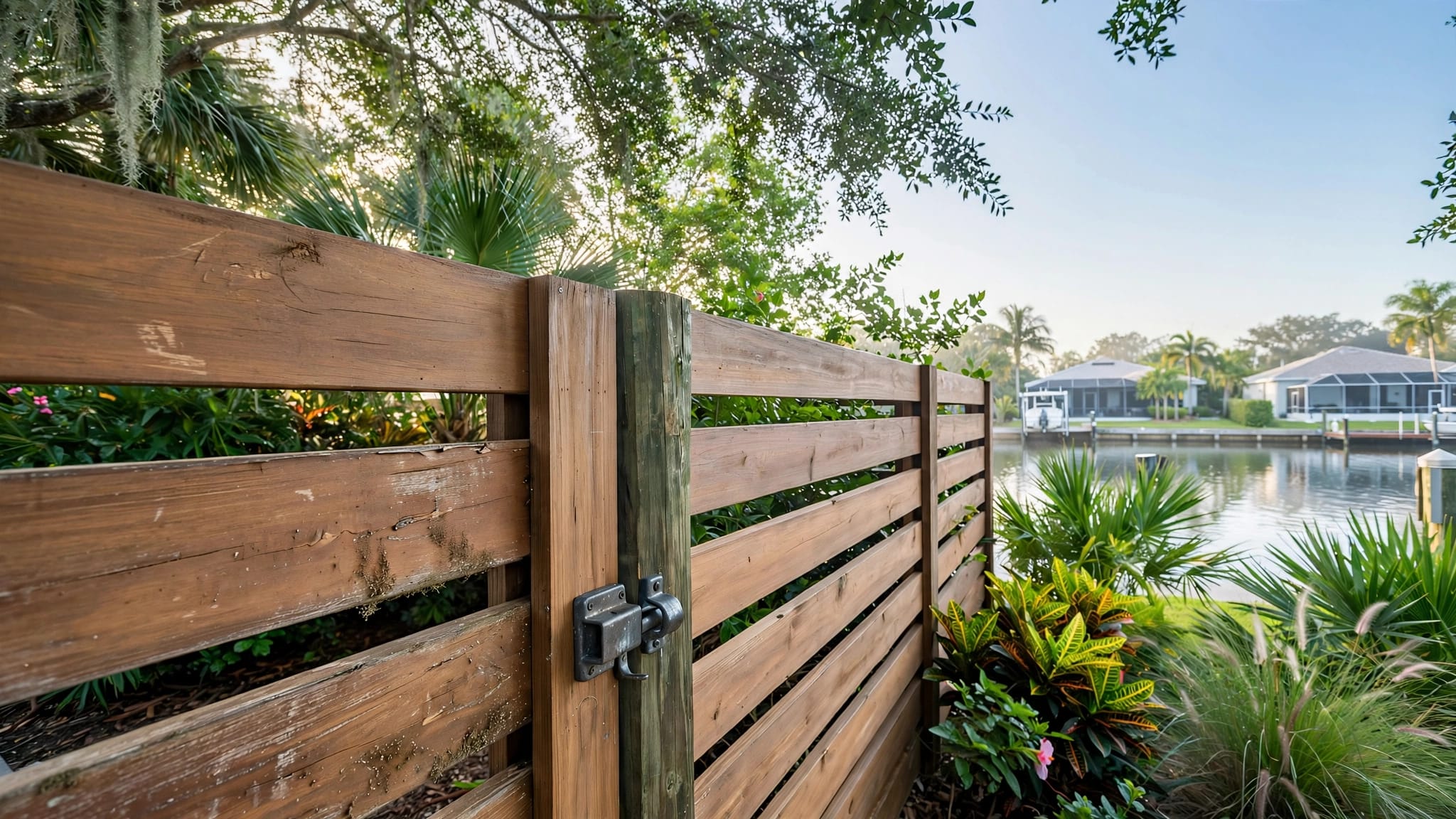
A wood fence can complement a traditional home, while a louvered design can offer partial screening. Both need careful placement because they may restrict access or create a more enclosed condition around the tank.
Wood requires regular inspection in Southwest Florida's humidity and rain. Loose boards, warped gates, rot, and overgrown vines can reduce a once-approved access route.
If privacy is the goal, consider screening the sightline from the patio or street rather than surrounding the tank on all sides. A shorter return wall placed at a proper distance may do more with less material.
A Practical Planning Checklist
Use this checklist before requesting fence estimates:
- Confirm tank size, ownership, fuel supplier, and whether the container is above ground or underground.
- Ask the propane supplier to approve the proposed fence footprint, gate location, delivery route, and access to valves, regulators, relief devices, and emergency shutoffs.
- Draw the tank, structures, windows, property lines, utilities, easements, pool equipment, and proposed fence on one site plan.
- Check local fence permits and ask the AHJ whether the existing LP tank permit or installation needs separate review.
- Review flood-zone conditions, wind exposure, drainage, and any tank anchoring requirements with the appropriate professionals.
- Select a fence material only after the safe, approved footprint is known.
- Put access requirements, gate details, material specifications, permit responsibility, and cleanup in the written contract.
Work With a Fence Contractor Who Respects the Tank Area
A qualified fence contractor can measure the lot, identify layout conflicts, and build a durable barrier around the supplier-approved space. The contractor should never guess at propane clearances or move tank equipment to make the fence fit.
Bring your supplier's requirements to the estimate appointment. If the information is incomplete, pause the project until the supplier or AHJ provides direction. That step can prevent rework, permit delays, and a fence that blocks future deliveries.
Compare estimates by scope, not price alone
Two quotes may list the same number of linear feet but describe different work. One may include a wide service gate, reinforced posts, permit coordination, careful hand digging near utilities, and a non-enclosing layout. Another may omit those items.
Use a Cape Coral fence quote comparison guide to review materials, hardware, gates, permits, site conditions, and exclusions before selecting a contractor.
Clear scope protects the homeowner and helps the installer preserve the access conditions approved for the propane system.
Final Thoughts on Fencing Around Propane Tanks
A propane tank fence should provide privacy while leaving the tank safe, visible enough for inspection, and accessible for delivery and emergencies. Tank capacity, installation type, supplier rules, local permits, easements, and flood conditions all shape the right plan.
Start with supplier and AHJ approval, then design the fence around that information. Safe access is the feature that makes every other design choice possible.