October 4, 2026
A well-built chicken run can still be the wrong project for a Cape Coral property. Before choosing fencing, confirm that your parcel qualifies for poultry keeping, because most residential lots don't.
For permitted Cape Coral chicken runs, secure enclosure design matters as much as the fence material. Start with zoning, then compare materials, gate details, and weather protection before requesting an installation estimate.
Check whether your property qualifies for chickens
Cape Coral has narrow poultry exceptions
Cape Coral Code Section 4-32 generally prohibits poultry across zoning districts, with specified exceptions. A fenced backyard alone doesn't make chicken keeping permissible.
One exception concerns Residential Estate (RE) property that also carries a Low Density Residential II Future Land Use Map classification. The stated minimum parcel area is 100,000 square feet , and the property must meet the applicable development regulations.
Under that provision, animals cannot remain within 100 feet of a district other than qualifying RE or Agricultural. Animal buildings, roofed structures, and enclosures must remain at least 150 feet from separately owned parcels in other districts.
Agricultural zoning is exempt from the Section 4-32 prohibition. However, that exemption doesn't replace a review of other applicable requirements.
Verify the parcel before planning the enclosure
Ask Cape Coral's Development Services staff to confirm both your zoning district and future land-use designation. Then review the proposed enclosure location against the applicable buffers.
Also check HOA documents, deed restrictions, and landlord requirements where relevant. Private restrictions can limit a project even when municipal rules allow it.
Approval for a property fence doesn't establish permission to keep chickens. Poultry eligibility and fence approval are separate questions.
Resolve those questions before buying birds or paying a fence deposit.
Fence options for Cape Coral chicken runs
A property fence defines your yard. A chicken enclosure must also address bird size, predators, ground gaps, and overhead access. Sometimes those jobs require separate barriers.
These common fence materials offer different starting points.
| Fence option | Main advantage | Chicken-run limitation |
|---|---|---|
| Galvanized or coated chain link | Often economical for larger areas; allows airflow | Openings and edge gaps need assessment; it isn't a complete predator barrier |
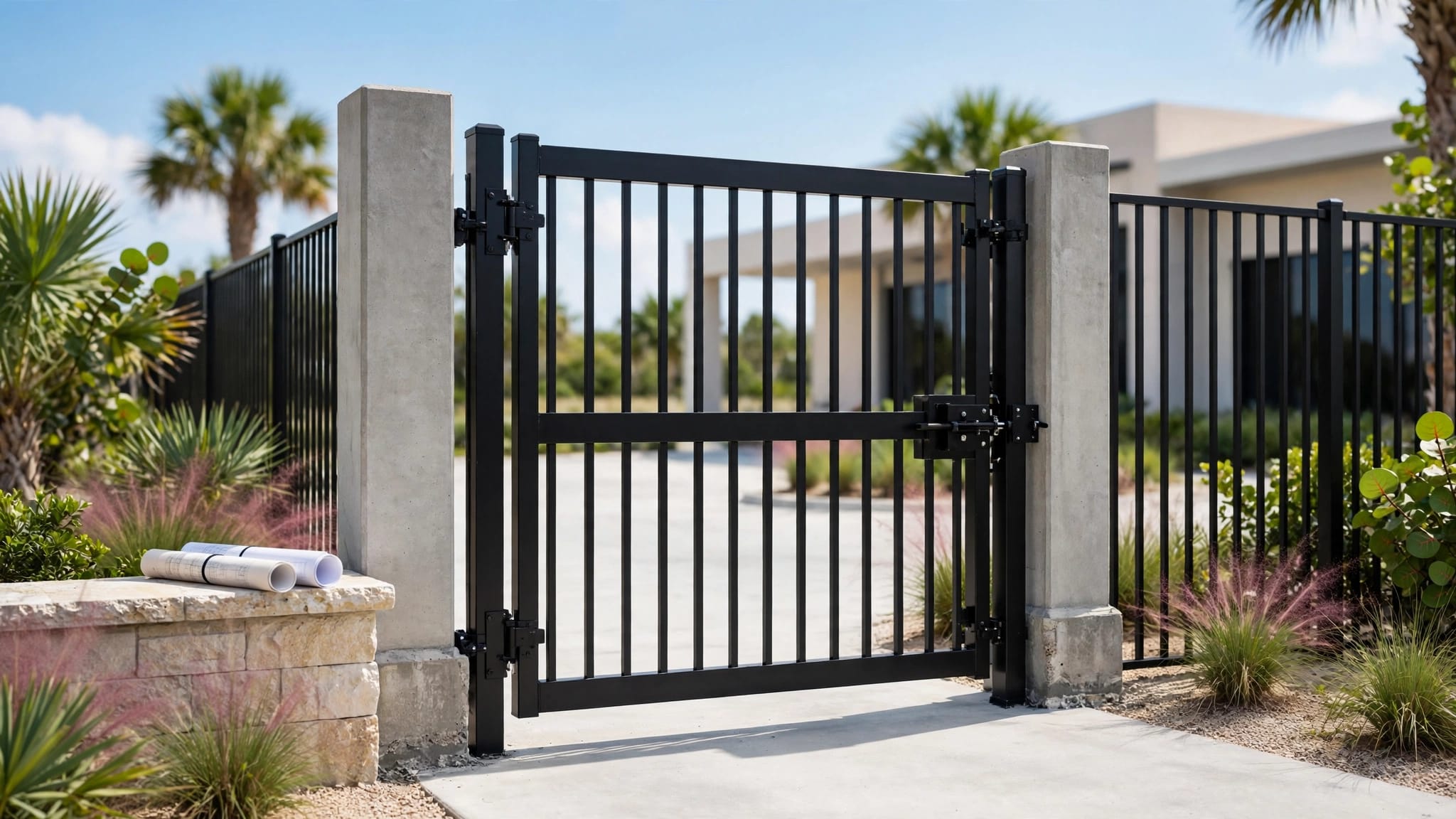
| Powder-coated aluminum | Open views and good corrosion resistance when properly specified | Standard picket spacing may be unsuitable for poultry |
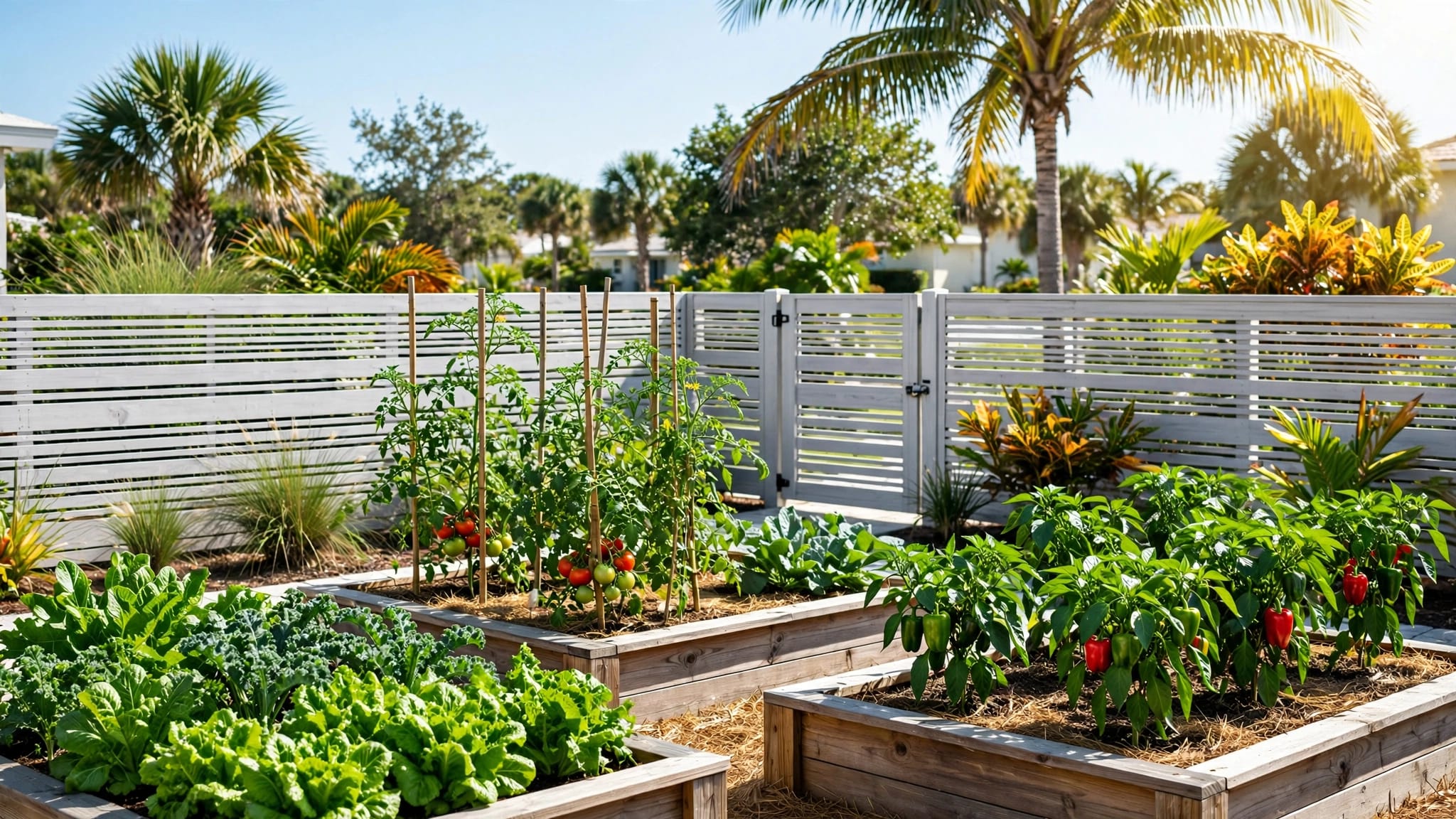
| Vinyl privacy fencing | Screens the yard and needs relatively little upkeep | Solid panels reduce airflow and don't secure the enclosure overhead |
| Wood fencing | Customizable appearance and layout | Moisture, warping, and ground-level deterioration need attention |
Chain link is often the practical starting point for a functional enclosure framework. However, compare the complete design rather than choosing by material name alone.
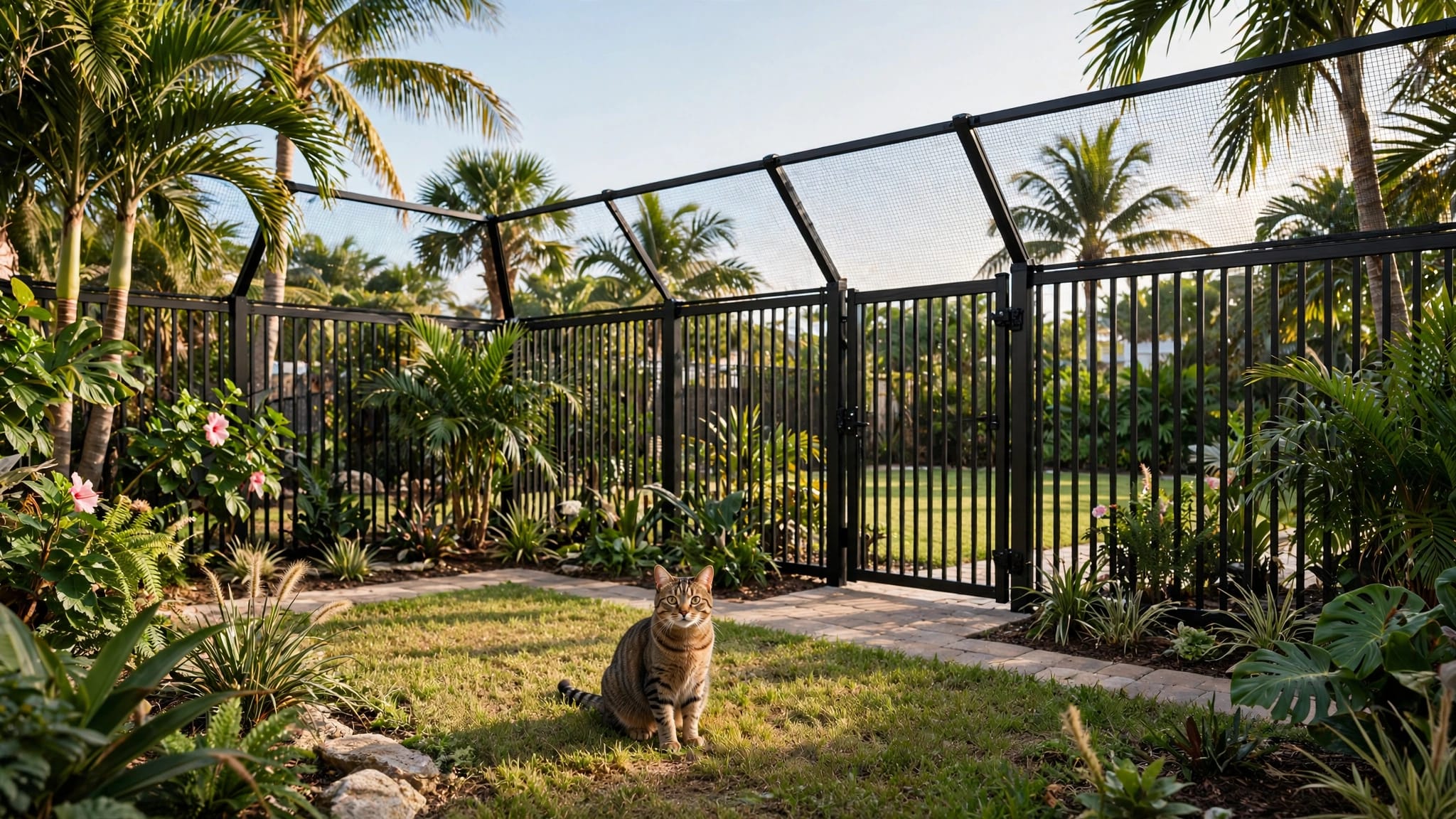
For example, an aluminum boundary fence may suit a canal-side yard while a separate mesh enclosure protects the flock. That arrangement lets each barrier do its own job.
Chicken wire can help contain birds, but it isn't a dependable stand-alone defense against determined predators. Ask the installer about stronger welded wire or hardware cloth where closer protection is needed.
Whichever material you choose, inspect how the mesh meets posts, gates, and the ground. Good panels cannot compensate for unsecured edges or poorly fitted access points.
Wood and vinyl work differently around a run
Wood allows customization but needs upkeep
Wood can suit homeowners who want a natural-looking backyard fence or a frame built around an unusual layout. It also allows contractors to tailor access openings and screening.
However, Southwest Florida's moisture makes maintenance important. Check boards and rails for rot, splitting, and warping, especially near soil and irrigation.
Ask which lumber, fasteners, and protective finish the estimate includes. Also confirm that the proposed wood design is acceptable for your parcel.
Vinyl screens the yard but doesn't finish the enclosure
Vinyl can hide feed storage or screen a utility area without the regular staining that wood requires. Still, privacy panels don't provide a complete chicken enclosure.
A screened run needs adequate ventilation and separate attention to roof openings, gates, and ground gaps. Solid fencing also presents more surface area to wind.
Royal Fence's comparison of wood and vinyl privacy fences helps you weigh appearance and upkeep. Treat that boundary-fence decision separately from poultry protection.
Secure the ground, gates, and overhead openings
Ground-level gaps and gates deserve close inspection
Sandy soil and storm runoff can change the clearance beneath a fence. Therefore, review the finished grade with your installer rather than assuming the original ground level will remain unchanged.
Discuss protection against digging and entry beneath the enclosure. The appropriate detail depends on soil, drainage, and predator exposure; don't treat a generic installation detail as a local code requirement.
Gate corners also deserve attention. A gate can close neatly while leaving an opening below or beside the frame.
Ask how the contractor will secure mesh edges and keep hinges and latches functional. Then inspect those connections regularly, especially after heavy rain or equipment passes nearby.
Overhead protection needs its own design
An open-topped run leaves birds exposed to aerial predators. Chickens may also fly out, depending on the breed and enclosure.
Discuss overhead protection as part of the complete project. The contractor should account for support, attachment, access, and weather exposure.
Shade fabric and lightweight netting have different purposes from structural roofing. Don't assume one product provides shade, predator resistance, and storm protection equally well.
If you propose a roofed structure, ask the city how it will classify and review that component. A fence approval doesn't automatically cover everything attached to it.
Plan for Cape Coral heat, rain, and storms
Shade and drainage affect daily usability
Place the run where birds can access shade without blocking ventilation. A solid privacy fence may screen the enclosure, but it can also restrict moving air.
Before setting posts, observe where water collects after rain. Avoid directing roof runoff into the run or placing gate openings in persistently wet areas.
The layout should also give you room to clean, refill water, and remove bedding. A gate that accommodates your maintenance equipment makes those routine jobs easier.
Keep drainage routes and required utility access clear. Neither a secure enclosure nor a convenient gate should obstruct those areas.
Coastal exposure changes hardware choices
Where salt exposure is a concern, ask about powder-coated aluminum, hot-dipped galvanized components, and corrosion-resistant fasteners. Coastal guidance identifies 316 stainless steel as more chloride-resistant than 304 stainless.
However, specify compatible materials rather than mixing metals without review. Hardware and connections deserve the same attention as visible panels.
Open fencing allows more wind passage than solid privacy panels. Even so, no material name establishes hurricane performance.
Ask the installer to explain the proposed posts, footings, connections, and any required engineering. Remove or secure loose accessories before storms, then inspect the enclosure afterward.
Review Cape Coral fence permits and placement rules
Cape Coral's published residential fence guidance requires a permit and says the property must already be improved before a fence can be permitted.
It lists a general residential height limit of 6 feet , or 8 feet where residential property abuts commercial property. Those limits don't establish approval for every location or fence design.
Waterfront placement adds another condition. Within the rear 20 feet of a property abutting a waterway, fencing must be open mesh above 3 feet.
Have the contractor review your survey, easements, property lines, gate locations, and proposed enclosure footprint. There isn't one universal setback that safely applies to every Cape Coral fence project.
Before digging, call 811 for utility marking. Also identify private underground lines, such as irrigation or owner-installed electrical service.
Finally, confirm whether the enclosure's roof, attached structures, or unusual height require additional documentation. Don't assume a small or interior enclosure avoids review.
Compare contractor quotes for the complete enclosure
A low panel price tells you little about the finished chicken run. Mesh reinforcement, overhead protection, gates, site preparation, and permitting can change the scope substantially.
Request written estimates based on the same layout and materials. Royal Fence's guide to comparing Cape Coral fence estimates explains why apparently similar bids can include different products and services.
Before signing, confirm that each proposal identifies:
- The fence material, mesh specifications, posts, and attachment details.
- Gate dimensions, hardware, ground-level protection, and any overhead work.
- Permit responsibilities, removal and disposal, warranty terms, and exclusions.
Also ask for proof of applicable licensing and insurance. A contractor should clearly distinguish ordinary boundary fencing from specialized poultry-enclosure work.
Without those details, you may be comparing a basic yard fence with a much more complete installation.
Key takeaways
- Confirm poultry eligibility before ordering fencing; most Cape Coral residential parcels don't qualify.
- Choose the boundary fence and chicken enclosure according to their separate functions.
- Review gates, ground gaps, overhead protection, and corrosion-resistant connections as one system.
- Compare complete installation scopes, including permits and any additional structural review, rather than panel prices alone.
Frequently asked questions
Can a removable chicken run avoid the zoning restrictions?
Don't assume portability creates an exception. Cape Coral's poultry prohibition concerns keeping the animals, so a movable enclosure doesn't establish permission. Ask Development Services whether your parcel qualifies before choosing either a permanent or removable run.
Can a chicken run share an existing pool fence?
A pool barrier has separate safety requirements. Adding mesh, changing gates, or creating access through the barrier may affect its approved design. Have the proposed changes reviewed before installation, and don't assume that a fence suitable for poultry also satisfies pool-safety requirements.
Choose the enclosure after confirming permission
The right fence starts with a parcel that legally supports poultry keeping. After that, material selection should follow the enclosure's practical needs and your property's exposure.
Prioritize a complete barrier design over a familiar fence style. Clear specifications, secure access points, and a reviewed installation plan give you a stronger basis for choosing a Southwest Florida fence contractor.