June 2, 2026
A fence can look simple from the street, but the posts carry most of the load. In Cape Coral, that matters even more because moisture, salt air, sun, and termites can wear posts down faster than many homeowners expect.
So, can you reuse old fence posts ? Sometimes, yes. The real answer depends on the post's condition, the footing below it, and the type of fence you want to build next.
A post that looks fine above ground can still fail where you can't see it, at the base.
What actually decides if an old post can stay
The first test is simple, if the post feels solid, it might still have life left. The second test is less forgiving, if the base has rot, rust, cracking, or looseness, reuse gets risky fast.
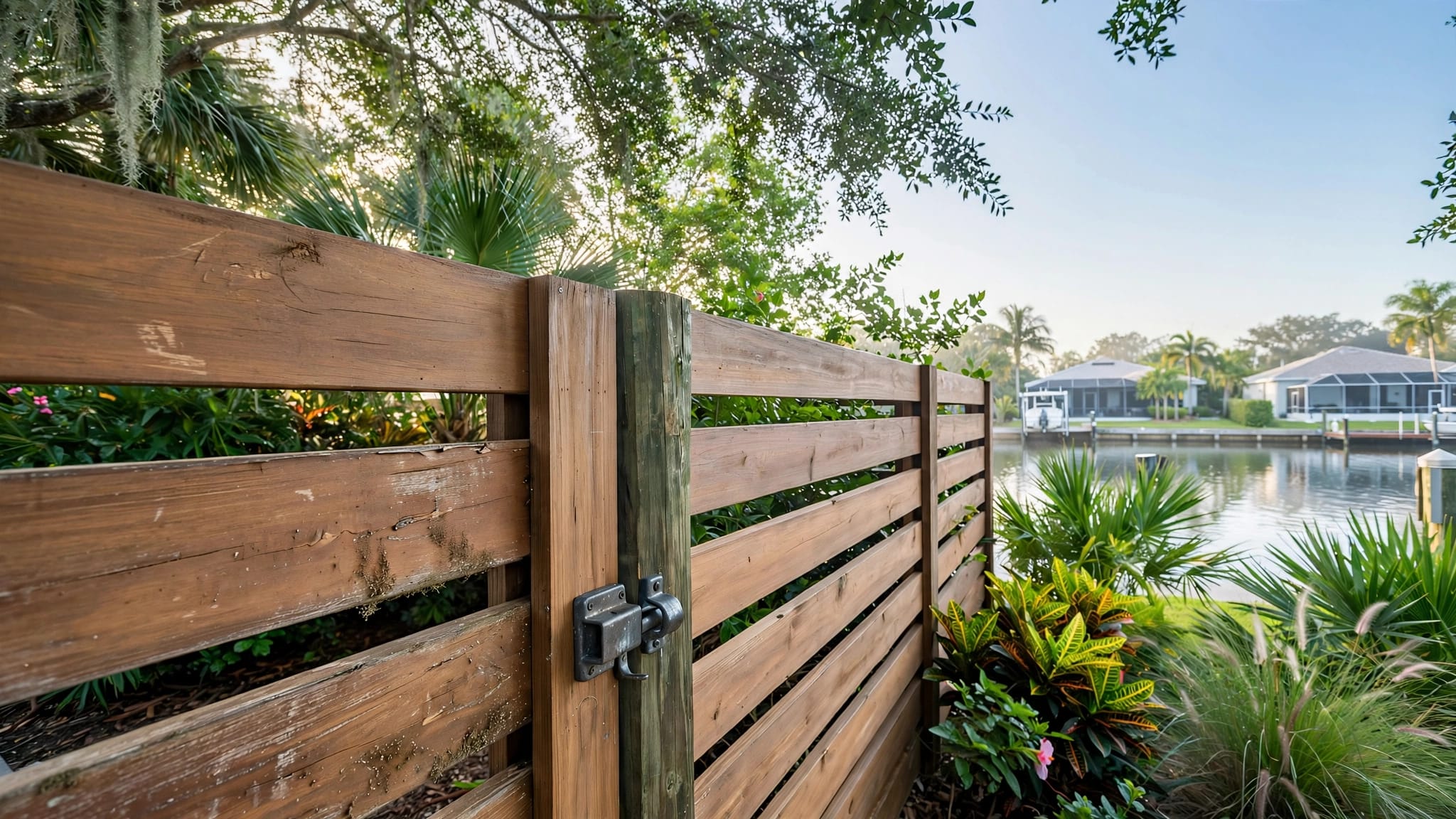
Wood posts need close attention near the ground line. That's where moisture collects and damage starts. Metal posts need a check for rust, bends, and weak fasteners. Even when the post itself looks decent, a failed concrete footing can ruin the whole setup.
A quick push by hand tells you a lot. Any wobble, twist, or bounce is a warning. The same goes for visible gaps between the post and concrete. If the footing has shifted, the post may not hold up during wind or heavy rain.
Before you make a choice, it helps to compare the job with local repair options. A guide to fence repair in Cape Coral can give you a better sense of when repair makes sense and when replacement is the cleaner fix.
Cape Coral weather wears posts faster than you think
Cape Coral fences live in a tough setting. Rain soaks the soil, heat dries it out, and that constant cycle moves posts around. Add salt exposure from the air, and metal parts can corrode faster. Sun also breaks down exposed wood and weakens protective coatings.
Termites make the problem worse. They often target soft or damp wood near the base, where damage hides until the fence starts leaning. Once they get in, the inside can hollow out while the outside still looks okay.
Storms add another layer of stress. Strong wind pushes against the fence, and weak posts get forced back and forth. That movement loosens concrete, opens cracks, and turns a small problem into a full replacement later.
If a fence has already failed once in the same spot, pay close attention to the footing. A post is only as good as what holds it in place. If the concrete is shallow, cracked, or crumbling, reusing the post may save a little now and cost more later.
Signs an old post is worth keeping, or replacing
The decision gets easier when you look at the visible signs side by side.
| Condition | What it usually means | Best move |
|---|---|---|
| Solid wood, no soft spots | The post may still be sound | Inspect the footing and hardware |
| Minor surface wear only | Age is showing, but strength may remain | Recheck after cleaning and drying |
| Rust at the base of a metal post | Moisture has started the damage | Replace or test very carefully |
| Cracks, splits, or rot near the ground | Strength has dropped | Replace the post |
| Post moves in the concrete | The footing has failed or shifted | Rebuild the footing |
| Termite damage or hollow wood | Hidden weakness is likely | Replace it |
A table like this helps, but it doesn't replace a real inspection. A post can look acceptable from a distance and still fail under pressure. That is why the base matters more than the top rail or panel.
Heavier fences also change the answer. A privacy fence puts more stress on posts than a lighter section of chain link. So does a taller fence or one built to catch wind. If the new fence will be heavier than the old one, reuse becomes a weaker choice.
When in doubt, ask for a repair opinion before you commit. A local contractor can spot hidden rot, rust, or footing trouble much faster than a quick walk-around in the yard.
Safety and long-term cost usually point the same way
Short-term savings can be tempting. Reusing posts means less digging, less concrete, and less labor. Still, those savings disappear if the fence leans, rattles, or fails after the next storm.
New posts often make more sense when the old ones have multiple problems. That's especially true if the fence is old enough that several posts are near the end of their life. Replacing a few weak posts now can prevent a bigger repair later.
It also helps to compare quotes the right way. Ask whether the price includes new posts, new concrete, disposal, and cleanup. A clear estimate makes it easier to see whether reuse is truly cheaper or only looks cheaper on paper. How to compare fence estimates in Cape Coral can help you ask better questions before work starts.
If permits or local rules may apply to your project, confirm the current Cape Coral and county requirements before work begins. That matters even more if the fence height, layout, or material is changing.
Conclusion
You can sometimes reuse old fence posts in Cape Coral, but only when the post and footing are still strong. Once rot, rust, cracking, looseness, or footing failure show up, replacement usually gives better value.
Cape Coral weather is hard on fences, so the safest choice often pays off in the long run. A fence should hold steady when the wind picks up, not just look fine on a calm day.